New MLS Extended Program Seeks to Fill the Gap in Rural Medical Laboratories
| A silent hiring crisis exists in the medical laboratories of rural, small-town hospitals in Arkansas and nationwide, and a new program in the University of Arkansas for Medical Sciences’ (UAMS) College of Health Professions seeks to help.
According to the Bureau of Labor Statistics, unfilled positions in all medical laboratories average 7-10%, but in rural hospitals that average climbs to 15% or higher.
Amy Gaines, MLS (ASCP), executive laboratory director for Mercy Hospital Northwest Arkansas in Rogers, said that a lack of local laboratory staff often forces rural hospitals to send patient samples to out-of-state reference laboratories, resulting in dayslong delays for results. It also increases the cost of care.
Having the staff to do the testing in-house speeds up both lab processing times and diagnoses of patients, which generally means quicker treatment, improved patient care outcomes and a lower cost of testing, she said.
The new Medical Laboratory Sciences (MLS) Extended Internship Program’s primary mission is to train professionals in areas where recruitment is difficult. By training students locally, hospitals can transition program graduates directly into full-time employees who are already familiar with the facility’s culture and systems, while helping to fill the gap created by the critical laboratory workforce shortage.
“Our initial intent was to help Northwest Arkansas provide qualified laboratory professionals in that area. And we’ve also expanded now to other areas of the state of Arkansas and outside of Arkansas as well,” said Cherika Robertson, M.Ed., assistant program director and an associate professor in the college’s Department of Laboratory Sciences.
Robertson also is the founding designer of the MLS Extended program. The program began as a pilot with one student in 2023. Enrollment grew to four students in 2024 and jumped to 13 students in the fall of 2025. Since its launch, the program has achieved a 100% national certification exam pass rate among its graduates.
“None of this growth — and our 100% certification pass rate — would have been possible without the dedication of our MLS Program faculty, the leadership of Jenni McArthur as MLS Internship Director, and the outstanding support from the UAMS College of Health Professions Office of Admissions,” Robertson said. “Their collaboration has been instrumental in recruiting, preparing and placing students in communities that need them most.”
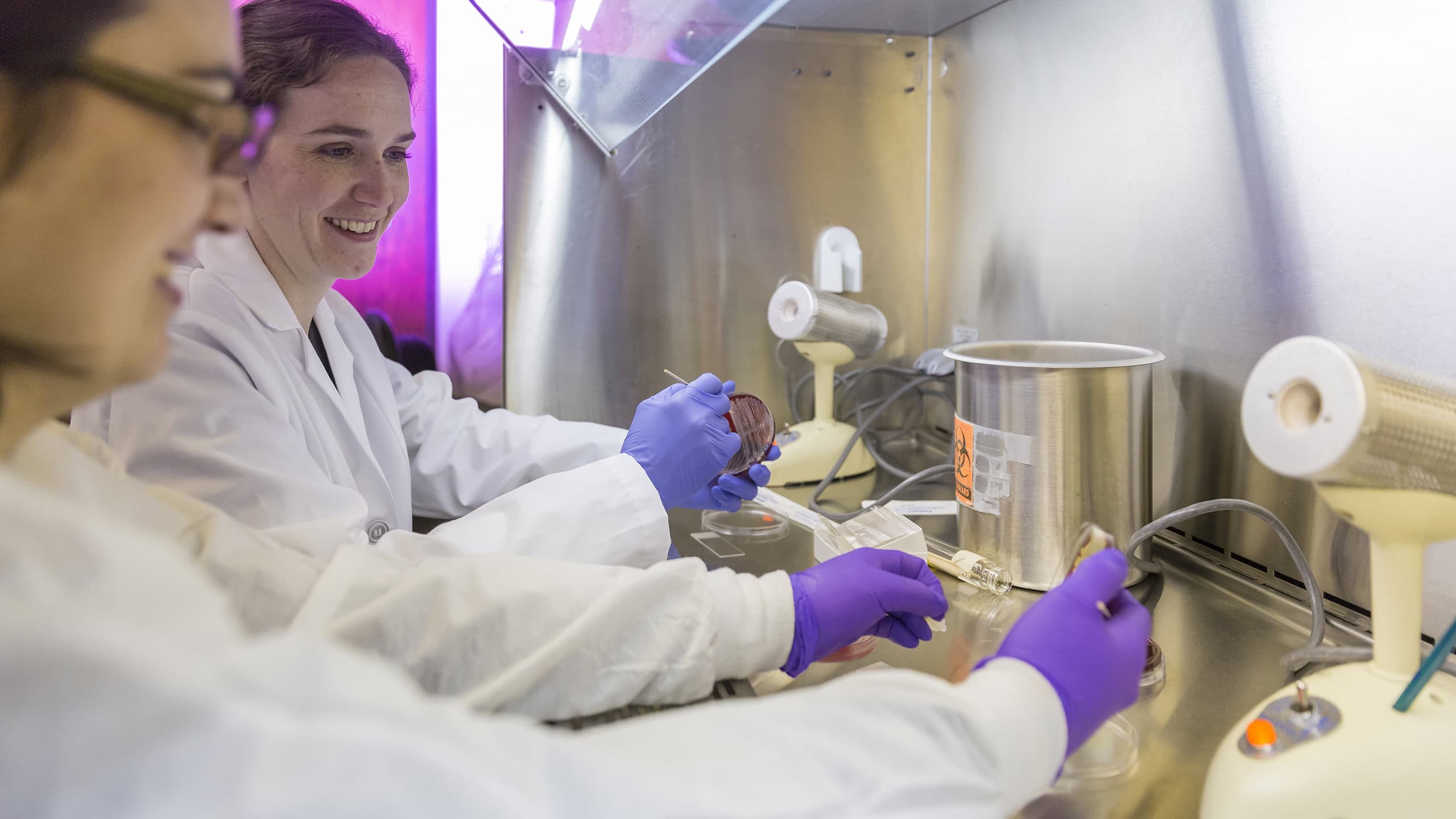
MLS Extended is entirely online for the didactic part of the program, and then to ensure hands-on competencies, students must complete an in-person clinical internship at an affiliated hospital.
“I sometimes tell clinical sites it is an investment when you’re training students with the time and resources of the site, but that’s also a way to increase your workforce,” Robertson said.
Caitlyn Miller recently completed the program. She already had a bachelor’s degree in biology and some lab experience from a job in food safety testing. She knew she wanted to work in a laboratory when she enrolled in the MLS Extended Internship Program. The online format allowed her to maintain a PRN (as-needed) job at Mercy Northwest while completing her studies.
Very recently, she passed her national certification exam.
“I liked that hands-on science aspect of it, and I have an interest in health care, but not the patient side,” Miller said, adding that she hopes to keep working in the lab at Mercy Northwest.
Establishing affiliation agreements for the program in hospitals and clinics requires legal approval from both UAMS and the clinical site, which can be a lengthy process, Robertson said. It’s doable though. In addition to Mercy Hospital Northwest Arkansas in Rogers, the MLS Program has agreements with clinical sites in Stone County, Clarksville and Wynne. The program also recently added two new sites — one in Minnesota and another in Lenexa, Kansas.
Gaines said she was highly satisfied with the skills and abilities of the UAMS graduates, noting they are often ready to function in the laboratory immediately upon graduation.
“When the relationship is symbiotic and everything works well for each other, we just incorporate them into our laboratory family,” Gaines said.