UAMS Hosts Symposium on Treatments for Chronic Pain
| Health professionals from across the state recently convened at the University of Arkansas for Medical Sciences (UAMS) for the 2026 Arkansas Pain Management Symposium, an event that highlights the importance of interprofessional collaboration to improve treatment for chronic pain.
The theme of this year’s symposium, held April 4 at the UAMS Jackson T. Stephens Spine & Neurosciences Institute, focused on “The Geriatric Pain Continuum: Assessment, Intervention, and Rehabilitation.”
The number of Americans age 65 or older is projected to more than double in the coming decades, surpassing 88 million by 2050, according to the AARP. As the population ages, it becomes even more important that clinicians manage their patients’ pain using therapies that have proved to be safe and effective, several of the symposium’s presenters noted.
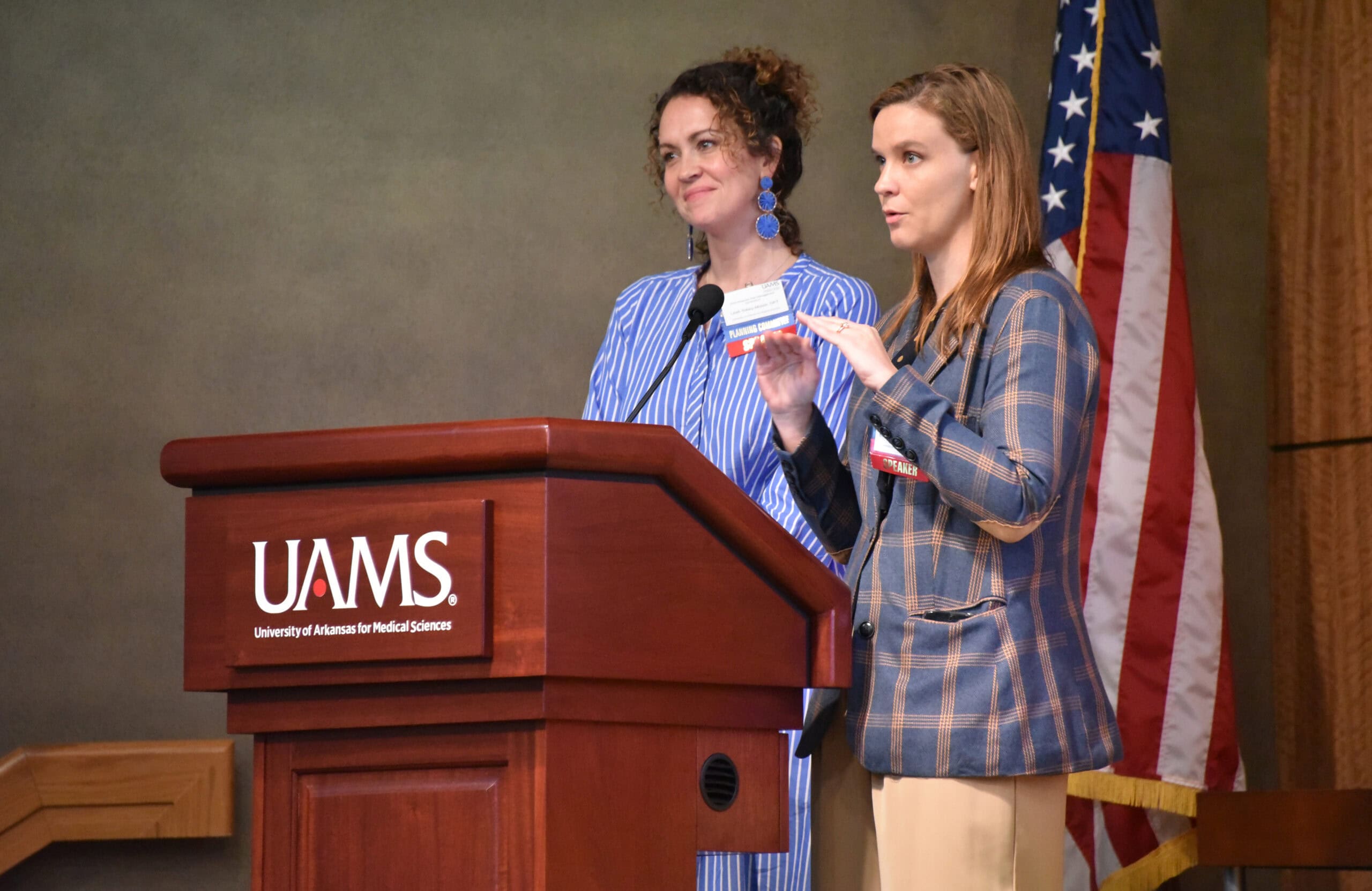
Leah Tobey-Moore, DPT, MBA, assistant professor in the UAMS College of Medicine’s Department of Psychiatry, and Meghan Breckling, Pharm.D., assistant professor in the College of Pharmacy’s Department of Pharmacy Practice, presented several simulated case studies showing treatment options for older patients with health conditions such as osteoarthritis or diabetic neuropathy.
Many of their recommendations featured non-pharmacological interventions, including lifestyle changes and physical therapy. For patients whose conditions require pharmaceutical treatment, they consulted the American Geriatrics Society’s criteria for medications that could be inappropriate for adults over 65.
“Even if we’re just making small changes in patients’ treatment, I think it will add up to make Arkansas a healthier state,” Breckling said.
Although most of their treatment plans did not include the prescribing of opioids, Breckling and Tobey-Moore noted that there are situations in which those drugs are needed. For those cases, they encouraged health professionals to assess the benefits and risks of opioids before prescribing — and to conduct periodic reevaluations during treatment.
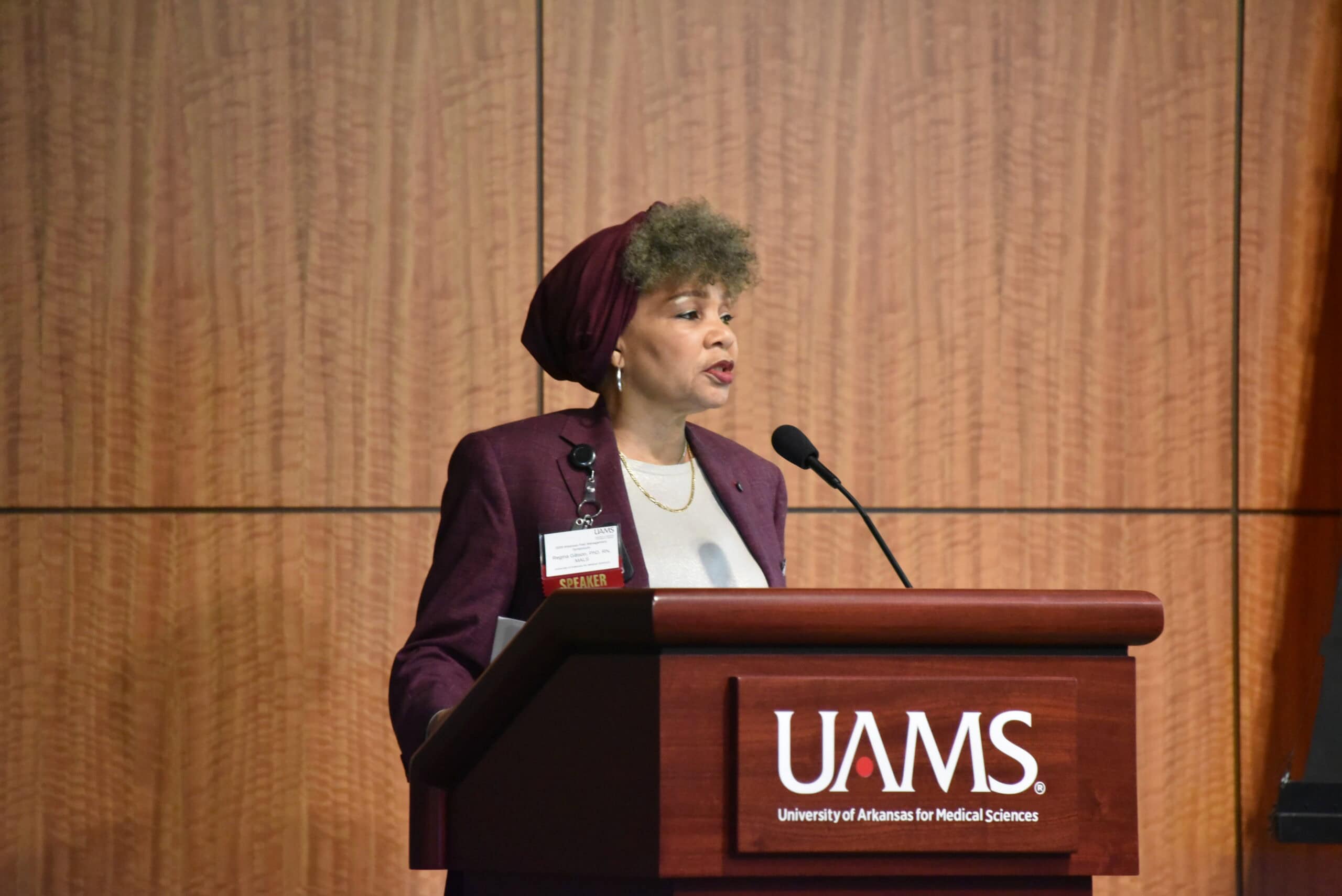
Regina Gibson, assistant professor in the College of Medicine’s Department of Geriatrics and program manager for the Opioid Prevention for Aging and Longevity Program at the UAMS Donald W. Reynolds Institute on Aging, speaks about safe alternatives to medication.Image by Chris Carmody
They said clinicians should ensure that patients prescribed opioids have access to naloxone, a fast-acting medication used to reverse opioid-induced respiratory depression, a potentially fatal side effect.
Regina Gibson, Ph.D., RN, assistant professor in the College of Medicine’s Department of Geriatrics and program manager for the Opioid Prevention for Aging and Longevity (OPAL) Program at the UAMS Donald W. Reynolds Institute on Aging, shared information about safe alternatives to medication.
“Aging is a slow and chronic biological process and a universal truth in life,” she said. “The variety of changes that come with it requires special care and management.”
Gibson explained that older adults experience a slowing in their ability to metabolize medications, potentially leading to higher drug concentrations in the body and an increased risk of toxicity. Additionally, many older adults have other medical conditions that could affect their response to medications, she said.
Gibson cited recommendations from a 2023 panel of the American Geriatrics Society, which reviewed treatment options for 21 common ailments that affect older adults, including chronic pain. Those guidelines suggested a variety of non-pharmacological therapies, including mindfulness meditation and exercises such as aquatic yoga and tai chi.
Some of the speakers examined emerging treatments for chronic pain. Johnathan Goree, M.D., director of the Chronic Pain Division in the UAMS College of Medicine, talked about the implications of neuromodulation, a treatment that uses electrical stimulation or chemical agents to alter nerve activity.
In another presentation, Jennifer Vincenzo, Ph.D., PT, associate professor in the UAMS College of Health Professions’ Department of Physical Therapy, outlined a multifactorial approach for preventing falls among older adults who are already living with pain.
Benjamin Boyett, M.D., a fellow in the College of Medicine’s Chronic Pain Division, spoke about axial low back pain, a localized condition that can stem from the muscles, joints, or discs around the spine. He looked at several evidence-based treatments for this type of back pain, noting that strong evidence supports the efficacy of non-pharmacological care.
“How we treat a condition like this matters because it affects so many of our patients,” he said.