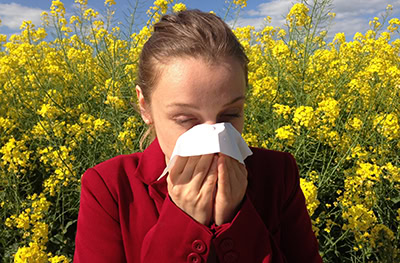
Allergic Rhinitis
Tiny grains
| Download this episode | It’s that time of year again. Everywhere you look, cars and outdoor furniture are covered with a thin yellow coating of pollen. Each spring, trees, weeds, and grasses release tiny pollen grains into the air. Some of the pollen ends up in your nose and throat. This can trigger a type of seasonal allergy called allergic rhinitis, more commonly known as hay fever even though it’s not caused by hay and it doesn’t cause a fever. If you have allergic rhinitis, your immune system mistakenly identifies a typically harmless substance as an intruder. This substance is called an allergen. The immune system responds to the allergen by releasing histamine and chemical mediators that typically cause symptoms in the nose, throat, eyes, ears, skin and roof of the mouth. A perennial form of allergic rhinitis is caused by dust mites, pet hair or dander and mold. The symptoms of this condition occur year-round. | In addition to the usual allergen triggers, the symptoms of allergic rhinitis may also occur from irritants such as smoke and strong odors, or to changes in the temperature and humidity of the air. This happens because allergic rhinitis causes inflammation in the nasal lining, which increases sensitivity to inhalants. Many people with allergic rhinitis are prone to allergic conjunctivitis, an eye allergy. In addition, allergic rhinitis can make symptoms of asthma worse for people who suffer from both conditions. The most common symptoms of allergic rhinitis include Itching in the nose, roof of the mouth, throat, eyes, sneezing, a stuffy nose, a runny nose, tearing eyes and dark circles under the eyes. Allergic rhinitis can last several weeks, longer than a cold or the flu, but it doesn’t cause a fever. The nasal discharge is thin, watery, and clear while the nasal discharge from a cold or the flu tends to be thicker. | Sneezing, pressure in the nose and cheeks and swollen eyes. Sound familiar? If your allergic rhinitis symptoms are interfering with your daily life, you should consult with a medical professional. They will ask you questions about your symptoms and medical history and perform a physical exam. Keeping a record of your symptoms over a period of time can help determine what triggers your allergies. Your doctor may want to do an allergy skin test to determine what you are allergic to. Tiny amounts of allergens are applied to your skin. You will feel tiny pricks that are usually not painful. Your doctor will observe and record the way your skin reacts to each allergen. Your doctor may also decide to do a blood test, such as the radioallergosorbent test. This test identifies antibodies in your blood that determine what you’re allergic to. Once your allergens are identified, you and your doctor can decide the best treatment. | Did you just sneeze? Gesundheit! Once specific allergens are diagnosed, your allergist-immunologist will work with you to develop a plan to avoid allergens that trigger your allergic rhinitis symptoms. For example, if you are allergic to dust mites or indoor mold, you will want to take steps to reduce these allergens in your house as much as possible. For outdoor allergies such as pollen, limit your outdoor activities during times of high pollen counts. Immunotherapy, or allergy shots, is a proven treatment approach providing long-term relief for many people suffering from allergic rhinitis. Your allergist might prescribe medication to decrease allergic rhinitis symptoms. These medications may include nasal corticosteroid sprays, antihistamine pills, nasal antihistamine sprays or decongestant pills. Allergic rhinitis cannot be prevented but you can help your symptoms by avoiding the things that cause them. | Allergic rhinitis affects an estimated 40 to 60 million people in the U.S. It can disrupt your sleep, drain your energy, and make it harder to function at school or work. Nasal symptoms like congestion, sneezing, and a runny nose tend to worsen when lying down, leading to poor sleep, fatigue, and headaches. Over time, these effects can add up, making even routine tasks feel more difficult. Allergic rhinitis is also closely linked to asthma and eczema so keeping it well-controlled can help you manage those conditions too. In fact, uncontrolled allergic rhinitis is one of the most common triggers for asthma flare-ups. The good news is that there are effective treatments available, from antihistamines and nasal sprays to longer-term options like allergy immunotherapy. If your symptoms are worsening or feel hard to manage, talk to your doctor. Together, you can build a plan that keeps allergies from getting in the way of your life.
Transcript
Irritants
Transcript
Keep a record
Transcript
Gesundheit!
Transcript
Can add up
Transcript