View Larger Image
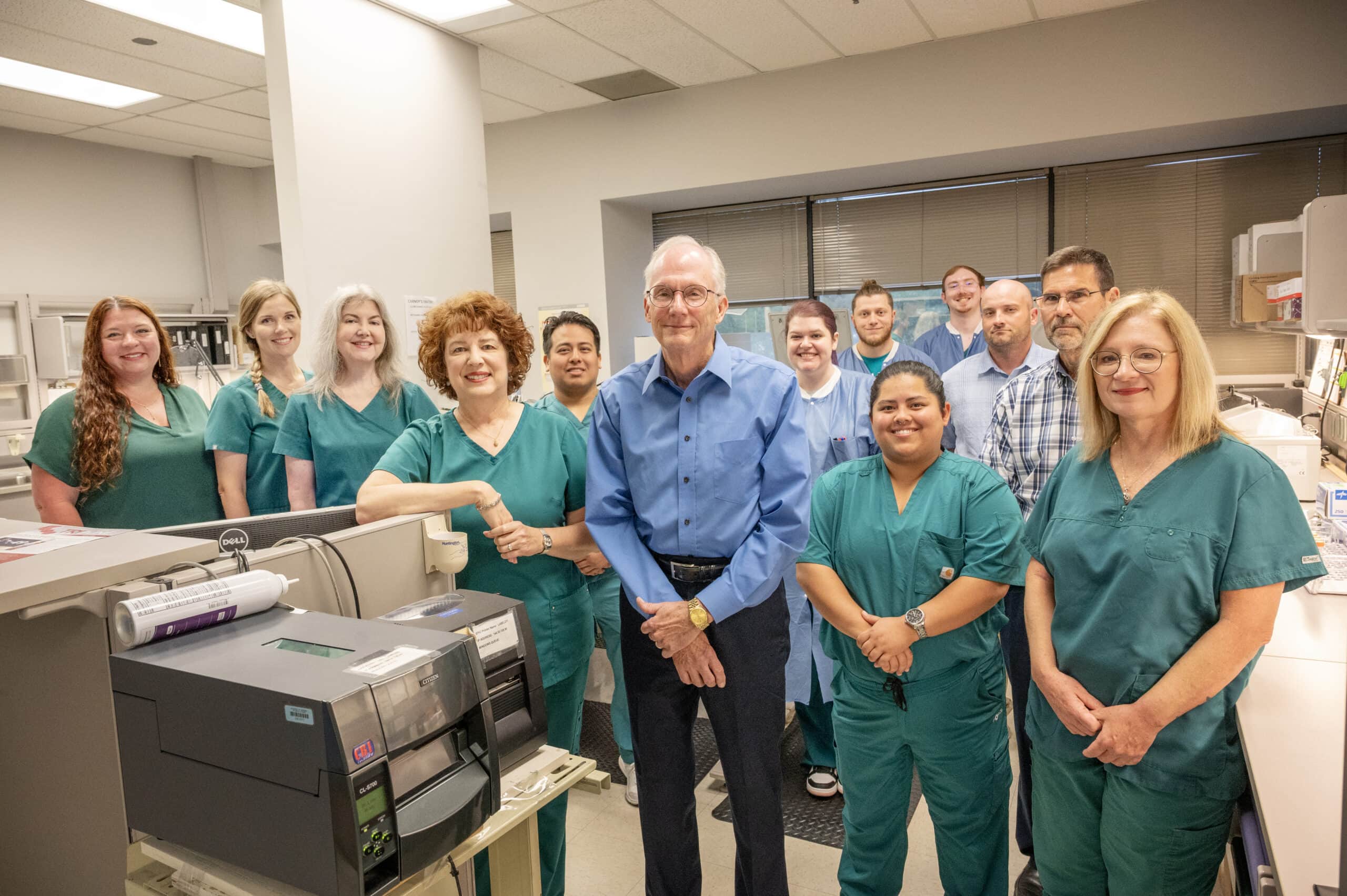
The Cytogenetics Lab is a vital part of the treatment process for myeloma patients.
Image by Evan Lewis
Partners in Care: Cytogenetics Laboratory Finds Clues to Myeloma Treatment
| The Myeloma Center began at the University of Arkansas for Medical Sciences (UAMS) in 1989. The Cytogenetics Laboratory has been supporting them since the beginning.
The Cytogenetics Laboratory, located at the Freeway Medical Tower in Little Rock off UAMS’ main campus, is part of the Clinical Laboratory under the UAMS College of Medicine Department of Pathology.
“We started at Arkansas Children’s Hospital before there was a UAMS myeloma program,” said Cytogenetics Laboratory Medical Director Jeffrey Sawyer, Ph.D. “Not long after the myeloma program began, we moved to this location due to a lack of space at Children’s Hospital.”
In addition to Jeffrey Sawyer, Janet Sawyer supervises the laboratory, while Ashley Henry manages the administrative side from the Winthrop P. Rockefeller Cancer Institute.
The Myeloma Center and the Cytogenetics Laboratory work together in determining treatment options for newly diagnosed multiple myeloma patients.
Several types of analysis are performed at the laboratory including:
• Bone marrow
• Leukemic blood
• Rapid chromosome
• Solid tissue
• Solid tumors
Specimens are collected under sterile conditions and transported at room temperature to the laboratory.
What is cytogenetics?
“Cytogenetics is basically the study of chromosomes. We look for extra chromosomes, missing chromosomes or structurally rearranged chromosomes, which all affect the prognosis of the disease,” Jeffrey Sawyer said.
Bone marrow samples are the most common type received from the Myeloma Center.
“We need to process them as soon as we get the bone marrow because cells have a limited lifespan,” said Janet Sawyer. “It takes several days to culture a specimen because we harvest them at 24 hours, 48 hours and 72 hours. The myeloma cell needs time to grow.”
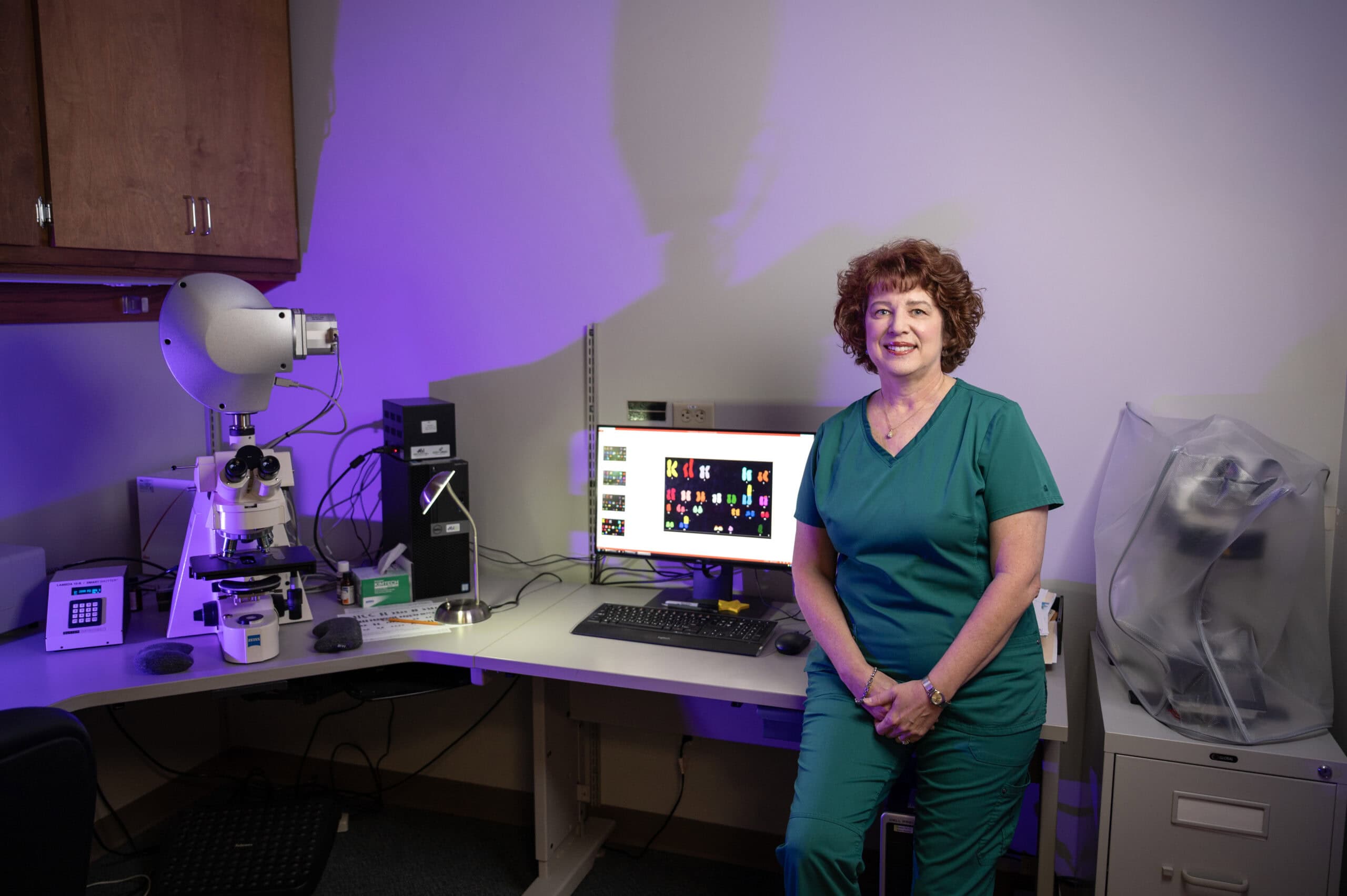
Janet Sawyer with a SKY machine, a powerful research tool useful for studying cancers and other genetic diseases where complex chromosomal rearrangements occur.Image by Evan Lewis
When analyzing the samples from multiple myeloma patients, “we’re typically looking for indications of a poorer prognosis or a better prognosis,” Jeffrey Sawyer said.
“Obviously, if the chromosomes are normal, that’s a better prognostic indicator. During the beginning of multiple myeloma disease, you’ll see odd-numbered chromosome gain, and as the disease progresses, you’ll see the loss and gain of other chromosomes,” he added.
“There are challenges with analyzing multiple myeloma cases. Chromosome abnormalities associated with this disease are very complex,” Janet Sawyer added.
Cytogenetics results influence how physicians select therapies.
“There are multiple treatments now. Specific treatments are used based on the specific findings,” said Jeffrey Sawyer.
He discussed the behavior of chromosomes in its relation to cancer.
“No one has a perfect genome. The human genome is always undergoing change. The older we get, the more gene mutations we accumulate. That’s why older people are more susceptible to cancer — that accumulation of mutations adds to your risk,” he said.
Henry ensures the Cytogenetics Laboratory has what it needs to function.
“I’m one of the clinical laboratory managers,” she said. “I manage the budget and human-resources type-activities for three departments — cytogenetics, microbiology and molecular diagnostics.”
“I like singing the praises of the cytogenetics lab,” Henry continued. “There are not a lot of labs that can handle the volume of complex myeloma workups they do.”
Janet Sawyer attributes the efficiency of the lab to the staff.
“We have a very experienced team. The success in our lab stems from the skill and dedication of the technologists, many of whom have been part of this team since the early days of UAMS’ myeloma program,” she said. “I believe that the work we’ve done over the years has shaped many of the treatments for multiple myeloma.”
While the team may not interact directly with patients, Janet Sawyer said, they still consider themselves a vital part of the care team.
“It’s all about the patients. We want to make sure we get the results out in a timely manner to aid the health care providers in assisting patients,” she said.
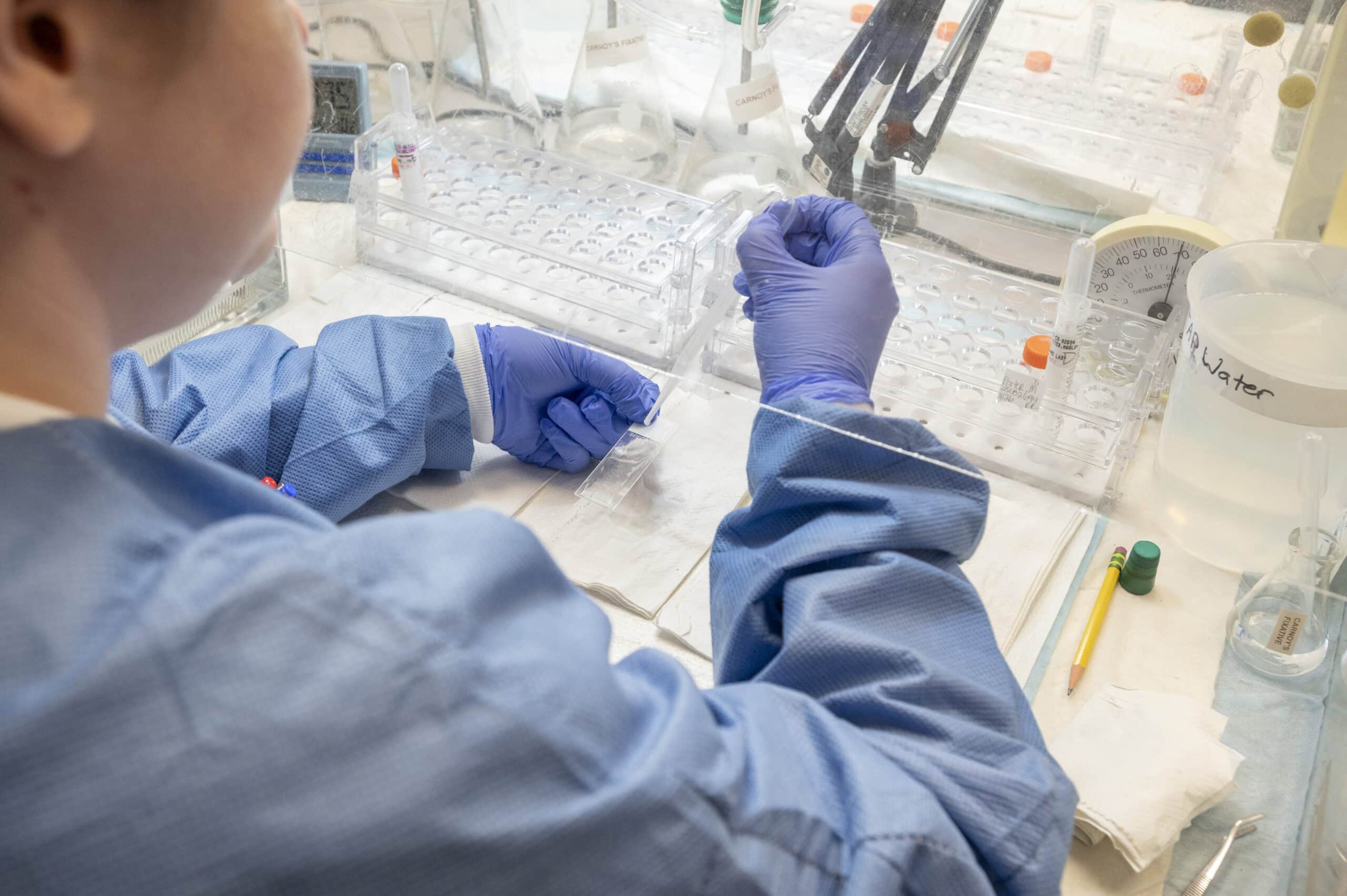
Bone marrow samples are the most common type received from the Myeloma Center.Image by Evan Lewis