View Larger Image
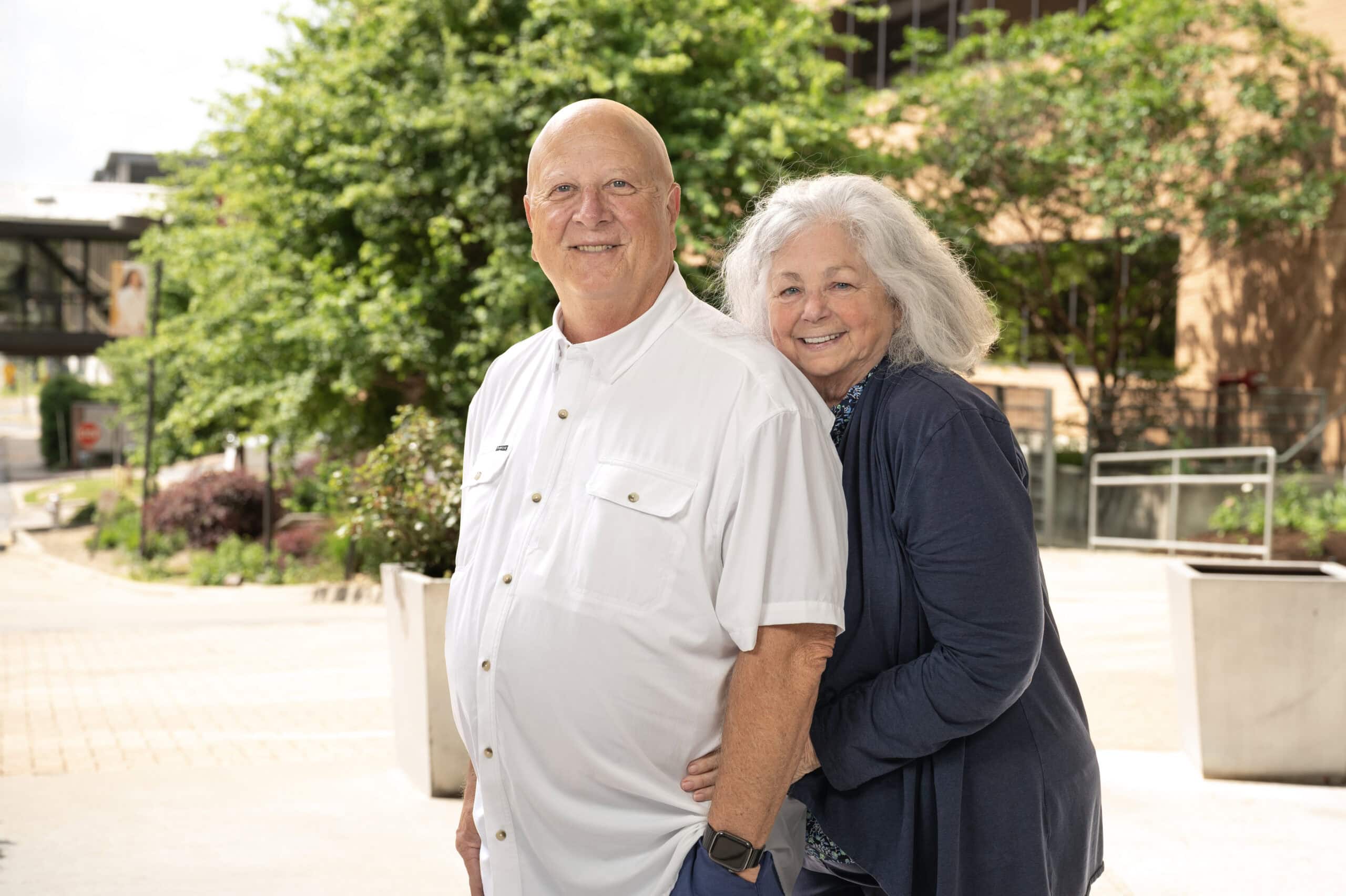
Don Wilson, DVM, and his wife Melissa are huge supporters of UAMS' Myeloma Center.
Image by Evan Lewis
When Words Are Not Enough: 20-Year Myeloma Survivor Gives Back to UAMS
| By Shannon Perna
“Thank you.”
These heartfelt words are often all that’s needed to express sincere gratitude, but after 20 years of life-saving treatment at the UAMS Winthrop P. Rockefeller Cancer Institute’s Myeloma Center, Don Wilson, DVM, and his wife, Melissa Wilson, wanted to do more.
So more than a decade ago, they began to direct their philanthropy to support the Myeloma Center’s work to continually expand the boundaries of myeloma research and therapy toward a cure.
Wilson had a large veterinary practice in the Washington, D.C., area when he was first diagnosed with myeloma in 2005 at the age of 55.
“I was having some pain in my neck and went to the chiropractor,” said Wilson. “During the manipulation, he fractured two ribs, and it took several months before we finally figured out how the fracture happened. I had a plasmacytoma (a tumor of plasma cells) secondary to myeloma on the ribs, and that was why they fractured.”
He began receiving treatment with thalidomide, which according to Wilson, is “a particularly nasty drug” that caused extremely painful neuropathy. He took the medicine for about six months but decided to stop because the side effects became unmanageable.
As the Wilsons considered their next steps, a friend introduced him to an oncologist he had met on a scuba diving trip. Wilson asked the oncologist a few pointed questions.
“What would you do if your mother had myeloma? Where would you recommend that she go?” Wilson asked the oncologist. “He told me ‘the University of Arkansas for Medical Sciences,’ so we called UAMS, and they got me in before the end of the year. I saw Dr. van Rhee, and I’ve been seeing him ever since.”
Frits van Rhee, M.D., Ph.D., is the clinical director of the Myeloma Center and a professor in the UAMS College of Medicine. He continues to monitor Wilson and provides treatment when the myeloma recurs.
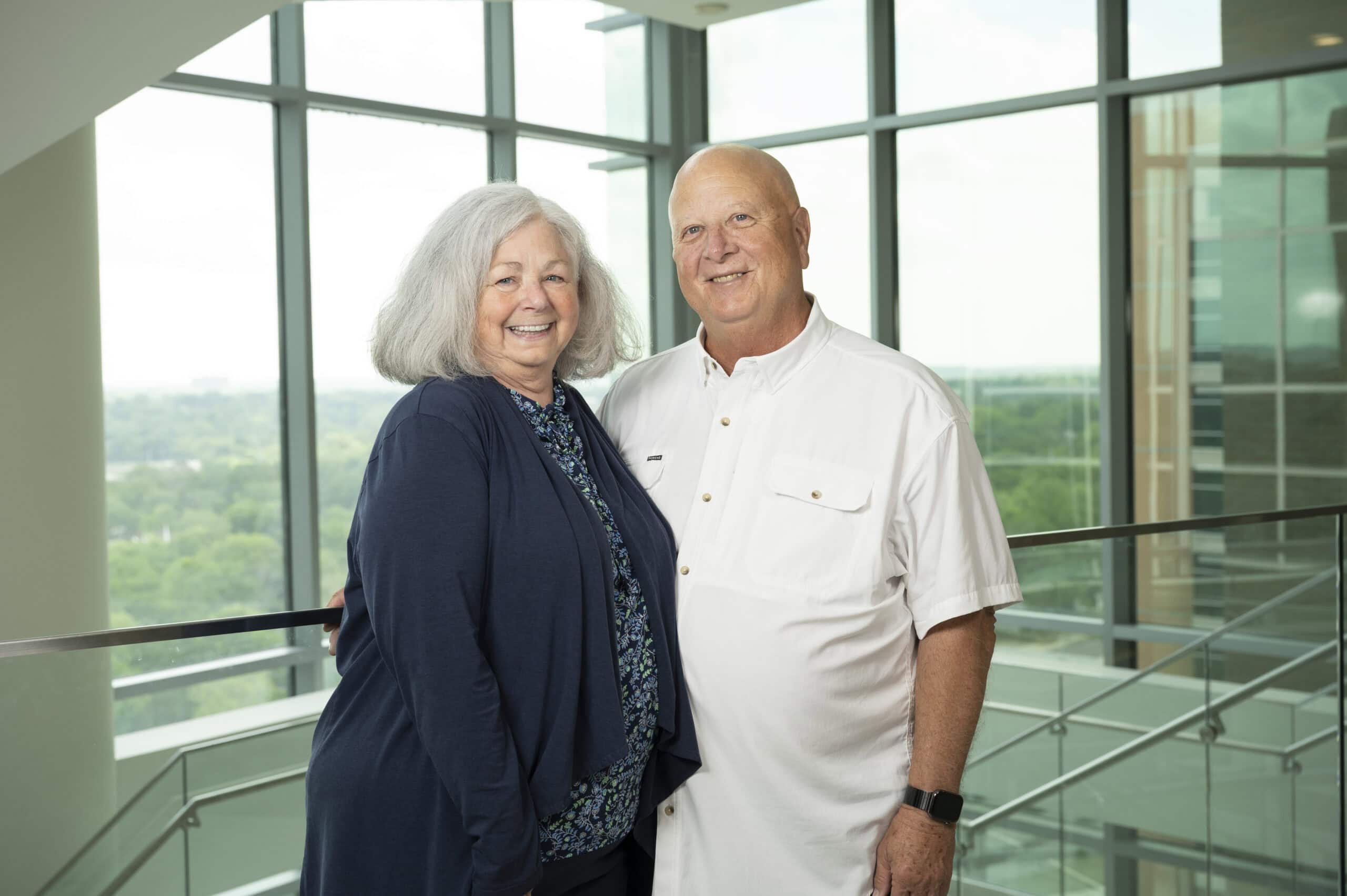
The Dr. Don and Melissa Wilson Fund for Excellence was established in 2023.Image by Evan Lewis
“It’s a hard, hard thing,” Wilson said. “As you go through it, you know it’s a treatment, but it’s not a cure. The treatment lasts for a certain period of time, and then we have to come up with something else. The cancer is very clever — it finds a way around whatever treatment we throw at it.”
Wilson relapsed in 2024 and couldn’t tolerate the new treatment, which they discontinued in September 2024. He visited UAMS in April 2025 to determine the next course of action.
“I’m kind of on the tip of new treatments now,” he said. “I’ve been one of the first people to get some of the new drugs, which have just barely been approved.”
The Wilsons are grateful for the high level of care given at the Myeloma Center, as well as the kindness with which it is given.
“The caregivers and support staff are so nice here. I always feel better when I come to UAMS, even if I get bad news,” Wilson said.
To show their appreciation, the Wilsons began giving to the Speer Patient Support Fund in the Myeloma Center in 2010 and contributed to the center’s research efforts in 2012.
Then in 2023, they wanted to increase their impact. With a $100,000 gift, they established the Dr. Don and Melissa Wilson Fund for Excellence. This fund is used for education, travel and related expenses to support myeloma nurses and ensure they are prepared to meet the changing health care needs of myeloma patients. In 2024, the couple made a second $100,000 gift to support the Myeloma CURE Project, a comprehensive research effort focused on the genetics of myeloma to understand the disease at the molecular level.
“Because of my good fortune in life, I have the ability to help out,” Wilson said. “I’ve always wanted to give so that it got to the people who actually do the work.”
Now retired and in their 70s, the Wilsons live in the Florida Keys.
“We live our lives in small chunks and return frequently to Little Rock for tests and treatment,” Wilson said. “It’s been difficult, but fortunately I have a wife who won’t let me die, and we’ve been through this together.”
Despite the difficulties, Wilson enjoys his life filled with family, hobbies and travel, and encourages other myeloma patients to do the same.
“People who have been recently diagnosed are frightened, and everything sounds bad,” he said. “But I tell them, ‘Yes it does sound bad, but you have to fight. You have to get in there and find your team. Don’t give up, even on the dark days. Hang in there as long as you can.’”
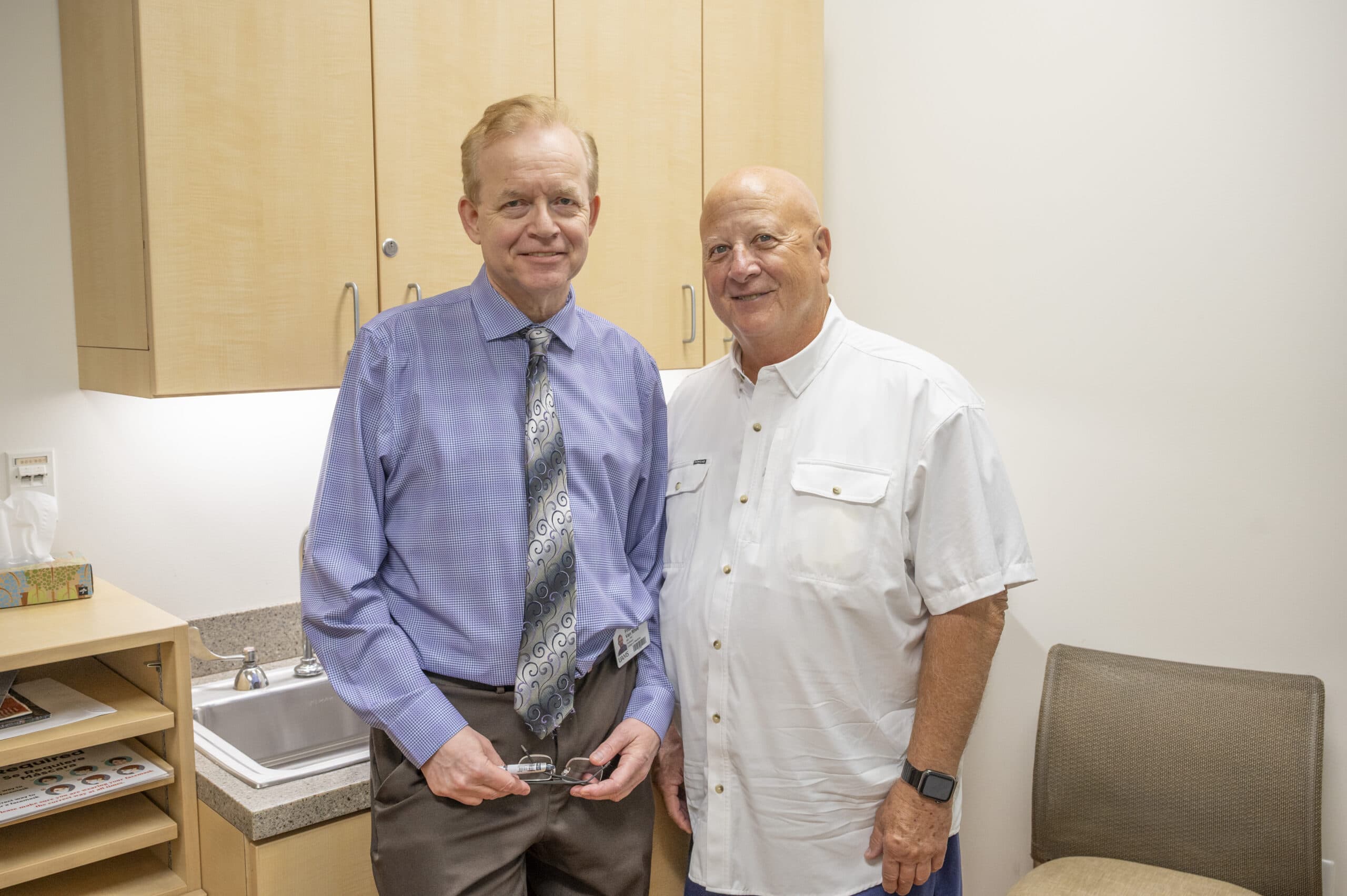
Myeloma Center clinical director Frits van Rhee, M.D., Ph.D., and Don Wilson, DVM.Image by Evan Lewis