UAMS Researchers Find that Smart Food Lockers Expand Access to Healthy Food in Arkansas
| LITTLE ROCK — Using smart food locker technology is an innovative and promising approach to addressing food insecurity in Arkansas, according to researchers from the University of Arkansas for Medical Sciences Institute for Community Health Innovation.
Food insecurity, defined as the limited or uncertain access to enough nutritious food, continues to affect communities across Arkansas at high rates. In 2023, nearly 19% of households experienced food insecurity, significantly exceeding the national average of 13.5%.
Many families rely on food pantries and other charitable food organizations to meet their needs and supplement their grocery budget. However, households experiencing food insecurity often face additional barriers to accessing these resources, including stigma associated with receiving food assistance, transportation challenges, work and childcare obligations, and limited pantry hours.
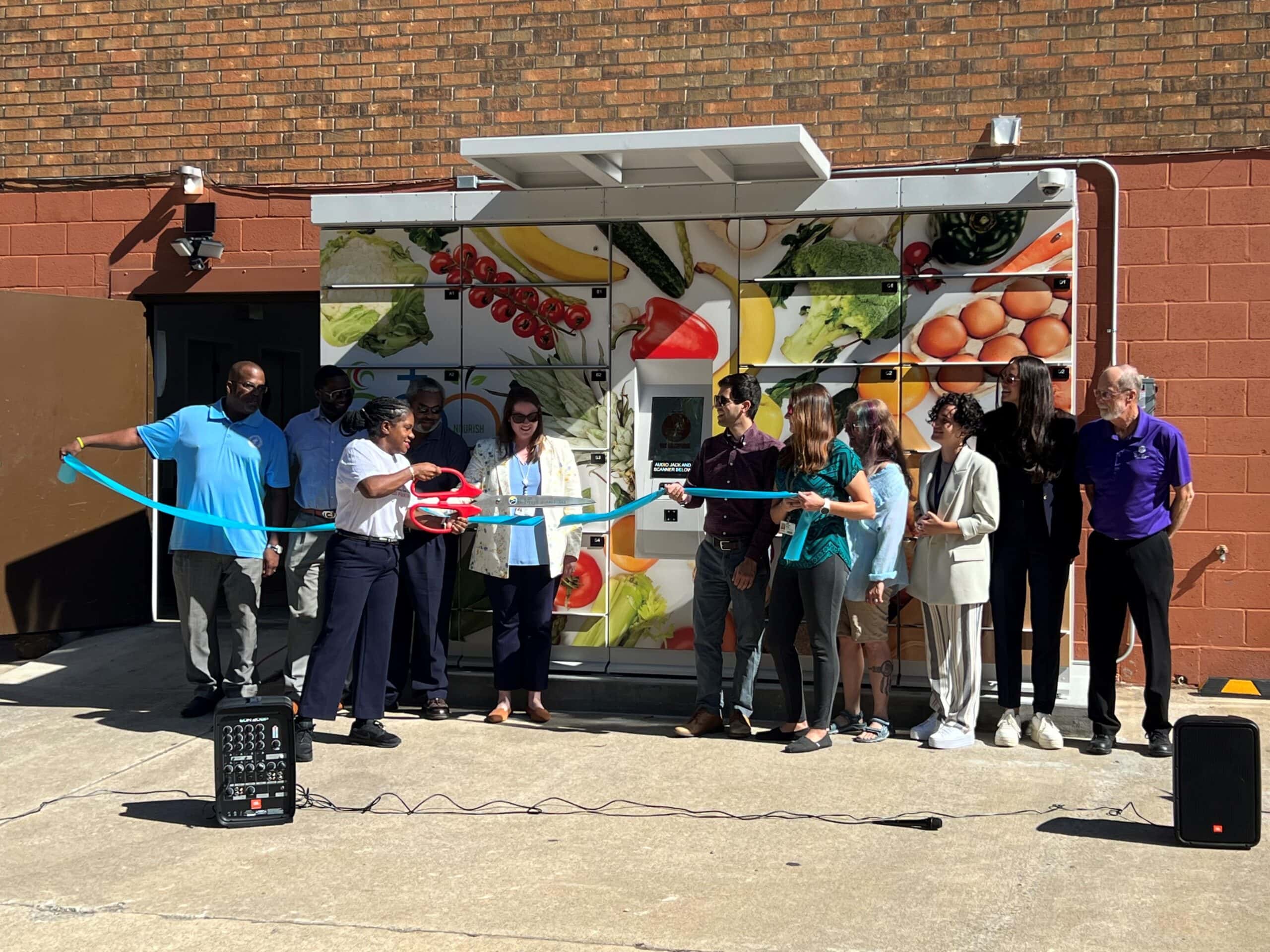
To address these challenges, UAMS researchers partnered with a faith-based food pantry in Fayetteville to pilot a smart food locker system. This emerging technology provides a secure, temperature-controlled locker compartment that allows individuals to order groceries online and pick them up at their convenience.
“This innovative approach to addressing food insecurity is about meeting people where they are,” said Pearl McElfish, Ph.D., director of the Institute for Community Health Innovation. “By creating access points outside the typical 9 to 5, we can remove barriers like limited pantry hours and stigma and improve access to healthy food.”
Participants of the pilot program used the smart locker system to order a variety of foods, including fresh produce, dairy, proteins, and culturally relevant items tailored to the community. With 24/7 access, families were able to pick up food at times that fit their schedule.
“The smart locker system also plays a critical role in advancing Food is Medicine approaches,” said McElfish. “Through the increased access to fresh, healthy foods, this initiative supports improved nutrition outcomes and helps reduce the risk of chronic disease like diabetes, high blood pressure, and heart disease.”
The program showed meaningful improvements in nutrition, with 75% of participants reporting an increase in their fruit and vegetable intake, an improved ability to stretch their grocery budget, and reduced barriers related to time, transportation, and stigma.
“This pilot project highlights meaningful improvement in food access and nutrition,” said Jenni Vaughan, a registered dietitian at the institute. “While smart food lockers are not a standalone solution, they represent a scalable and adaptable model that can strengthen the charitable food system, support Food is Medicine initiatives and better serve working families and underserved communities.
The results of the pilot program can be found in “Outcome Evaluation of a Smart Food Locker Pilot at a Faith-Based Community Food Pantry,” which was published in the Journal of Hunger & Environmental Nutrition.
To learn more about the institute’s initiatives to improve nutrition and advance Food is Medicine approaches in Arkansas, visit communityhealth.uams.edu.
A broader look at UAMS’ rural healthcare programs that impact the health and well-being of rural Arkansans can be found at the UAMS rural health hub.
UAMS is the state’s only health sciences university, with colleges of Medicine, Nursing, Pharmacy, Health Professions and Public Health; a graduate school; a hospital; a main campus in Little Rock; a Northwest Arkansas regional campus in Fayetteville; a statewide network of regional campuses; and seven institutes: the Winthrop P. Rockefeller Cancer Institute, Jackson T. Stephens Spine & Neurosciences Institute, Harvey & Bernice Jones Eye Institute, Psychiatric Research Institute, Donald W. Reynolds Institute on Aging, Translational Research Institute, and the Institute for Community Health Innovation. UAMS includes UAMS Health, a statewide health system that encompasses all of UAMS’ clinical enterprise. UAMS is the only adult Level 1 trauma center in the state. UAMS has 3,553 students and 1,030 medical residents and fellows, and two dental residents. It is the state’s largest public employer with about 12,000 employees, including 1,200 physicians who provide care to patients at UAMS, its regional campuses, Arkansas Children’s, the VA Medical Center and Baptist Health. Visit www.uams.edu or uamshealth.com. Find us on Facebook, X (formerly Twitter), YouTube or Instagram.###