View Larger Image
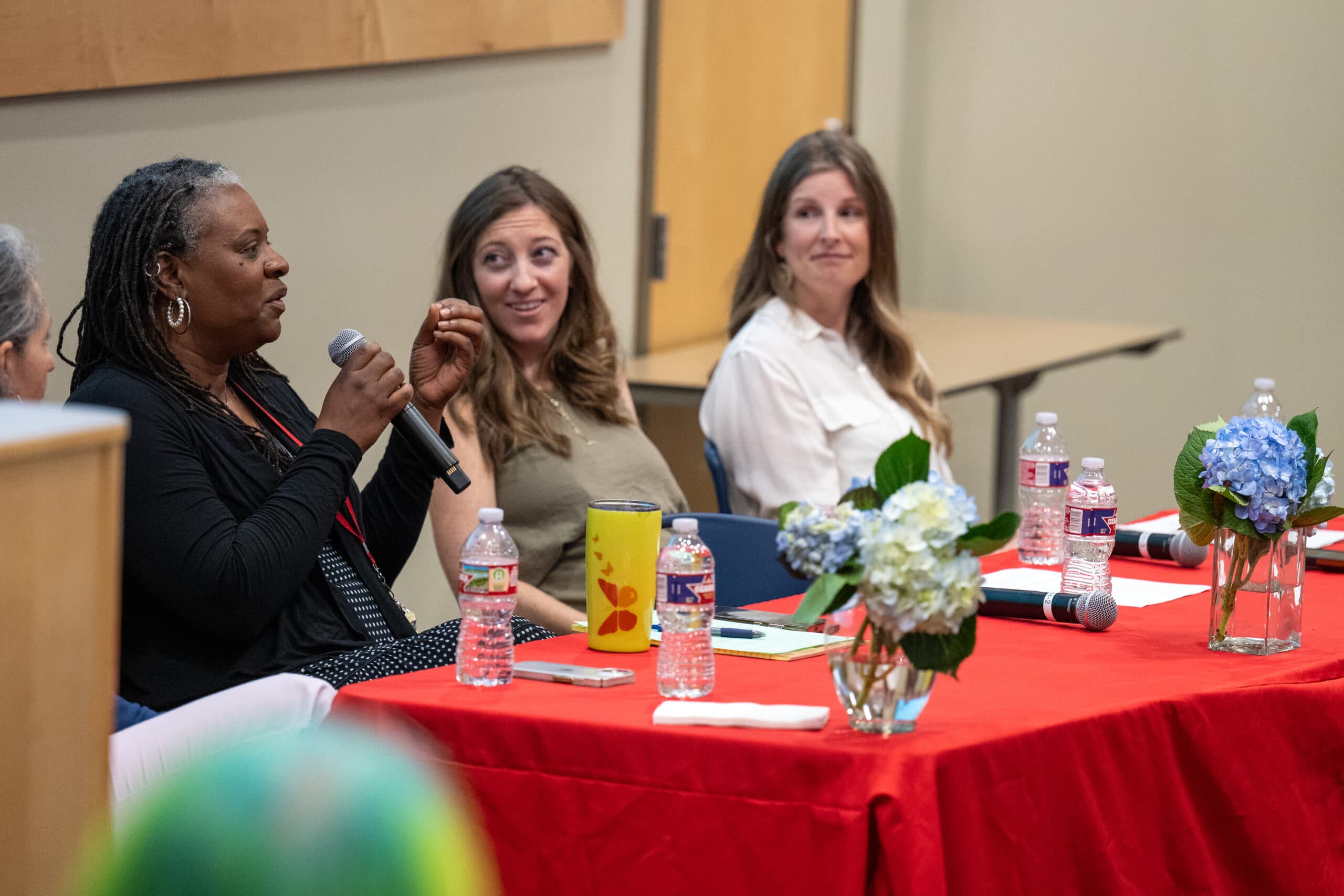
Keneshia Bryant-Moore, professor in the UAMS Fay W. Boozman College of Public Health, speaks during the Arkansas Nursing Research Day panel on maternal health.
Image by Bryan Clifton
Conference Highlights Importance of Partnerships in Nursing Research
| The University of Arkansas for Medical Sciences (UAMS) hosted a May 1 conference that gave nurses and nursing students from across the state an opportunity to exchange ideas and celebrate the impact of nursing research.
This year’s Arkansas Nursing Research Day carried the theme of “Partnerships in Action: Advancing Health Through Nursing Research,” highlighting the collaborative efforts that turn research findings into meaningful change in patient care.
Sarah Rhoads, Ph.D., DNP, dean of the College of Nursing, encouraged the audience members to ask questions and build connections with their peers.
“Healthcare is a complex system, and we all need to work together to improve the quality of care for patients across the state of Arkansas,” she said. “I hope you leave this event feeling inspired and energized.”
Britni Ayers, Ph.D., assistant professor in the College of Nursing, moderated the conference’s morning panel discussion, which focused on maternal health and the future of the nurse-midwifery profession in Arkansas. This fall, the College of Nursing will welcome the inaugural cohort of its Nurse-Midwifery Program, the first of its kind in the state.
Samantha Crouch, DNP, CNM, assistant professor in the College of Nursing and director of the Nurse-Midwifery Program, said research will have a vital role in the clinical decision-making of those who graduate from the program.
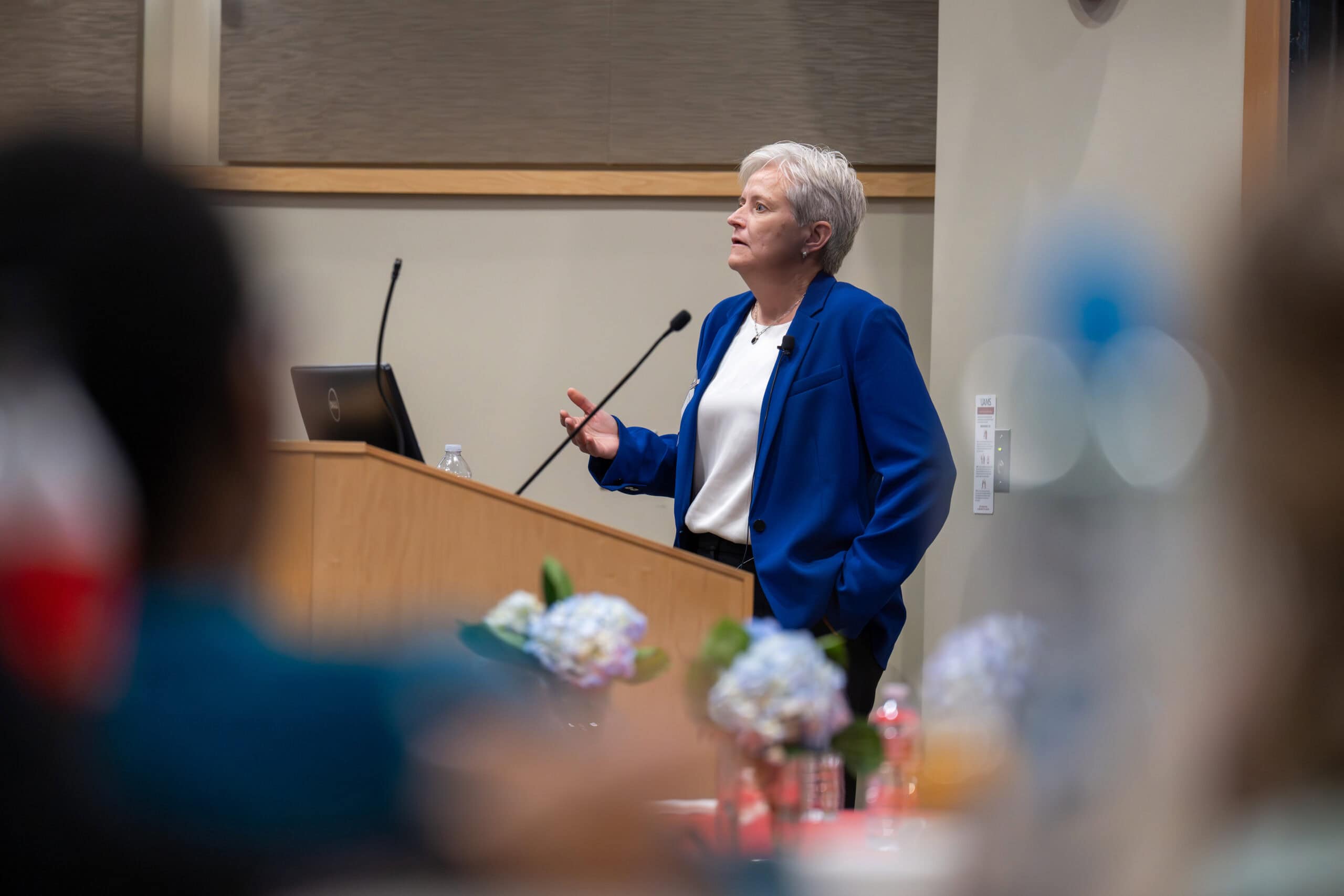
Nancy Glass, associate director of the Johns Hopkins Center for Global Health, gives a keynote address about how community and professional partnerships have anchored her research on violence against women and girls.Image by Bryan Clifton
“We’re going to train our students to meet the highest standards of evidence-based care,” she said.
UAMS has also used research as a guide while developing the program. Hannah McHardy, RN, senior director at the UAMS Institute for Community Health Innovation, described the findings from a needs assessment conducted with certified nurse-midwives in the state.
More than half of the survey’s respondents said they are unable to practice to the full scope of their authority — even though a 2021 state law granted them the right to evaluate, diagnose, and manage patients as well as prescribe medications without having to contract with a supervising physician. They cited concerns that physicians and institutions were unfamiliar with the role of certified nurse-midwives, who assist not only in labor and delivery but also provide primary and reproductive healthcare from adolescence through menopause.
However, McHardy noted that some of the respondents described a very different professional atmosphere, one in which they freely and frequently consulted with colleagues in other disciplines.
“This tells us that barriers to collaboration are not inevitable,” she said. “We have an infrastructure problem, not an attitude problem.”
Crouch said the findings have helped her team address misconceptions about the nurse-midwifery profession and engage with healthcare systems about training and employment opportunities.
“If nurse-midwifery care is successful in improving health outcomes in Arkansas, and I really think it will be, then it will happen because we built systems where nurse-midwives can thrive and be integrated into healthcare institutions,” she said.
Dominique DuBois, Ph.D., CNM, instructor in the College of Nursing and assistant director of the Nurse-Midwifery Program, said it’s important that these educational efforts also address the misconception that the nurse-midwifery care model represents competition for other healthcare providers.
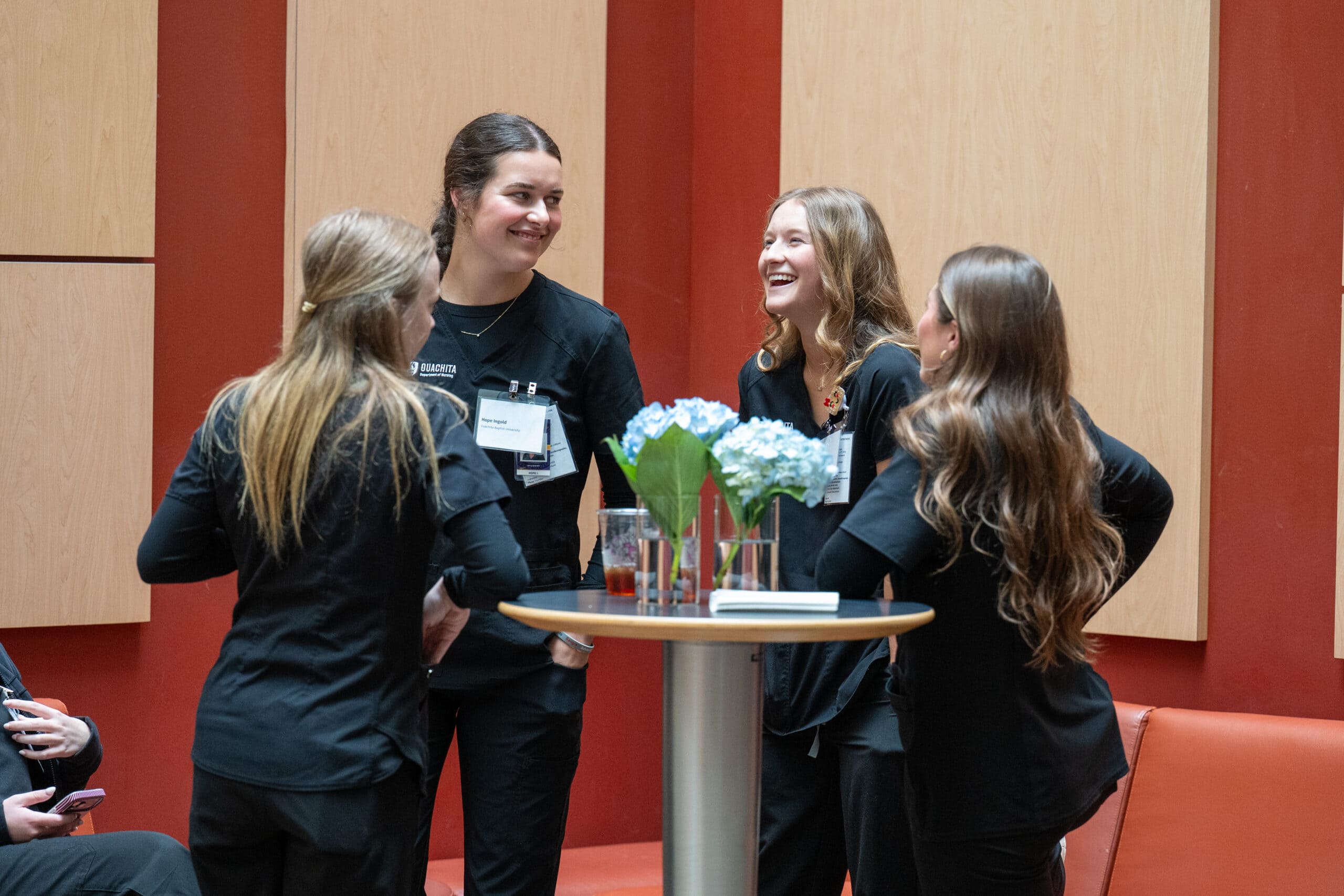
Attendees chat during a break between sessions at Arkansas Nursing Research Day.Image by Bryan Clifton
“We practice as part of a team,” she said. “We need to be able to collaborate with physicians and other health professionals if we’re going to provide patients with the full continuity of care.”
Keneshia Bryant-Moore, Ph.D., APRN, professor in the UAMS Fay W. Boozman College of Public Health, described her endeavors in a different area of maternal and child health, focusing on mothers who face homelessness after giving birth. She partners with trusted community organizations to ensure that mothers can find the support they need.
“A lot of the work I do now involves building relationships and linking these partnerships to our research in the College of Public Health,” she said. “We want to make sure that we’re hearing the voices of these women.”
Nancy Glass, Ph.D., RN, associate director of the Johns Hopkins Center for Global Health, gave the conference’s keynote speech as part of UAMS’ Dalme-Rickel Visiting Lectureship in Oncology/Community Health. Her address focused on how community and professional partnerships have anchored her research on violence against women and girls.
Glass outlined several projects from her 30-year career in research, including one in which her team built an app that helps women develop plans to protect themselves from violent partners. Another project resulted in the creation of the “Pigs for Peace” microfinance program in the Democratic Republic of the Congo, where families received livestock loans to strengthen their economic security and reduce the stress factors that can lead to violence.
Glass spoke about the benefits of collaborating with colleagues from other research disciplines, noting that these partnerships produce high-quality, high-impact work. She said community partners also play an essential role, imbuing the research with trust and credibility.
“This input really matters for my work,” she said. “Violence research has to be rooted in the norms of the community.”
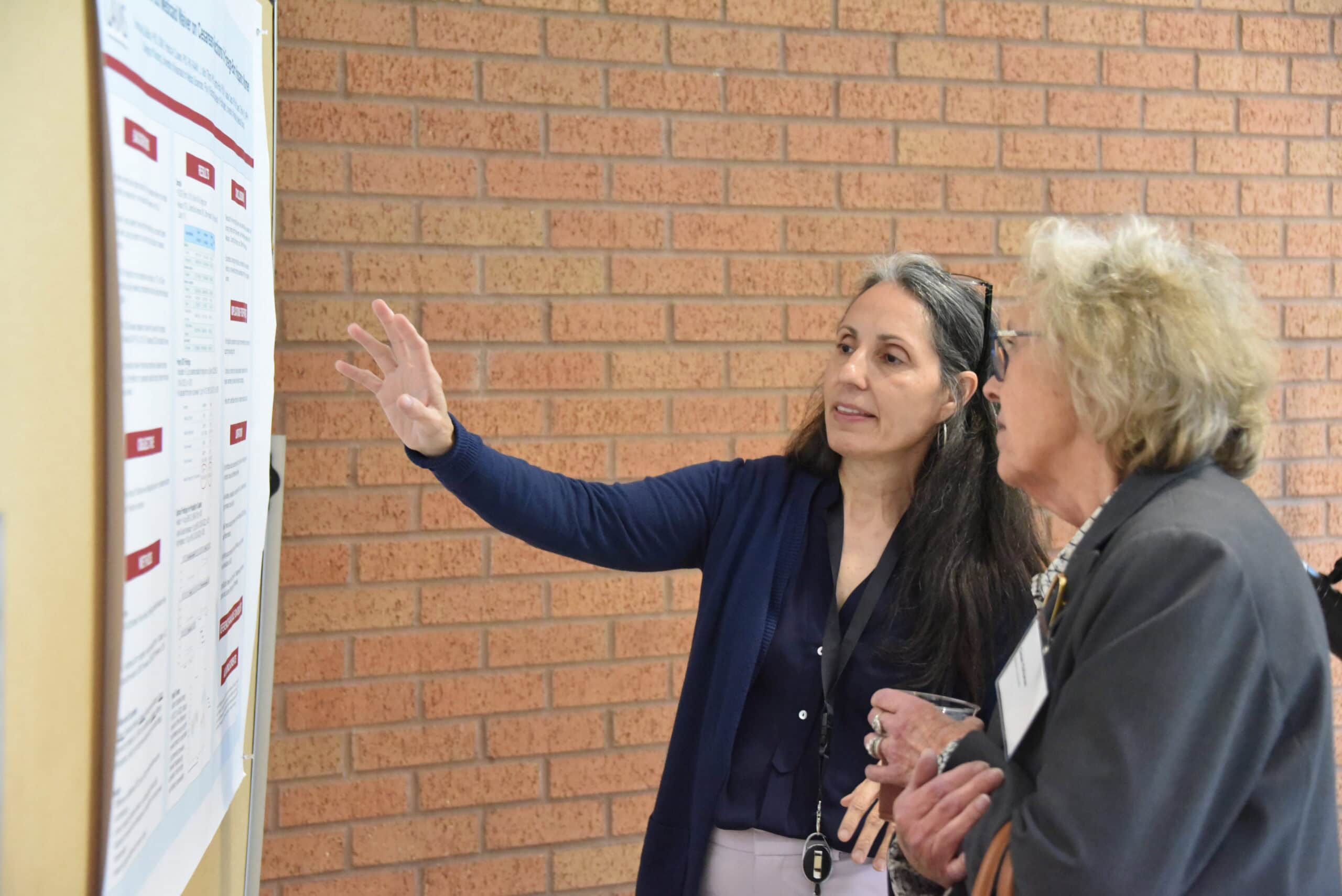
Dominique DuBois (left), instructor in the UAMS College of Nursing and assistant director of the Nurse-Midwifery Program, discusses one of the posters set up outside the auditorium at Arkansas Nursing Research Day.Image by Chris Carmody
The conference’s afternoon session featured a panel discussion that further explored the importance of community partnerships. Jocelyn Anderson, Ph.D., RN, associate professor in the UAMS College of Nursing and chair of the conference, served as the moderator. Glass participated in the conversation alongside Pearman Parker, Ph.D., RN, assistant professor in the College of Nursing, and Traci Owen, RN, an expert in oncological sexual health education.
Conference attendees then split into smaller groups to discuss extracorporeal membrane oxygenation (ECMO) procedures and ways to engage future nursing scientists in undergraduate programs. The breakout sessions allowed them to engage with colleagues on a deeper level and exchange ideas that can enhance their work in clinical and classroom settings.
Anderson said she hopes this year’s event serves as a steppingstone for future breakthroughs in nursing research.
“It was truly rewarding to see nurses and students from across Arkansas come together to share their research and learn from one another and our keynote speaker,” she said. “Research doesn’t happen in a vacuum — events and partnerships like these are essential to advancing the health of Arkansans.”