College of Public Health Students, Faculty Participates in National Gardening Conference
| The University of Arkansas for Medical Sciences (UAMS) Fay W. Boozman College of Public Health was well-represented at the 2026 American Community Gardening Association National Conference, “Pathways to Food Security: Localizing Solutions.”
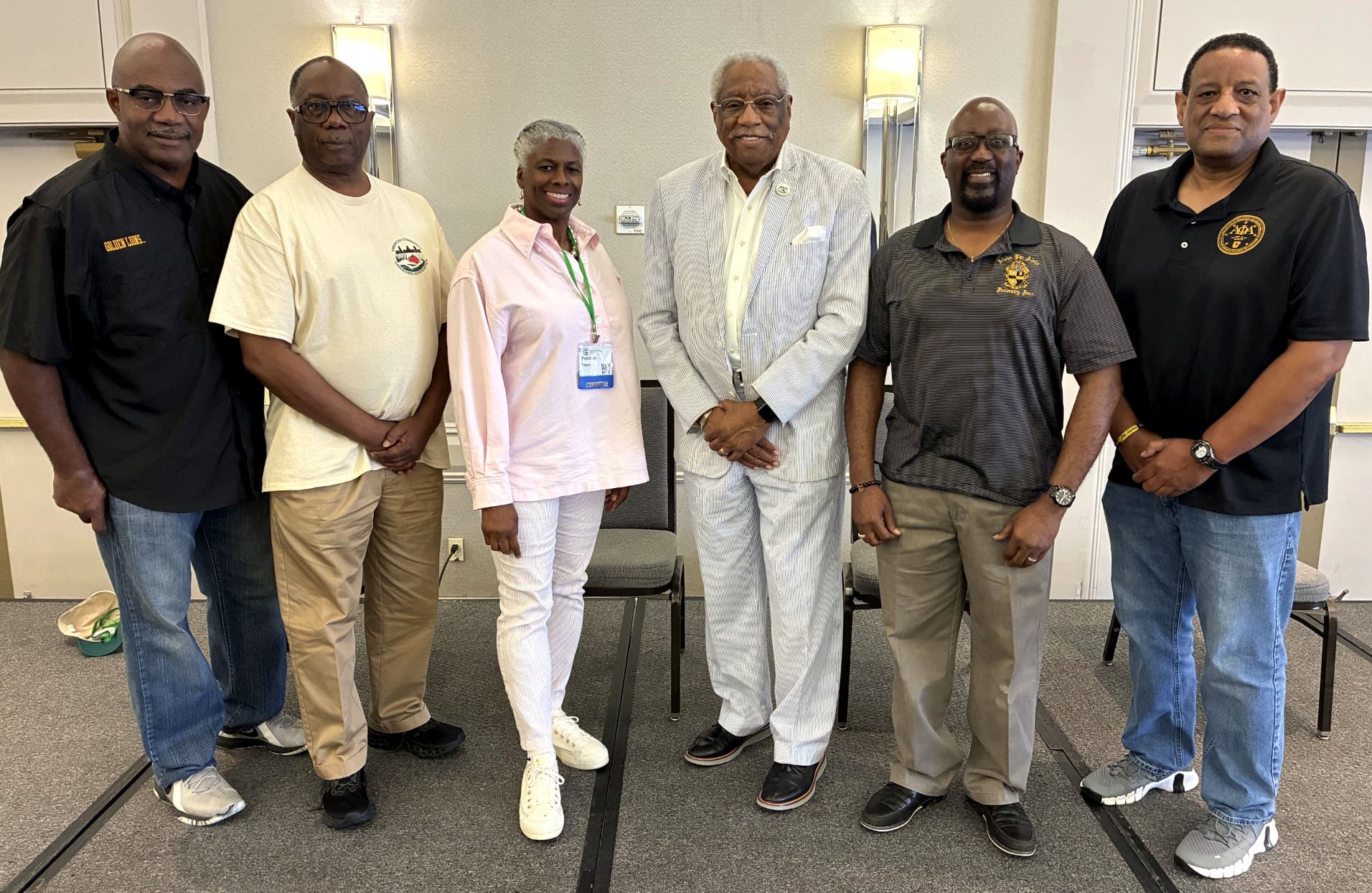
The college’s Center for Research, Health, and Society and the Community Garden Health Block collaborated with the host organizations, Central Arkansas Sphinx Foundation and Pi Lambda Chapter of Alpha Phi Alpha Fraternity, and over 20 community partners to host the conference. Charles Donaldson (Central Arkansas Sphinx Foundation and Pi Lambda Chapter of Alpha Phi Alpha Fraternity) and UAMS’ Pebbles Fagan, Ph.D., MPH, served as co-chairs, demonstrating a strong community-academic partnership.
Additionally, Fagan, Sarah Pitman, Ph.D., and Edward Ohene-Marfo, MPH — all affiliated with the College of Public Health’s Department of Health Behavior and Health Education — presented information at the event.
The mission of the American Community Gardening Association is to build community by increasing and enhancing community gardening throughout the United States and Canada. For the first time ever, its annual conference took place in Little Rock. The event consisted of a series of presentations and breakout sessions designed to inform attendees about various aspects of food, gardening, community collaborations, health and nutrition.
The four-day conference, held June 4-7, had 600 registrants representing 21 different states.
Pitman, a postdoctoral fellow, took part in the research poster session of the conference. The program gave her the chance to network and inform people about her pilot study, “Digital Food Access, Ultra-Processed Foods & Chronic Disease Risk: A Pilot Geospatial Study of a Food Delivery App and Menu Quality Across Rural Arkansas.”
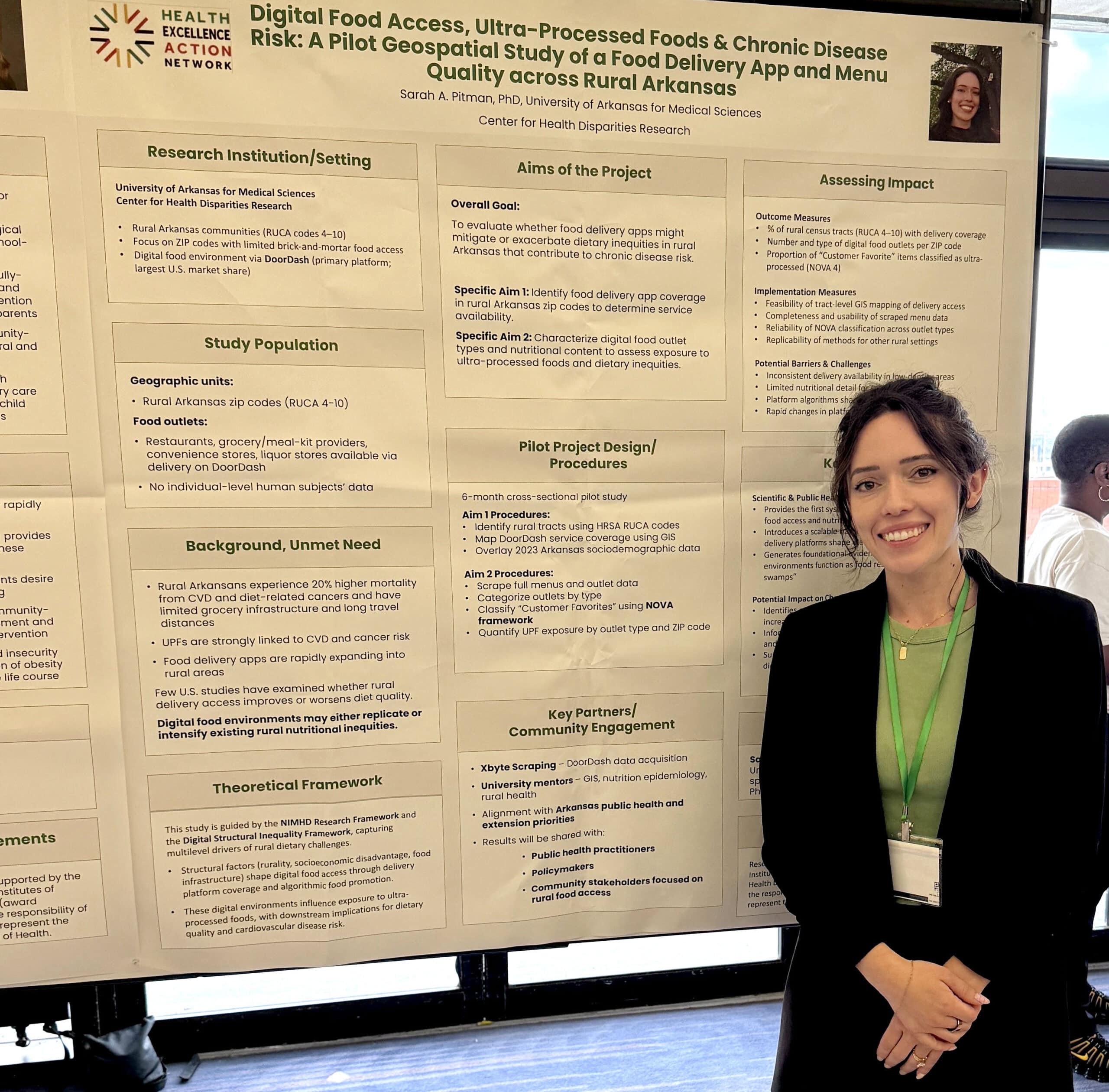
Sarah Pitman, Ph.D., a postdoc in the UAMS College of Public Health, presented her research during the 2026 American Community Gardening Association National Conference.
Supported by the UAMS Center for Research, Health, and Society, Pitman’s project examines how food delivery applications may influence food access and dietary quality in rural communities by evaluating delivery coverage, retailer types, menu offerings, and the availability of ultra-processed foods on a popular food delivery platform across rural Arkansas.
“Presenting at the conference was a valuable opportunity to connect with researchers, community organizations, and practitioners who are working directly to improve food access in rural communities,” Pitman said. “I especially enjoyed speaking with individuals involved in community gardening, local agriculture, and other grassroots efforts to increase access to fresh, locally grown foods. Those conversations provided important perspectives on how digital food delivery may fit within existing community food systems and sparked ideas for future research on how delivery services might support — or complicate — access to healthy foods in rural areas.”
Ohene-Marfo, a doctoral student, participated in the panel discussion, “Food Insufficiency and Child Exposure to Household Smoking and Vaping.” Ohene-Marfo said he embraced the opportunity because it relates to a pair of public health challenges that disproportionately affect children: food insufficiency and exposure to secondhand smoke and vaping.
“Health problems rarely occur alone,” he said. “People who struggle financially typically face more than one stressor at once. Unfortunately, children are the ones who suffer the most from this.
“Food insufficiency among children has many negative implications for their growth and development, and secondhand smoke and aerosol also affect the health of children. The combination of food insufficiency with secondhand smoke and vaping creates an unhealthy situation that affects the child’s health immensely.”
For Ohene-Marfo, speaking at the conference provided him the opportunity to grow as a researcher, to communicate research findings to a broader audience, and to contribute to ongoing discussions on food insecurity.
“Presenting our research at the conference was important to me because it provided an opportunity to share the Child and Family Health Promotion Lab findings, led by Ashley Clawson, Ph.D., on an issue that affects entire families,” he said. “The conference allowed me to share our findings, learn from others, and receive feedback that can improve our work. Our findings revealed to conference participants that providing food not only solves hunger issues but possibly might prevent children from exposure to secondhand smoke or vaping.”
Pittman said the conference was personally beneficial due to it giving her a chance to receive guidance on her research from experts in food access, community food systems, nutrition, and public health. She also liked how the event provided a pathway to making connections and identifying potential opportunities for future collaborations and community-engaged research.
“I learned a lot about innovative community-based approaches to improving healthy food access and gained a broader understanding of how local food initiatives are addressing barriers faced by underserved populations,” she said.

Edward Ohene-Marfo, MPH, a doctoral student in the UAMS Fay W. Boozman College of Public Health, participated in a panel discussion during the 2026 American Community Gardening Association National Conference, held in downtown Little Rock.
Fagan, who is the director of the Center for Research, Health, and Society and a professor in the College of Public Health, said the conference properly promoted how collaborative work is vital to solving most food and health shortcomings.
“Arkansans want to end food insecurity, and they are passionate about gardening,” she said. The conference theme, “Pathways to Food Security: Localizing Solution,” is about ending chronic disease burden through community gardening, which has been shown to increase fruit and vegetable intake, reduce stress, improve mental health, and increase socialization. Hosting this meeting helped us better understand the enormous capacity we must engage in solving public health problems at the local levels.
“Community-academic partnerships that prioritize community health issues and community-involved solutions are critical to ending the cancer and cardiovascular disease burden in our rural and urban communities,” she added.
Ohene-Marfo said having the opportunity to lead a breakout session was something he will always cherish.
“In each section I attended, I learned important information,” he said. “Equally important, I was able to interact with other conference attendees, researchers, and farmers.”
“I loved the variety of people that made up the audience, from the farmer to the academic researcher. Everyone’s voice was heard throughout the discussions we had at the conference. Together, we’ll make the world a happy place to live through food security.”
Pitman enjoyed learning about the types of community gardening, food access, and nutrition initiatives taking place across the country.
“The conference brought together researchers, community leaders, educators, and advocates who are passionate about improving access to healthy foods,” she said. “I appreciated the opportunity to discuss my research with individuals from numerous backgrounds. I enjoyed learning how community-based food system strategies can support health and well-being in both urban and rural communities.”