UAMS Researcher Receives up to $1.05 Million to Study Lymphatics During Leishmaniasis, a Neglected Tropical Disease
| LITTLE ROCK — A researcher at the University of Arkansas for Medical Sciences (UAMS) has been awarded up to $1.05 million to study how to manage cutaneous leishmaniasis — a parasitic disease transmitted by bites from infected sandflies that can leave lifelong disfiguring scars.
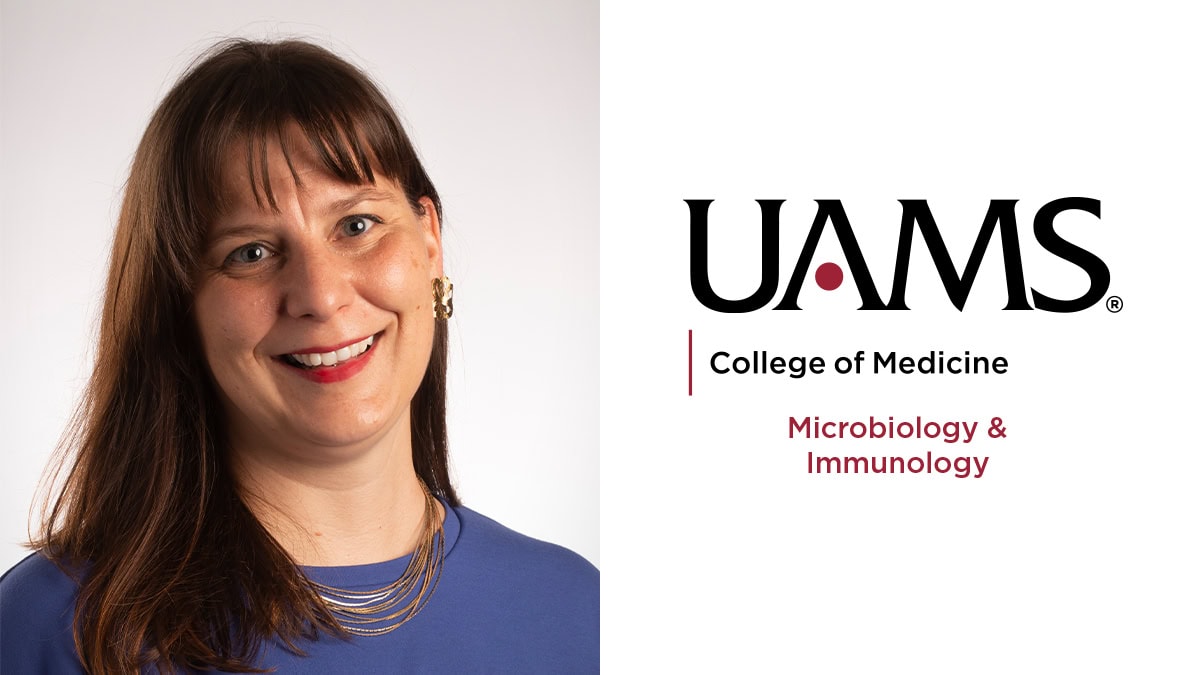
Tiffany Sue Weinkopff, Ph.D., an assistant professor in the UAMS College of Medicine Department of Microbiology and Immunology, is the primary investigator on the project, which will receive the funds over three years from the Advanced Research Projects Agency for Health (ARPA-H), an agency within the U.S. Department of Health and Human Services.
The project, led by ARPA-H Program Manager Kimberley Steele, M.D., Ph.D., is part of ARPA-H’s Emerging Health Innovators (EHI) initiative.
According to the agency’s website, “We support impactful biomedical research and development that other private or federal funders might dismiss as too risky. Our programs tackle the seemingly impossible by compressing the time it takes for innovations to reach the bedside into years instead of decades.”
Weinkopff said her lab is working with researchers at New York University Langone Health to adapt existing technologies that modulate the lymphatic system to enhance immune responses and reduce tissue inflammation. Her lab wants to help develop transformative diagnostic and therapeutic technologies that address gaps in understanding and treating infectious diseases, including leishmaniasis, that use the lymphatic system to spread.
“Securing this ARPA-H award is a major milestone for UAMS and Arkansas,” said Jon Blevins, Ph.D., professor and chair of the department. “By targeting the lymphatic system, an underexplored yet critical regulator of immunity, Dr. Weinkopff’s work has the potential to transform how we treat complex infections, including cutaneous leishmaniasis and beyond.”
Leishmaniasis is considered a neglected tropical disease (NTD) — one of about 20 that are caused by a variety of pathogens that primarily thrive in impoverished, tropical regions and are associated with devastating health, social, and economic consequences.
Cutaneous leishmaniasis primarily causes sores and ulcers that are often self-healing but that can leave permanent, disfiguring scars and may lead to severe mucosal infections. It is considered endemic in 90 countries, and more than half of those infected are children.
“While human leishmaniasis is not considered endemic in the United States, locally acquired infections are emerging in the southern United States as sandfly ranges are expanding with climate change, highlighting a growing need for effective interventions,” Weinkopff said.
According to the World Health Organization, current treatments for cutaneous leishmaniasis include drugs that aren’t well-tolerated, must be taken for a long time, and are difficult to administer.
“Presently, drugs against the parasite are extremely toxic, and there is no human vaccine,” Weinkopff said.
“The lymphatic system is a critical but under-targeted component of human health, with no effective early diagnostics or targeted therapies despite its central role in immune regulation and pathogen clearance,” Weinkopff said. “Infectious diseases like cutaneous leishmaniasis exploit the lymphatic system to evade immune detection, leading to chronic infection and persistent inflammation that current treatments do not adequately address.”
She said foundational studies have shown that the lymphatic system plays an active role in regulating immune responses and disease outcomes in infection, and preclinical testing is underway to evaluate how modulation of lymphatic function impacts infection control, inflammation, and tissue repair.
She said her research is aimed at offering patients improved control over infection, reduced tissue damage and better long-term health outcomes, while offering new therapeutic options for clinicians that address both immune dysfunction and inflammation.
The research also hopes to open new avenues for diagnostics, therapeutics, and vaccine development, while providing healthcare systems with better tools to manage chronic and emerging infectious diseases, reducing disease burden and long-term complications.
“The project is an exciting collaborative effort between UAMS and NYU, supported and directed through ARPA-H’s Emerging Health Innovators (EHI) initiative,” she said. Weinkopff said Hayden Roys, a research technician at UAMS, will assist her lab in the project.
ARPA-H provides oversight of the projects it funds and requires researchers to meet strict performance specifications.
UAMS is the state’s only health sciences university, with colleges of Medicine, Nursing, Pharmacy, Health Professions and Public Health; a graduate school; hospitals in Little Rock and Bryant; an orthopaedic hospital; a main campus in Little Rock; a Northwest Arkansas regional campus in Fayetteville; a statewide network of regional campuses; and seven institutes: the Winthrop P. Rockefeller Cancer Institute, Jackson T. Stephens Spine & Neurosciences Institute, Harvey & Bernice Jones Eye Institute, Psychiatric Research Institute, Donald W. Reynolds Institute on Aging, Translational Research Institute, and the Institute for Community Health Innovation. UAMS includes UAMS Health, a statewide health system that encompasses all of UAMS’ clinical enterprise, including partnering hospitals in Pine Bluff, Helena-West Helena, Mena, and Warren. UAMS is the only adult Level 1 trauma center in the state. UAMS has 3,813 students and 1,030 medical residents and fellows, and two dental residents. It is the state’s largest public employer with about 12,000 employees, including 1,200 physicians who provide care to patients at UAMS, its regional campuses, Arkansas Children’s, the VA Medical Center and Baptist Health. Visit www.uams.edu or uamshealth.com. Find us on Facebook, X (formerly Twitter), YouTube or Instagram.###