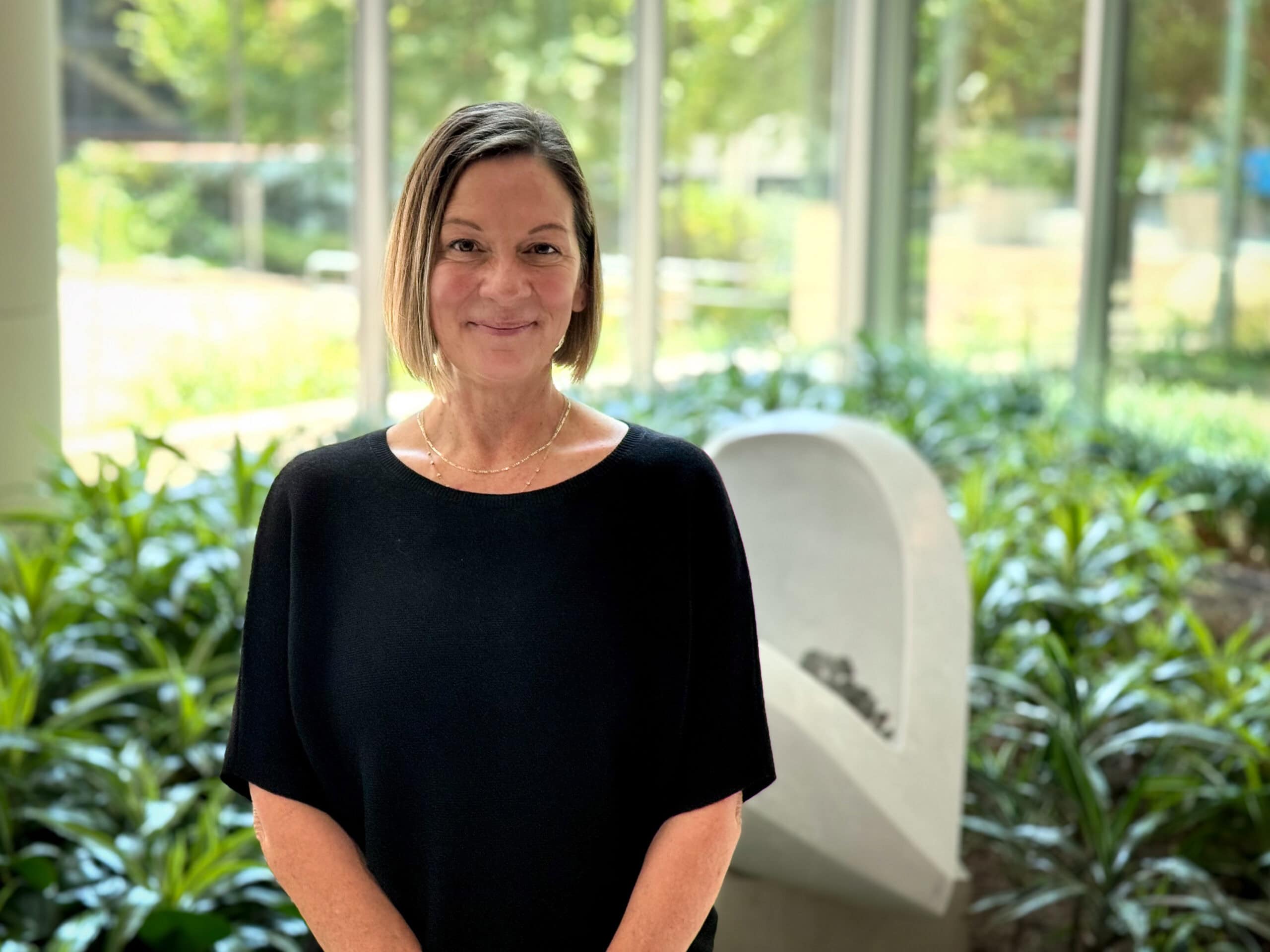
UAMS Performs State’s First Liver Transplant for Colon Cancer Patient
| Crystal McCoy has always paid close attention to her health.
A nurse who lives in Hot Springs with her husband and three children, she prioritizes maintaining a healthy lifestyle and understands the importance of being aware of her body.
When she noticed an unusual lump in her abdomen during a yoga session in December 2024, she knew it was worth looking into. Assuming it was a hernia, McCoy decided to schedule a visit with her primary care provider.
The provider agreed with her assessment but ordered some testing to be sure. Instead of a hernia, the results showed lesions on her liver.
McCoy was referred to a local oncologist and diagnosed with colon cancer that had metastasized her liver. Though the primary tumor was in her colon, tumors had spread to both lobes of her liver.
Remembering the shock of it all, she said, “My liver was just huge. There were so many tumors that I was able to feel them from the outside. Seeing the scan and how much it had taken over everything — I was so emotional.”
Following her diagnosis, McCoy focused on keeping herself as healthy and as strong as she could to support her treatment. By February 2025, she had started chemotherapy every two weeks. In July, the primary tumor on her colon was successfully surgically removed. By August, she restarted chemotherapy for the tumors that remained on her liver.
As McCoy underwent treatment, her oncologist worked closely with specialists at the University of Arkansas for Medical Sciences (UAMS) to explore every available treatment option.
One of those specialists was Katie Rude, M.D., a transplant hepatologist with the UAMS Gastroenterology Clinic. Rude treats patients with all forms of liver disease and is also the medical director of the liver transplant program, evaluating potential transplant patients and providing follow-up care.
Until recently, a liver transplant would not have been considered for someone like McCoy.
Traditionally, liver transplants were only an option for patients with chronic liver disease and liver scarring, or cirrhosis, that would ultimately limit their lifespan. Within the last year though, liver transplants have become a potential treatment option for patients who meet specific criteria and have colorectal cancer that has spread to the liver.
Part of Rude’s role in evaluating patients for transplants is considering how well they will follow healthcare provider recommendations and care for their new liver. By every measure, McCoy was identified as an ideal candidate for the procedure.
In January 2026 — one year after her initial diagnosis — McCoy was added to transplant waiting list. Just one month later, she received a life-changing phone call. A donor liver was available.
In February, Rude’s multidisciplinary team at UAMS performed Arkansas’ first ever liver transplant for a colon cancer patient.
Six months later, McCoy is now cancer free.
Reflecting on her journey, she said, “I’m sure anyone in this situation would feel this way, but this gift I’ve gotten — I don’t want to waste it. I understand that somebody made this choice for me and that’s amazing. Gratitude is not a big enough word.”
McCoy credits her family for helping her every step of the way. Their support — combined with doctors she says were absolutely amazing — was reassuring for her. After the initial shock, she never felt like this was something they couldn’t handle together. She put her trust in her expert care team and felt guided through this whole process.
“These doctors and nurses — they have dedicated their whole lives to this — and they’re so good at it. Even though they worked in different places and had different specialties, they all worked in harmony for this outcome. It’s a miracle to me.”
Now, McCoy is looking ahead to a life with her husband and three kids, treasuring the opportunity she has to someday meet her future grandkids.
For Rude, McCoy’s successful transplant represents a future of new possibilities for patients facing the same diagnosis.
“We’re evaluating more patients,” Rude said, “I think over time, we will absolutely do more for patients with colon cancer that has metastasized to the liver.”
She hopes McCoy’s story encourages more people to consider organ donation.
“If you’re not already an organ donor, I would say, please consider becoming one. It really does save lives.”