View Larger Image
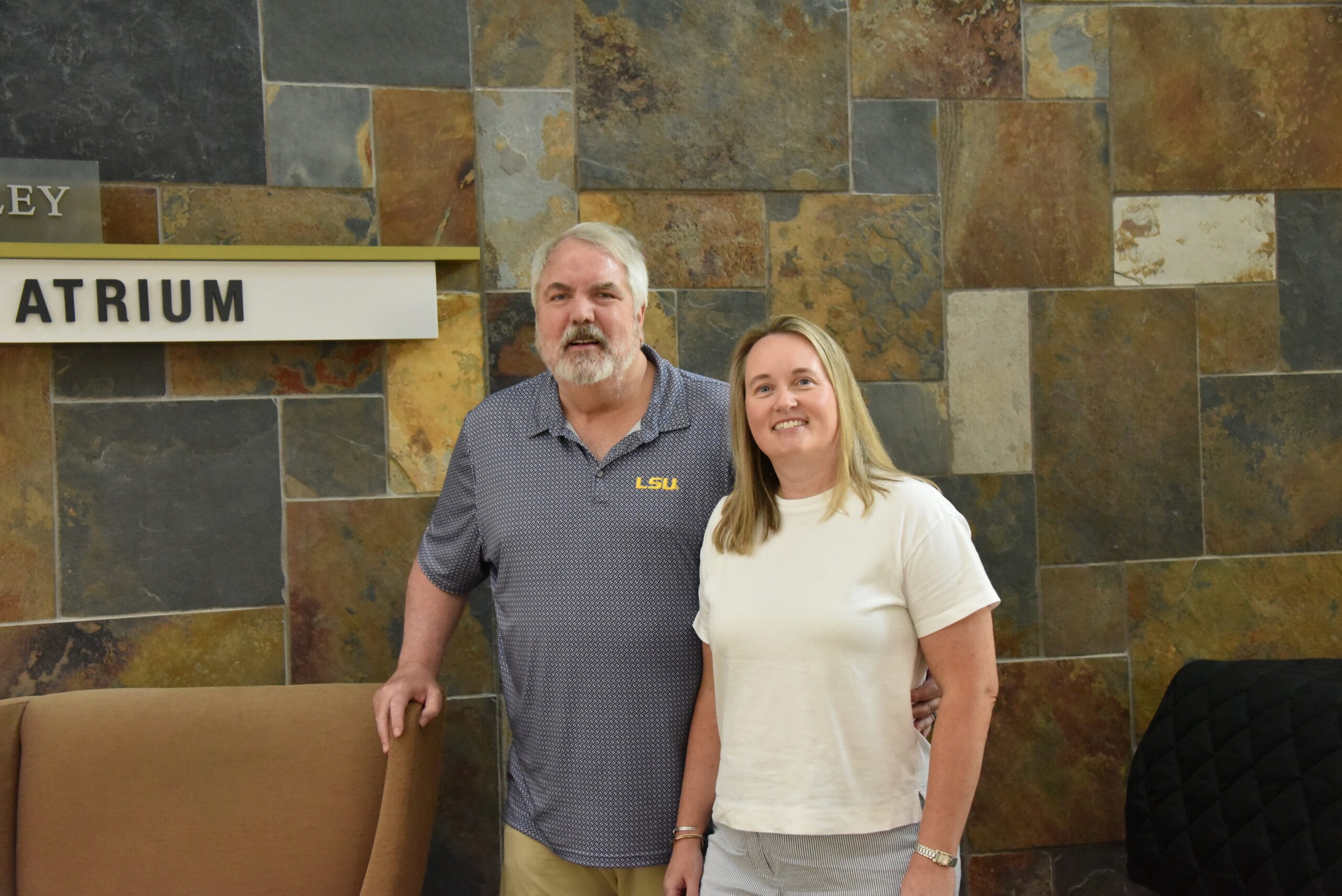
Chris and Liz Seab of Billings, Montana. Chris Seab was initially diagnosed with myeloma in May 2024 and has received two stem cell transplants.
Image by Nathan Tidwell
Myeloma Patient, Family Credit UAMS for His Improved Outlook
| Chris Seab has come a long way since his myeloma diagnosis, and the future looks better every day.
On a recent visit with his wife Liz to the Winthrop P. Rockefeller Cancer Institute’s Myeloma Center at the University of Arkansas for Medical Sciences (UAMS), the Seabs, who live in Billings, Montana, talked about Seab’s progress.
“Our visit here last summer was very positive, and this recent trip was even better,” he said. “My numbers have continued to drop.”
An injury to his back in March 2024 while skiing turned out to be the first sign of a problem.
“It felt like a bad muscle pull,” Chris Seab said. “I went to a chiropractor, but it didn’t help. Acupuncture was a little better, but not much.”
The issue escalated on a business trip.
“One day I was walking to my hotel, and it felt like if I took one more step I’d fall over — the pain was so intense,” he said. “I spent the next couple of days in bed before I was able to drive home.”
“Memorial Day weekend I was working at home in our kitchen and my pen fell to the floor,” he continued. “I went to pick it up, fell out of the chair, and I couldn’t get back up. I called my wife, and she and my son managed to get me to the emergency room.”
Tests revealed he had shattered the L5 vertebrae in his lower back, and he likely had cancer. Additionally, Seab had lesions all over his body, including the legs, pelvis, shoulder, and spine.
“An orthopaedic surgeon thought they may need to put a rod in my left leg,” he said.
Liz Seab started calling around for recommendations and “Go to UAMS,” was the most common response.
Chris Seab’s first appointment was in June 2024, when he was assigned to Myeloma Center physician Maurizio Zangari, M.D.
More testing at UAMS revealed the seriousness of his condition.
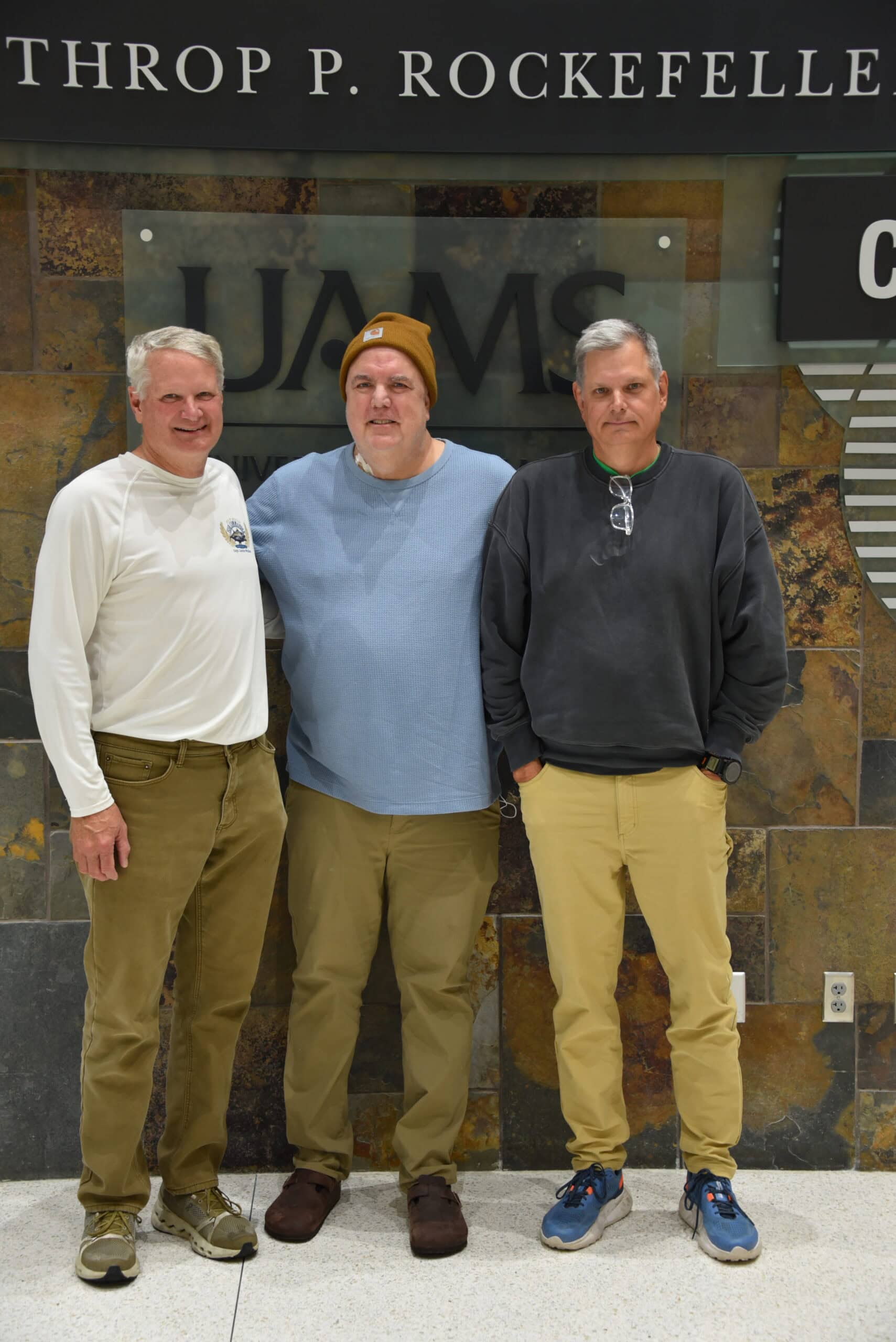
Burke Moran (left) and Rob Guba (right), longtime friends of Chris Seab, led a cross-country bike ride in January and February 2025 that raised more than $30,000 for myeloma research at UAMS.
“He had about 90% cancer in his bone marrow,” Liz Seab said.
Stem cell transplant was the prescribed treatment, with the first harvest of cells occurring in July 2024.
“I remember watching the Fourth of July fireworks out of my hospital room window,” Chris Seab said.
The first stem cell transplant took place in October 2024, followed by a second in February 2025. The second transplant was done on an outpatient basis.
“I enjoyed that a lot more,” he said. “I had a lot more freedom not being stuck in a hospital bed.”
While Seab was at UAMS for treatment last year, two of his childhood friends established the nonprofit Wheeling for Healing and embarked on a cross-county e-bike ride to raise money in support of him and others affected by multiple myeloma. Their effort resulted in $30,000 for myeloma research at UAMS.
Liz Seab said the Stem Cell Transplant Unit provided excellent care for her husband.
“They explained everything as we went along. We felt comfortable that anything that came up could be managed,” she said.
Following the transplants, Zangari prescribed a regimen beginning in April 2025 that included cancer drugs carfilzomib and isutaximab. This is when things began to steadily improve.
“There was no leveling out with my results, the numbers gradually came down,” Chris Saeb said.
“He’s doing very well,” said Zangari said. “We’re in a maintenance phase now.”
“His blood work looks really good,” Liz Seab added. “He now goes for local treatment once a month.”
She also noted an unexpected result.
“Chris’ lesions are resolving themselves,” she said. “We didn’t realize that would be possible.”
More than two years after the initial diagnosis, the path looks clearer.
“Everything is positive,” Chris Seab said.
“One of the greatest things we did was making the choice to come here,” Liz Seab said. “I think the trajectory of Chris’ recovery would have been very different if we didn’t have the benefit of the depth of experience and knowledge present at UAMS.”