Clawson Leads Project Designed to Prevent Youth Nicotine Use in Rural Arkansas
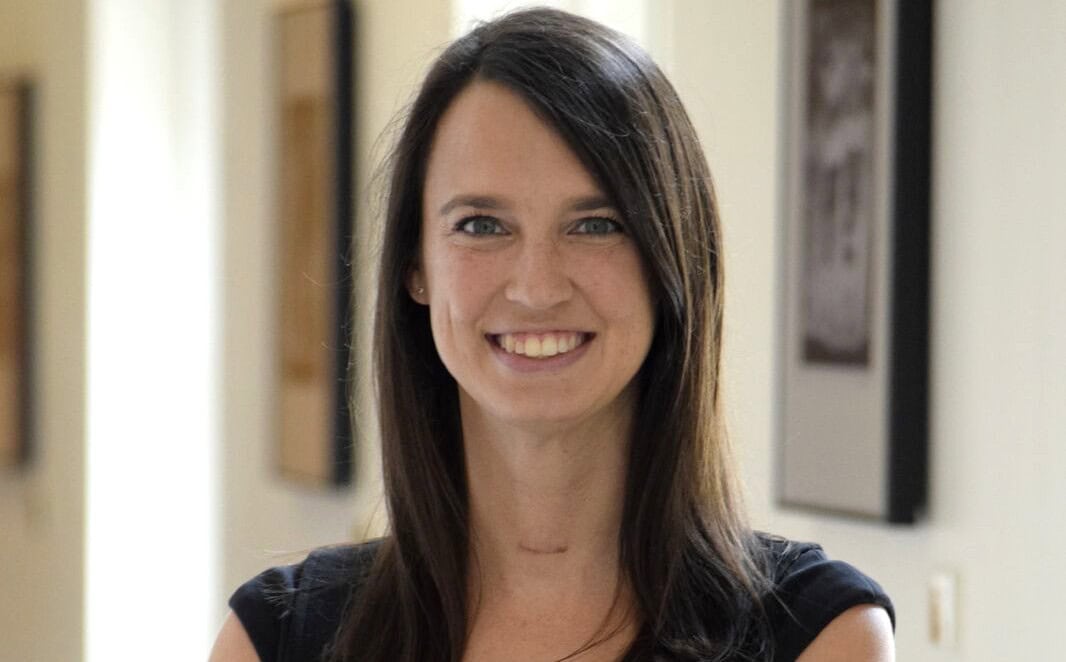
| Ashley Clawson, Ph.D., faculty in the University of Arkansas for Medical Sciences (UAMS) Fay W. Boozman College of Public Health, is leading a study designed to prevent and reduce nicotine use by youths in rural Arkansas.
Clawson, associate professor in the department of Health Behavior and Health Education, is conducting the study, “Improving School-Parent Coordination to Prevent Nicotine Use Among Rural Youth.”
“Our focus is capturing the unique experience of rural schools, rural students, and rural families,” she said. “My heart is in working with the community and working with families and parents to help empower them and give them tools to prevent their kids from using nicotine.”
The pilot project launched in September and will continue through May 2029. Supported by $711,000 from the National Institutes of Health National Heart Lung and Blood Institute, the research will help Clawson develop a tool that addresses the barriers to implementing youth nicotine use prevention efforts in rural Arkansas.
Students in the sixth grade, who attend a school deemed rural by the National Center for Educational Statistics, are the focus of the study. The investigators will recruit participants from every region of the state.
“The goal is to meet school needs and to meet family needs by working with them through a process where they’re directly involved with creating an intervention that has both a school-based nicotine use prevention program and a parent-based prevention program,” she said. “It increases the parent-school coordination to prevent rural students from using nicotine products.”
Through previous research, Clawson learned that nicotine use among youths in Arkansas is a major issue. She’s also discovered that most school professionals need more resources to implement evidence-based school prevention and intervention plans. Regarding the parents, including those who use nicotine themselves, data reflects that they want their kids to avoid using nicotine and tobacco products.
Learning about past attempts to implement nicotine use prevention methods at home and at school, and the outcomes, is important to the study.
“We want to learn what has worked and what are the things that have gotten in the way,” Clawson said. “We’ll discuss evidence-based school prevention programs and evidence-based family approaches in terms of what parents can do to prevent their kids from using nicotine.”
“Then we will ask schools and parents to identify the barriers that they think would get in the way of delivering these school and home prevention programs, and we will ask students about the best ways to get students engaged in these programs,” she said. “This information, in turn, will be used to create strategies designed to support schools and parents in overcoming these barriers so they can deliver these programs and to increase student engagement.”
“It’s about creating a coordinated intervention between a school and parents, where schools and parents are working together to prevent rural middle school students from using nicotine,” she said.
Additionally, for the project Clawson is partnering with Stanford University. She’ll be working with them to adapt their school-based prevention toolkit based on the feedback received from Arkansas schools and families.
“My goal is to help improve the health of Arkansas’ families,” she said. “If we can help students get on a path where they are nicotine free, it will help prevent a huge burden that Arkansans have regarding tobacco-caused disease.”
“The hope is in the long run we’ve improved the overall health of these students across their life span.”