UAMS Neurodiversity Conference Provides Vibrant Platform for Discussion
| In a world increasingly focused on inclusivity, the University of Arkansas for Medical Sciences’ “2024 Neurodiversity Conference: Bridging Health Care Gaps into Adulthood” provided a vibrant platform for discussing the importance of neurodiversity in workplaces, schools and communities.
Held at the UAMS Schmieding Center for Senior Health and Education in Springdale, the Sept. 27 event attracted a diverse range of voices, and its mission was clear: to foster a society that embraces neurological differences as a source of strength.
The conference brought together professionals, advocates and individuals from various walks of life, all advocating for a more inclusive future in which neurodiversity is celebrated, not marginalized.
Neurodiversity refers to the concept that variations in brain function and behavioral traits are natural and should be recognized as part of human diversity. This includes conditions such as autism spectrum disorder (ASD), attention-deficit/hyperactivity disorder (ADHD), dyslexia and other cognitive differences. Instead of viewing these conditions as disabilities that need to be “fixed,” the neurodiversity movement emphasizes acceptance, understanding and accommodations to ensure everyone can contribute their unique talents.
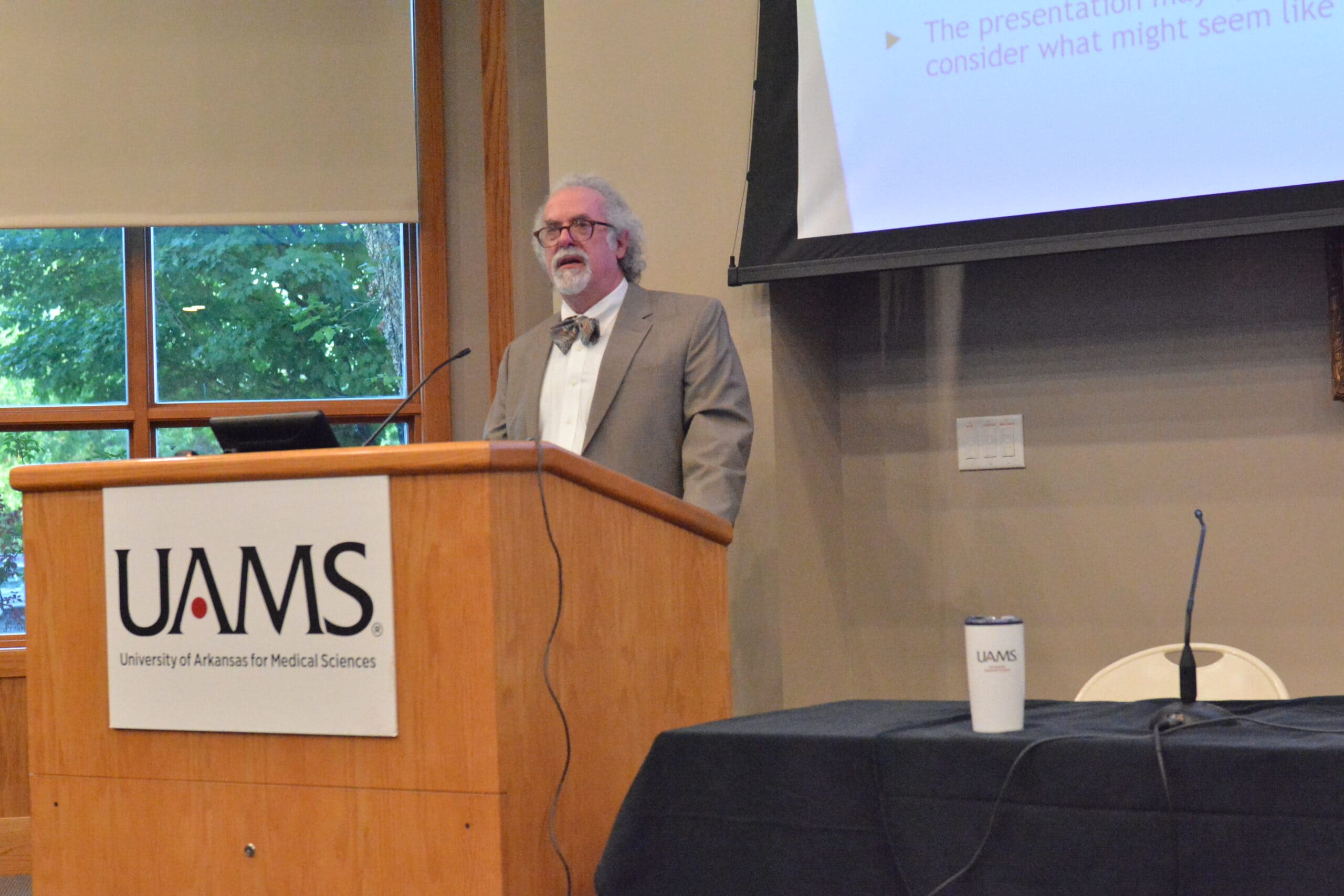
Jeffrey Clothier, M.D., medical director of the UAMS Psychiatric Research Institute, opened the conference with a keynote address, which focused on meeting the health care needs of neurodiverse adults.
“While neurodivergent children and adolescents have resources through Arkansas Children’s Hospital, there is little organized for their care after age 18,” Clothier said. “Many of these patients end up in mental health clinics that may not be suited to address the medical issues that arise. Comorbid medical conditions often require ongoing care and surveillance for new symptoms. These patients are challenging for a number of reasons, including difficulty communicating their symptoms as well as sensitivity to stimulation. By bringing together providers and advocates, we hope to share resources and build a welcoming medical community for the care of these vulnerable patients.”
Clothier’s presentation was followed by a panel discussion from neurodiverse adults and family advocates, who discussed some of the challenges they face in health care environments, including the sometimes difficult transition from a pediatric to an adult clinic environment. Panel members included:
- Lauren Tonymon – Tonymon is a graduate of the Arkansas Career Training Institute Arts Program. She volunteers at Beautiful Lives Boutique in Fayetteville as well as participating with Fayetteville 99 Balloons/BeFriends and the AbleTalks organizations.
- Noel Rodriguez – Rodriguez was born in Pachuca, Hidalgo, Mexico, to an American mom and a Venezuelan dad. He is currently in a program for special needs people, and he works with Children’s Therapy TEAM and UAMS. In his spare time, he enjoys speaking to groups about cerebral palsy and disabilities.
- Susan Tonymon – Susan Tonymon is a counselor for the UAMS Northwest Regional Campus Student Wellness Program.
- Betts McCombs – McCombs is one of the founders and board members of SLS Community, a Fayetteville nonprofit that is working towards a “live, work, play” community for neurodiverse adults. She serves on the Arkansas Legislative Task Force on Autism and is the mother of Anna McCombs, the inspiration for SLS Community.
- Ashton McCombs IV – McCombs is the executive director and a board member at SLS Community. He is the older brother of Anna McCombs.
- Ron Cook– Cook has worked passionately for over 25 years to promote good communities. As a father of two sons, he advocates for the rights and potential of neurodiverse youth and adults. He currently serves as the major gifts officer for UAMS.
The conference also spotlighted education and the critical role it plays in shaping how society views neurodiversity. Aleza Greene, Ph.D., spoke of the importance of supporting neurodiverse undergraduates on college campuses. Greene has been working with students on the autism spectrum since 1999 and is the director of the Autism Support Program at the University of Arkansas, a program for undergraduate students who have ASD and require extra support to be successful in college.
In the afternoon, UAMS students participated in a simulation activity that was focused on listening to advocates describe unique challenges that neurodiverse individuals can face in health care settings and developing best practices to support them with responsive care that is patient- and family-centered.
A session led by Amy Oswalt, Ph.D., and Brent Williams, Ph.D., focused on meeting the workforce needs of neurodiverse adults. Oswalt is the project coordinator for the Seamless Transition for ARkansas (START) program at the University of Arkansas, which focuses on work-based educational opportunities for neurodiverse students in rural Arkansas. Williams joined the University of Arkansas faculty in 2002 as program coordinator of the Rehabilitation Education and Research Program. He has held leadership positions in professional organizations including the American Rehabilitation Counseling Association and the National Council of Rehabilitation Education and also holds positions on the board of directors for two local independent living centers as well as the Arkansas Governor’s Independent Living Advisory Board.
While the conference celebrated many successes, it also acknowledged the challenges that remain. Societal stigmas surrounding neurodiversity still exist, and access to adequate resources, such as diagnosis and therapy, remains an issue for many families.
“With growing support and greater understanding, there’s no doubt that neurodiversity will continue to enrich society as a whole,” Clothier said. “The hope is that conferences like this one will help dismantle the barriers that have historically prevented neurodivergent individuals from reaching their full potential, creating a world where every mind matters.”
The conference was made possible in part by the support of a UAMS Chancellor’s Circle Grant.