View Larger Image
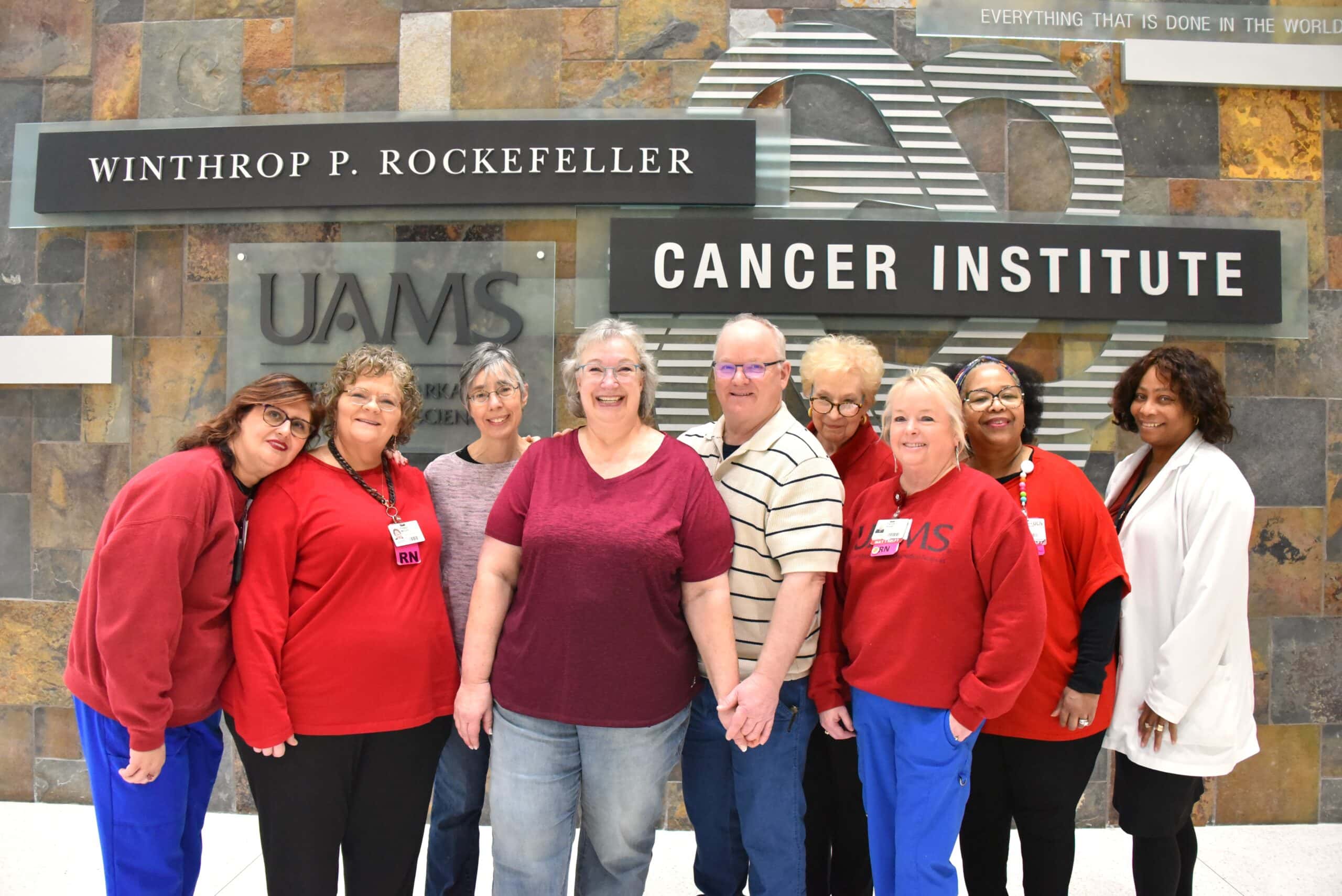
On Feb. 6, Ulrike and Mark White were welcomed back to Winthrop P. Rockefeller Cancer Institute.
Image by Andrew Vogler
Former Myeloma Center Patient Returns to UAMS to Mark 20 Years Since Diagnosis
| Ulrike White recently returned to the University of Arkansas for Medical Sciences (UAMS) Winthrop P. Rockefeller Cancer Institute to mark 20 years of her diagnosis and treatment of granulocytic sarcoma and acute myeloid leukemia (AML), a rare form of blood cancer that, at the time of her diagnosis, was not well understood.
White, former chair of Languages at then-Pulaski Technical College in North Little Rock who now lives in Germany with her husband, Mark, a retired Secret Service agent originally from Arkansas, was determined to celebrate the anniversary at the place that saved her life.
“I became sick in February 2006 and just knew that I needed to go to a hospital,” said Ulrike White, who lived in Little Rock at the time.
“She called me to tell me that she was feeling very sick,” added Mark White. “I came home, and she had been throwing up and couldn’t keep down water or food.”
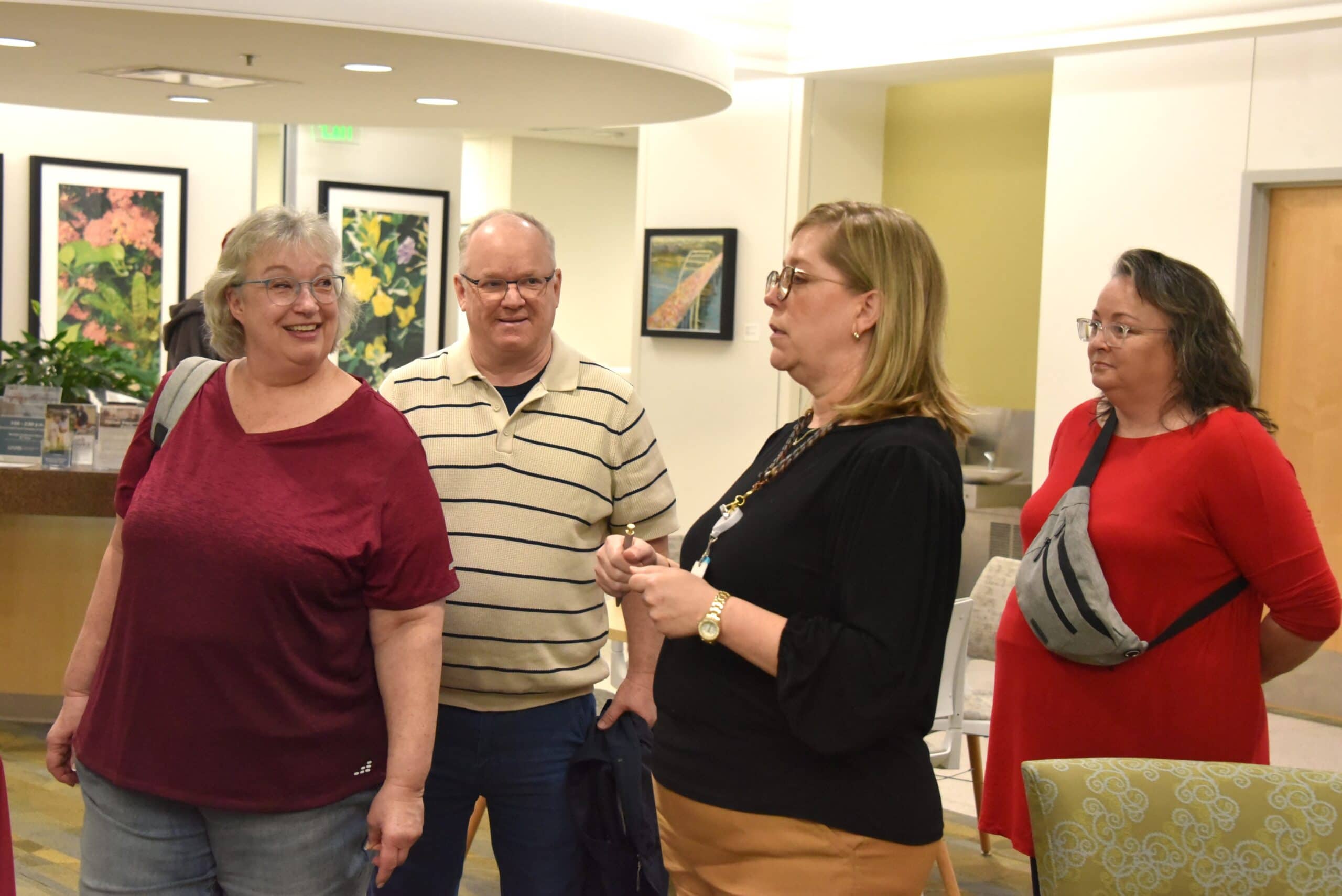
Ulrike and Mark White were welcomed with a small ceremony in Patient Support Pavilion at the Cancer Institute.Andrew Vogler
She went to a local hospital, but her condition didn’t improve. Frustrated by her worsening health, Mark White had a frank conversation with her doctor who immediately shifted the focus of her care, a critical decision that led to the uncovering of a serious illness.
“Eventually they did a barium swallow, and as soon as they did that, the doctor said that they had to do emergency surgery,” said Mark White. “The doctor said her intestines were blocked, but he didn’t know why. However, he did believe that it was most likely lymphoma and removed about 26 inches of her small intestine.”
Her care team also took a sample and sent it to MD Anderson Cancer Center in Houston, where doctors were intrigued, wanting to see the full report. Even though her local oncologist did not believe much could be done, a call to MD Anderson was placed to see if she could get in to be evaluated. The couple was able to travel to Houston where the oncologists at MD Anderson ran many tests including her first of many bone marrow biopsies. This confirmed a diagnosis of granulocytic sarcoma and AML.
“They said they only knew of a few other cases that were similar, with an individual from China who had survived,” said Mark White. “However, the others with this disease didn’t live past six months. It was certainly scary to hear.”
The oncologists there designed a treatment plan, which included many rounds of chemotherapy and mentioned that this course of care might give White some valuable time. They also offered the choice of starting the treatment in Texas or returning home to Arkansas, where, according to their doctors, a former colleague of theirs, Elias Anaissie, M.D., was at the UAMS Myeloma Center. Anaissie had been recruited by Bart Barlogie, M.D., Ph.D., to join him at UAMS.
“They told us that Dr. Anaissie was an excellent oncologist and researcher who was working on tandem stem-cell transplants for multiple myeloma patients and that this would be the best direction for care, so we went,” said Ulrike White.
Coming to UAMS was a decision that proved lifesaving.
Anaissie and the team at UAMS accepted her case, studied it, ordered many tests, and suggested that she undergo a tandem autologous transplant with off-protocol chemotherapy doses. Yet, even after the procedure, her care team was not always optimistic that she would recover.
“There were a couple of times when they said she might not make it through the night and that I needed to be prepared,” said Mark White. “And so, I would sit by her side and when she would wake up in pain, I’d tell her that it was going to be better tomorrow — if you just keep going, it’ll be better tomorrow.”
“Even though the treatment was done outpatient, there were days when all I wanted to do was stay in the hospital bed and not move,” said White. “But the nurses as well as Dr. Anaissie always stopped by while the infusions were running, insisting that I sat up, or walk down the hallway. No one accepted me feeling sorry for myself.”
On Feb. 6, Ulrike and Mark White toured the Medical Oncology Clinic, the place that saved her life, and thanked the clinical teams who cared for her.
“We were so impressed by the treatment we received, not just the doctors but especially the nurses. From tips about oral care to ice chips, a warmed blanket or a simple, ‘hang in there,’ we felt that everyone cared and that they would do anything they could,” said White. “It started when I entered the building. Every morning when I came in, the receptionist greeted me by name with an encouraging smile. The janitors kept the buildings’ facilities super clean, the pharmacy filled my prescriptions as fast as they could. So many people work here and everyone made my journey possible.”
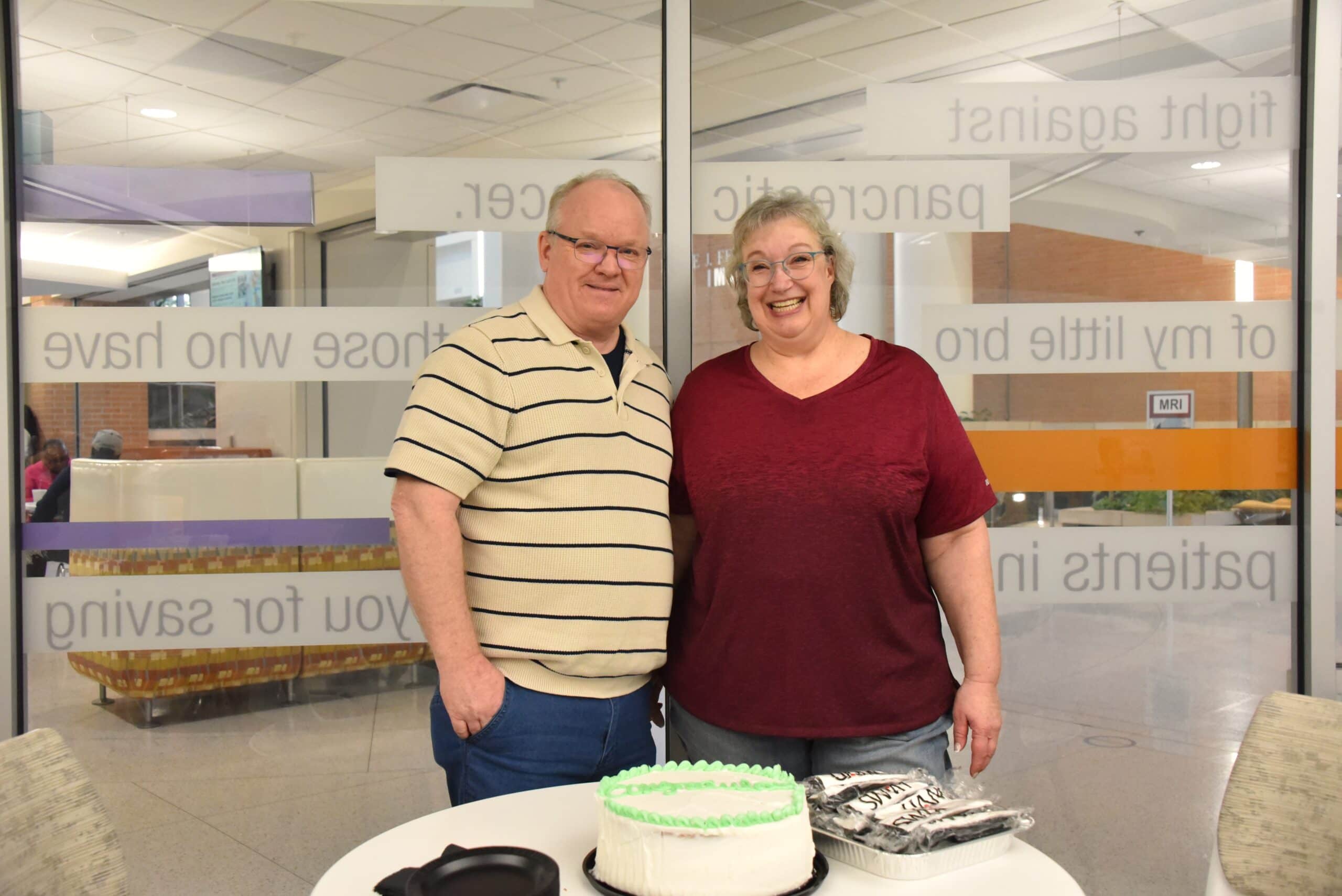
Mark and Ulrike WhiteAndrew Vogler
“The nurses were especially phenomenal — we’ve said for years we need to go back so they know that what they’re doing for patients like my wife makes a huge difference,” said Mark White. “Because of the people at UAMS, Ulrike is still in my life.”
After receiving the second stem-cell transplant in July 2006, Ulrike White returned to teaching at Pulaski Technical College that August.
“The road to a full recovery was not always easy, there were follow up surgeries, a flu-season turned into scarlet fever, and the effects of the harsh chemo therapies can still be felt to this day,” said White. “I have had a life. I have been given the opportunity to continue to teach, and make a difference for our kids, who now have kids and that is worth everything.
“I am truly grateful to all the people at UAMS, whose care at the time allowed me to live this life today,” added White. “And I’d like to say to everyone involved in patient care and treatment at UAMS today, please know how truly invaluable your work is. Thank you.”