View Larger Image
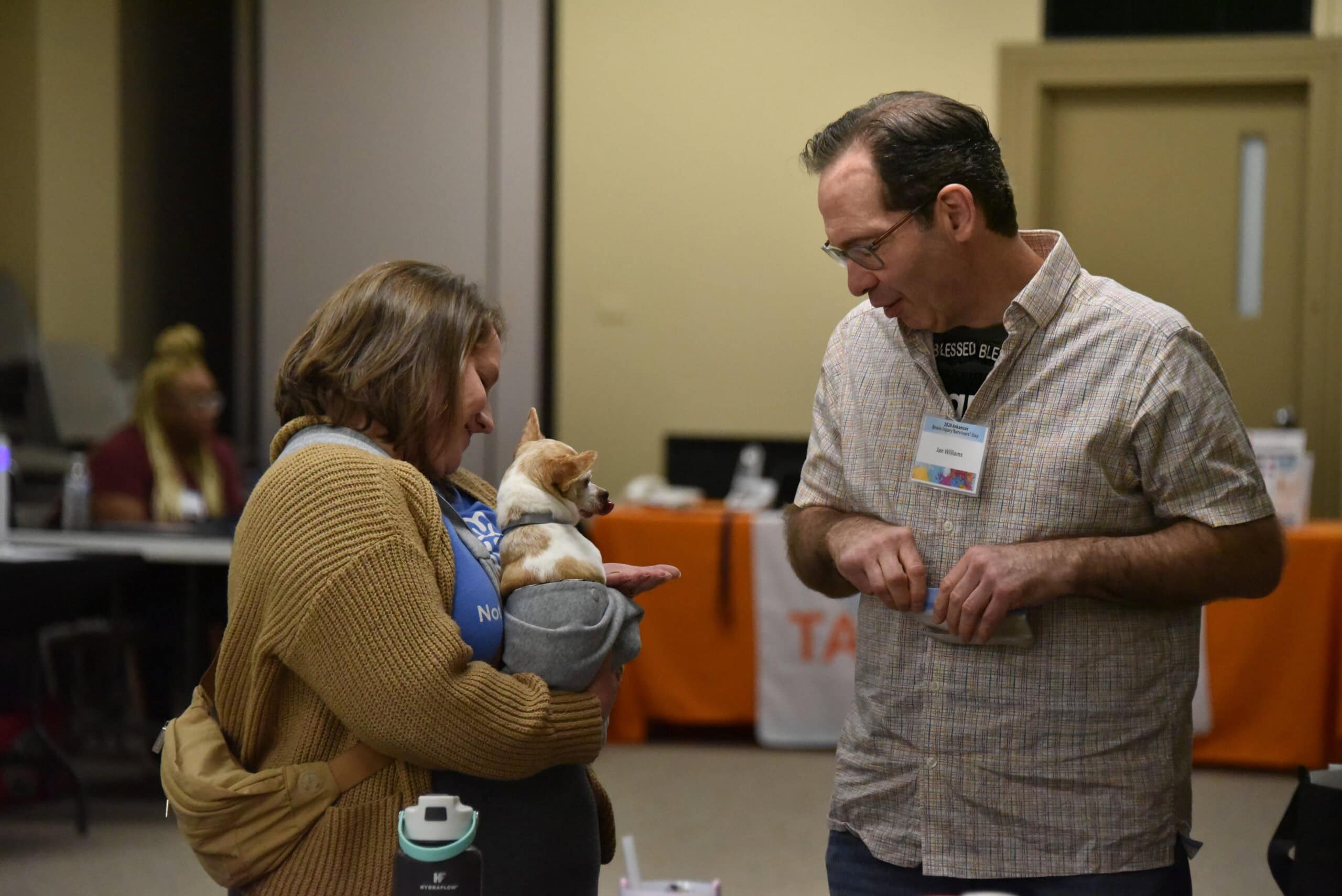
Jan Williams (right) chats with another attendee during the 2026 Arkansas Brain Injury Survivors’ Day.
Image by Chris Carmody
Brain Injury Survivors’ Day Highlights Community’s Resilience, Camaraderie
| In the 38 years since an automobile accident changed his life, Jan Williams has seen how much the field of brain injury rehabilitation has progressed.
“Right after my injury, I went through the same kinds of speech and language, occupational, and physical rehab that so many people know so well,” he said. “But that was a long time ago, and our medical understanding of the brain has grown tremendously since then.”
His decadeslong search for support eventually led him to the University of Arkansas for Medical Sciences (UAMS), where he found a flourishing community in the UAMS Brain Injury Program, part of the Institute for Digital Health & Innovation. Williams recently reunited with many of those community members at the 2026 Arkansas Brain Injury Survivors’ Day, an annual event that recognizes the resilience of survivors and their caregivers.
The free educational event, held March 27 at the Second Baptist Church Downtown in Little Rock, is organized by the UAMS Brain Injury Program with support from Chris Crain Hyundai.
Brandi Dawson, a health educator with the Brain Injury Program, said 100 people attended this year’s event, which gives survivors an opportunity to learn, play games, and enjoy the company of their peers.
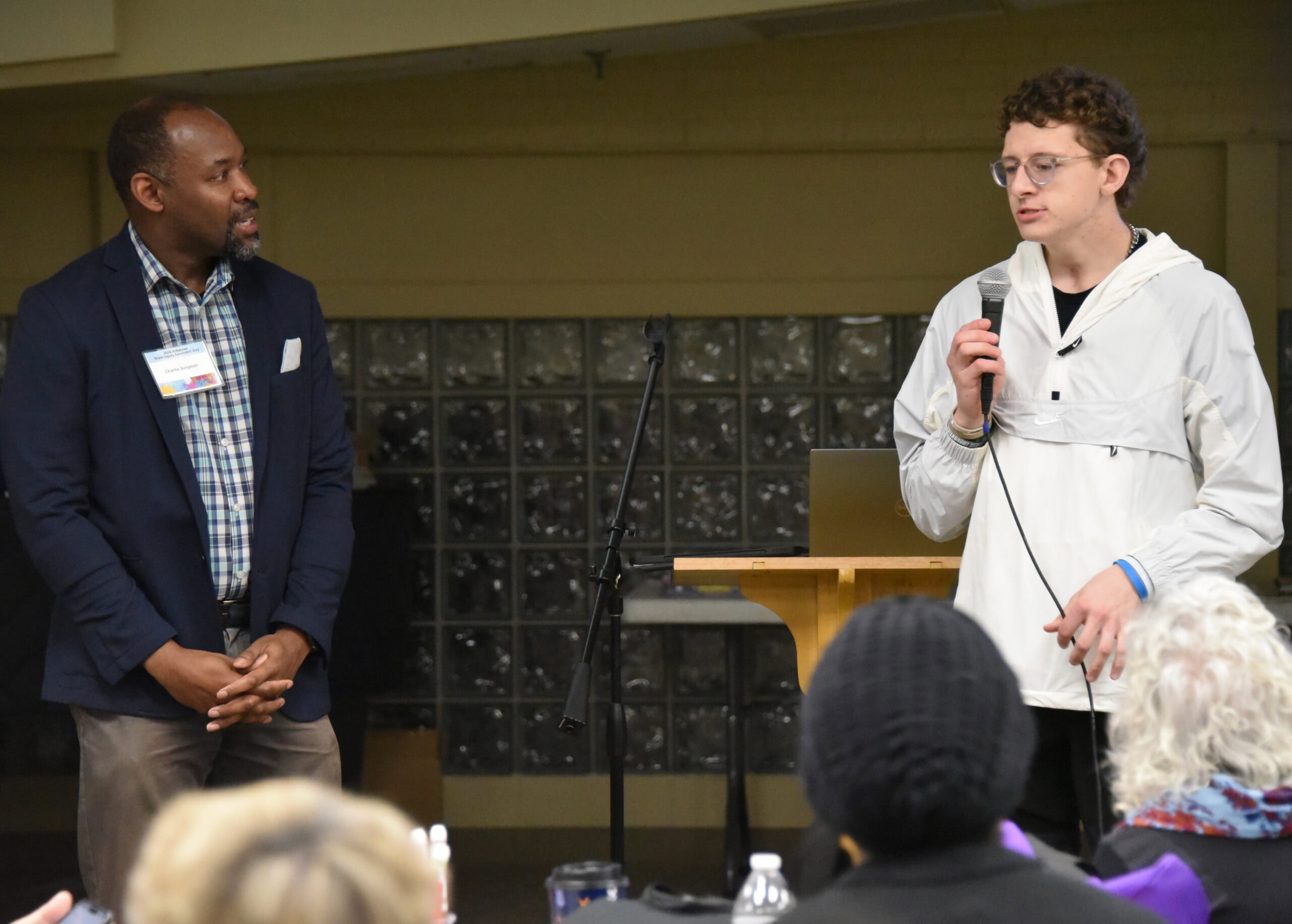
An attendee offers some words of inspiration for his fellow survivors as Charlie Simpson, a therapist at the Arkansas Relationship Counseling Center, looks on.Image by Chris Carmody
“This is really the one time of the year when we have a chance to celebrate and educate these survivors while they’re all in the same room,” she said. “They come in here and know they are going to find the support they need.”
The event featured a panel discussion involving several people who serve as mentors to their fellow survivors. Williams took part in the panel, giving the audience an overview of the nearly four-decade journey that brought him to the Brain Injury Program.
Williams, a Little Rock native, was 17 years old when the vehicle he was driving was struck by a bus in 1988. After a yearlong deferment, he was able to enroll at Kalamazoo College in Michigan, where he earned a degree in economics. But he describes that period as a “false rehabilitation.”
“It was not a real rehabilitation in the organized clinical sense; it was something pieced together by me, my family and my school,” he said.
In the ensuing decades, Williams participated in rehabilitation programs in Massachusetts and Ohio, and he noted that the quality of those programs improved over time. However, one of his biggest steps came after he decided to return to Little Rock in 2022.
“One of the best things I have ever done for myself was contacting UAMS to ask whether it had a brain injury rehab program,” he said.
Williams said the Brain Injury Program has taught him many techniques that have helped him in his everyday life. His efforts as a mentor have also played a critical role in his rehabilitation.
“When you mentor another injured person, you’re also shown something about yourself,” he said. “You know what you have lived through, and you notice what has changed. You recognize your own progress in a way that is very hard to do when you’re alone.”
The event included segments that focused on the physical and emotional workings of the brain.
Rani Gardner, M.D., associate professor in the UAMS College of Medicine’s Division of Physical Medicine and Rehabilitation, delivered a keynote address that gave attendees a better understanding of traumatic brain injuries. She talked about the neural pathways that connect different parts of the brain, as well as how the brain forms new paths in the wake of an injury.
Charlie Simpson, a therapist at the Arkansas Relationship Counseling Center, led a discussion about how to build family connections after a brain injury. The session gave survivors an opportunity to speak candidly about their struggles — and celebrate their triumphs.
Each speaker was met with a round of applause that reflected the survivors’ desire to uplift one another.
“They’re honestly just one big family,” Dawson said. “This is the most supportive, most kind group of people I have ever met.”
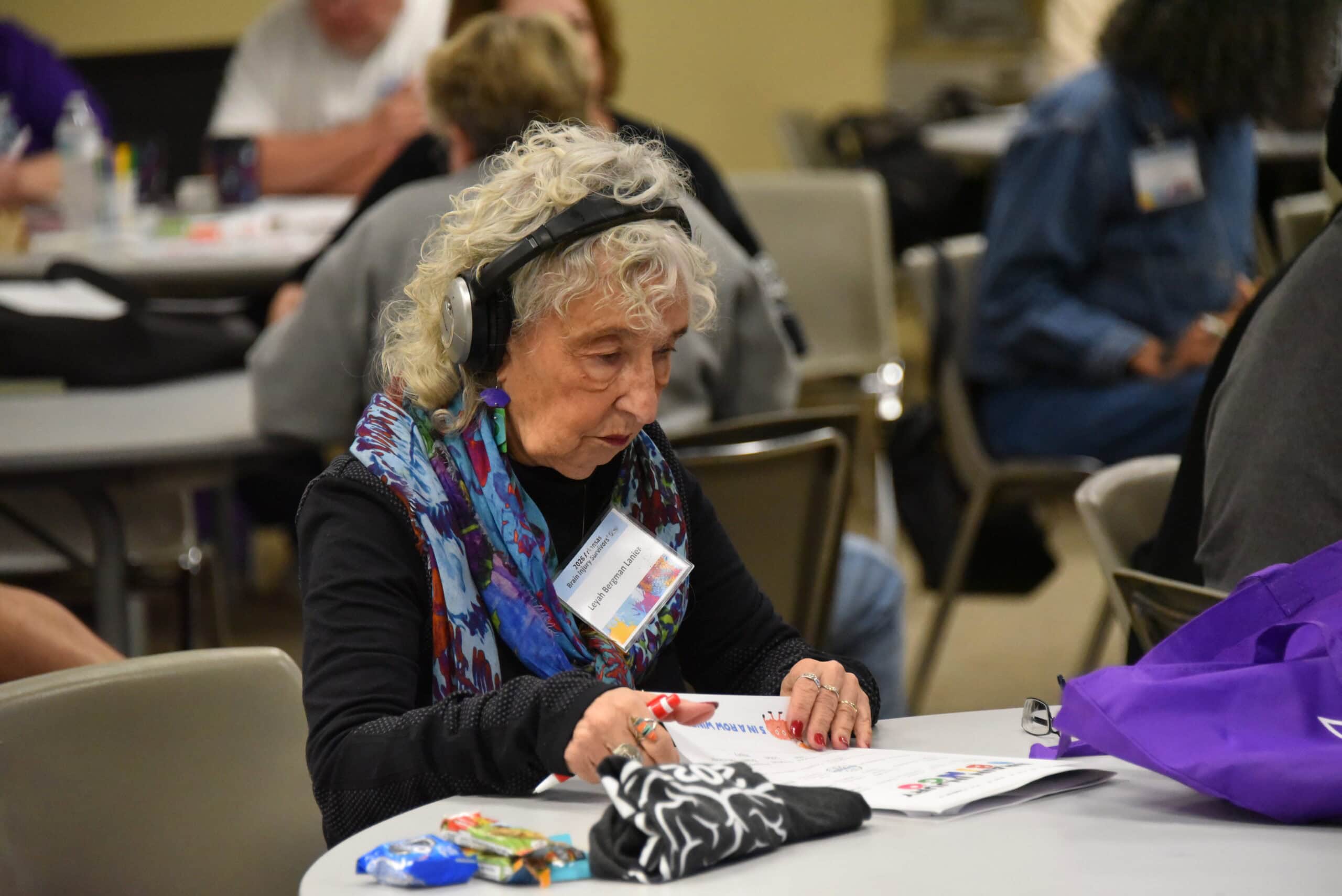
Leyah Bergman Lanier takes part in an activity during Arkansas Brain Injury Survivors’ Day.Image by Chris Carmody
Leyah Bergman Lanier is one of the community’s newest members, but she said she has already felt that support.
Bergman Lanier, former executive director of the Spring International Language Center at the University of Arkansas at Fayetteville, was injured in 2009 when a driver ran a red light and struck her vehicle. Despite a doctor’s prediction that she would never work again, she continued to serve in her executive role until the center’s closure in 2025.
But Bergman Lanier said she struggled to cope with the effects of her brain injury.
“I didn’t find any real help,” she said. “I’ve had good therapists, but they didn’t specialize in brain injuries.”
A few months ago, she decided to enroll in the RISE to Thrive initiative, a program developed and led by neuropsychologist Chrystal Fullen. It was during the 12-week virtual workshop, which provides brain injury survivors with practical tools for daily life, that Bergman Lanier first heard about Arkansas Brain Injury Survivors’ Day.
Bergman Lanier and her husband traveled from Fayetteville so she could attend the event. As she made her way through the venue, she was warmly embraced by peers who were seeing her in person for the first time.
“I didn’t find a community like this until I joined the Thrive workshop,” she said.