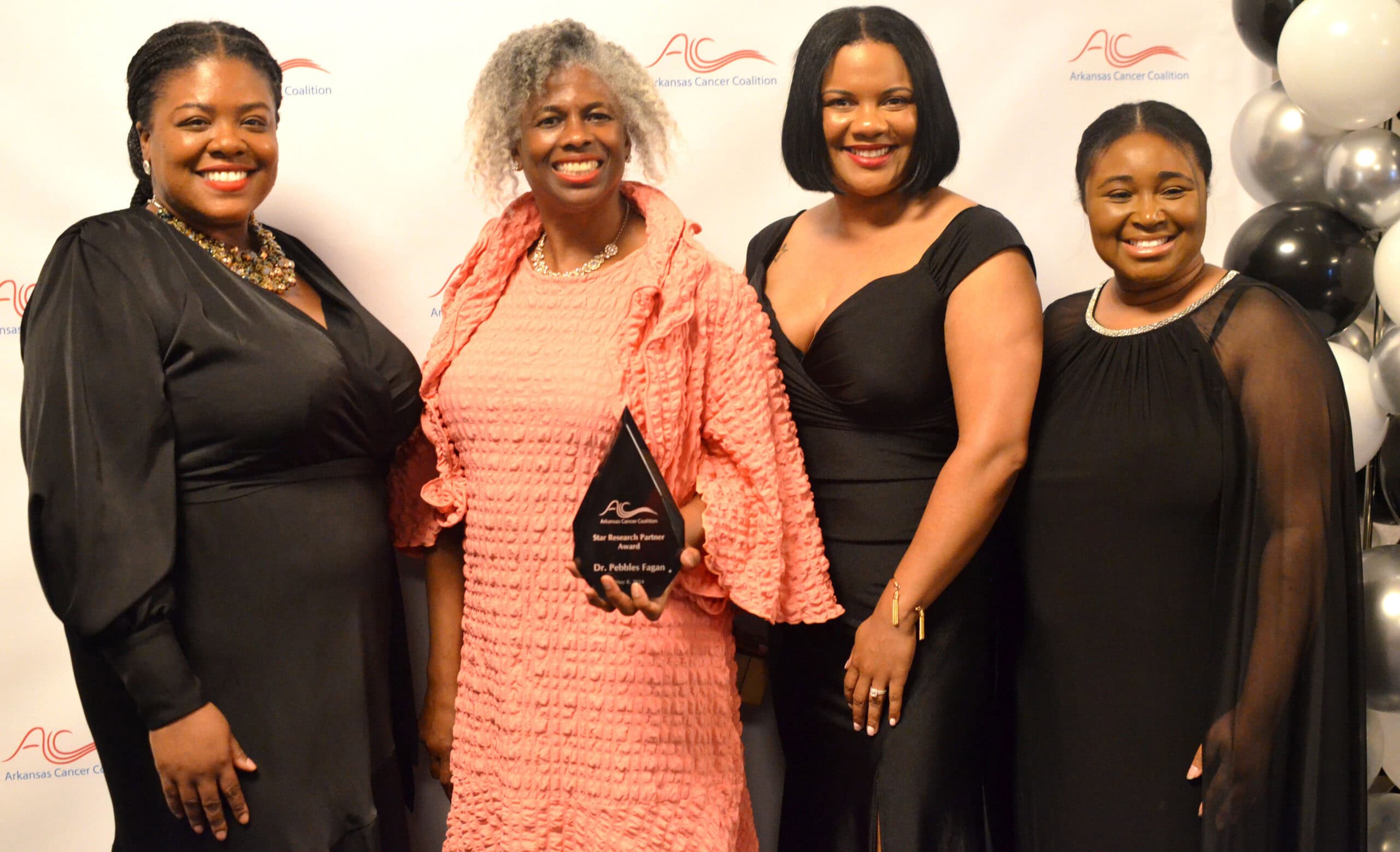
College of Public Health Collaborates with Arkansas Cancer Coalition
| The University of Arkansas for Medical Sciences (UAMS) Fay W. Boozman College of Public Health conducts cancer research throughout the state. Its partnership with the Arkansas Cancer Coalition is among the reasons why it has such a wide footprint.
“It matters that we work with the community on common goals,” said Pebbles Fagan, Ph.D., MPH, professor in the College of Public Health. “As it relates to research, because the coalition plays a critical role in reaching Arkansans to reduce the cancer burden in the state, it’s a natural fit to work with them. It’s a win, win situation for everyone.
“We work with the coalition to advance our research and capacity building goals. They work with us to advance their research and coalition goals. It’s a bidirectional relationship and we all win, especially the community.”
The coalition works to reduce the burden of cancer by promoting evidence-based practices such as screenings and educating people about cancer prevention. The organization also creates a safe space for people to discuss solutions for Arkansas’ cancer issues. Additionally, the coalition has established a statewide network of entities that provide various forms of cancer support.
“No one can reduce Arkansas’ cancer burden alone,” Fagan said. “It requires a collective effort from a coalition of people. It’s fitting that we engage in partnerships with organizations like Arkansas Cancer Coalition that bring people to the table to tackle a problem we all care about.
“We would not have made as much progress as we have made with any of our grants, without the Arkansas Cancer Coalition’s dedication and commitment to partnerships in research and capacity building,” she said.
The coalition has also made an impact through the development of the state’s Arkansas Cancer Plan. The plan emphasizes the value of working as a cohesive unit to address cancer in the state.
“Once we all came together regarding cancer control, it allowed us to implement evidence-based strategies so we could decrease mortality rates in Arkansas,” said Trena Mitchell, executive director of the coalition.
From the outset, the College of Public Health has factored heavily in the cancer plan. Mitchell complimented the school for its commitment to creating and supporting evidence-based strategies to address cancer.
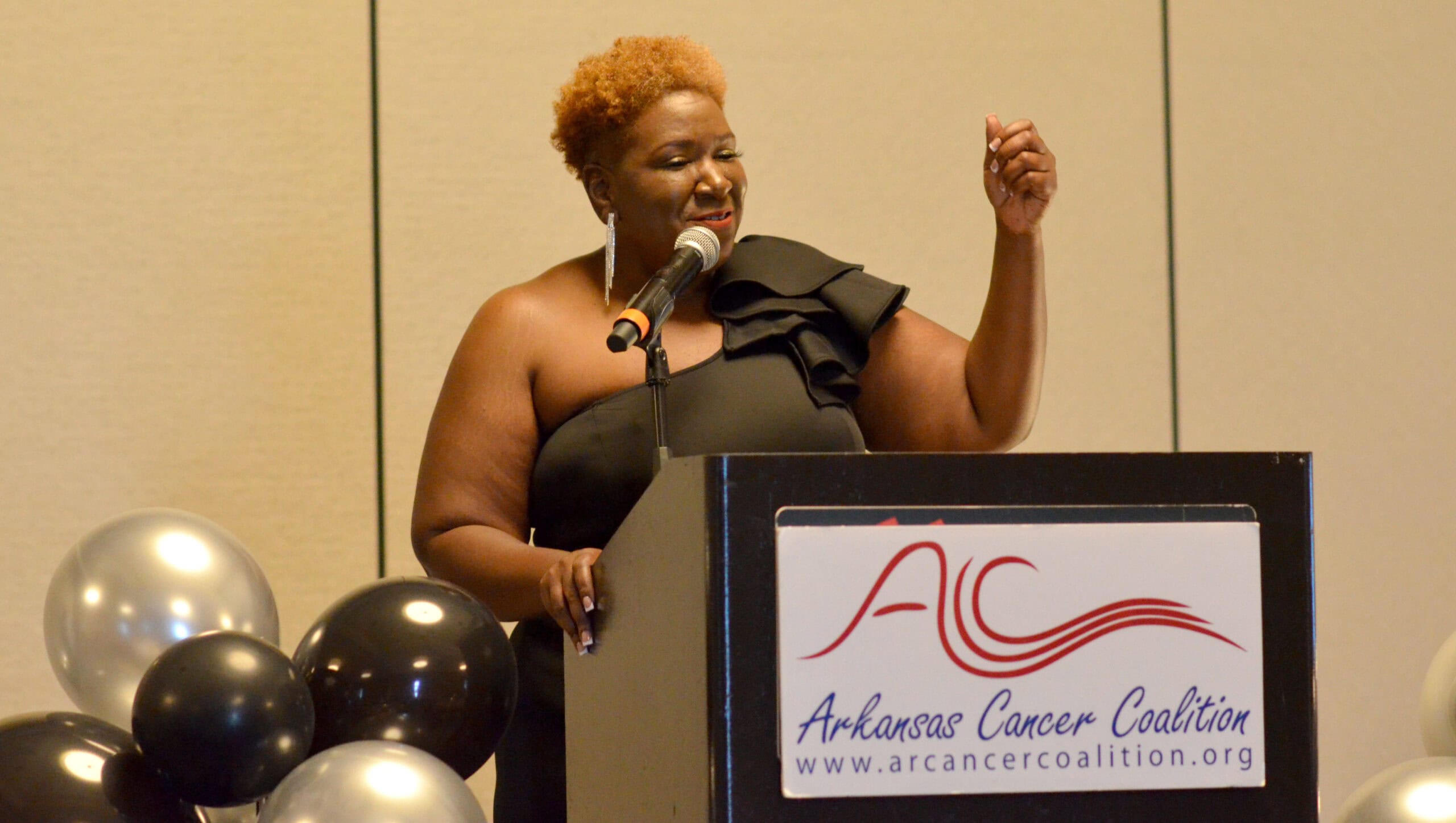
Trena Mitchell, executive director of the Arkansas Cancer Coalition, addresses attendees of an event hosted by the organization.
“We go into the communities and establish relationships,” Mitchell said. “However, we don’t have the educational component that’s needed to ensure that the community gets the necessary resources. The College of Public Health is there to provide us with frameworks that work on the community level.
“We combine the relationships we have with the community along with the science that’s needed — and that’s why it’s important to work with the College of Public Health,” she said. “You must have both aspects covered to give the people what they need. We need research and researchers in our mission to help Arkansans.”
Mitchell credits the college for how it not only provides key research but also survey instruments for collecting and translating data. The goal to help Arkansans fuels the partnership between the coalition and the college, according to Mitchell.
“We’re here to make sure you are well prepared to deal with cancer when it impacts someone you are closed to,” she said. “We have all levels of cancer-related expertise working together to accomplish one goal.
“The coalition and our partnering groups know the cancer screening guidelines,” Mitchell said. “We also equip the community with how to prevent certain cancers and also, if a person has cancer, the types of support they can receive.”
Fagan said community engagement cores should be productive partnerships with community organizations, but it should not stop there. It is important for all researchers to have productive, meaningful, bidirectional partnerships with community partners.
“We should not go to our partners only when we need something like assistance with recruitment or entry into a community. That is not a partnership. Relationship and allyship are the key words. Everyone must benefit. Sometimes we do not get it right. But, like any relationship, we have to do the hard work to make relationship work.”
“The cancer coalition has community credibility. People respect that organization. Those things matter regarding how one can make an impact. It all starts with trust and relationship building.
“We will never stop working with the Arkansas Cancer Coalition,” she added. “We hope that they never stop working with us. I have enjoyed working with the coalition. The relationship and allyship are priceless.”