View Larger Image
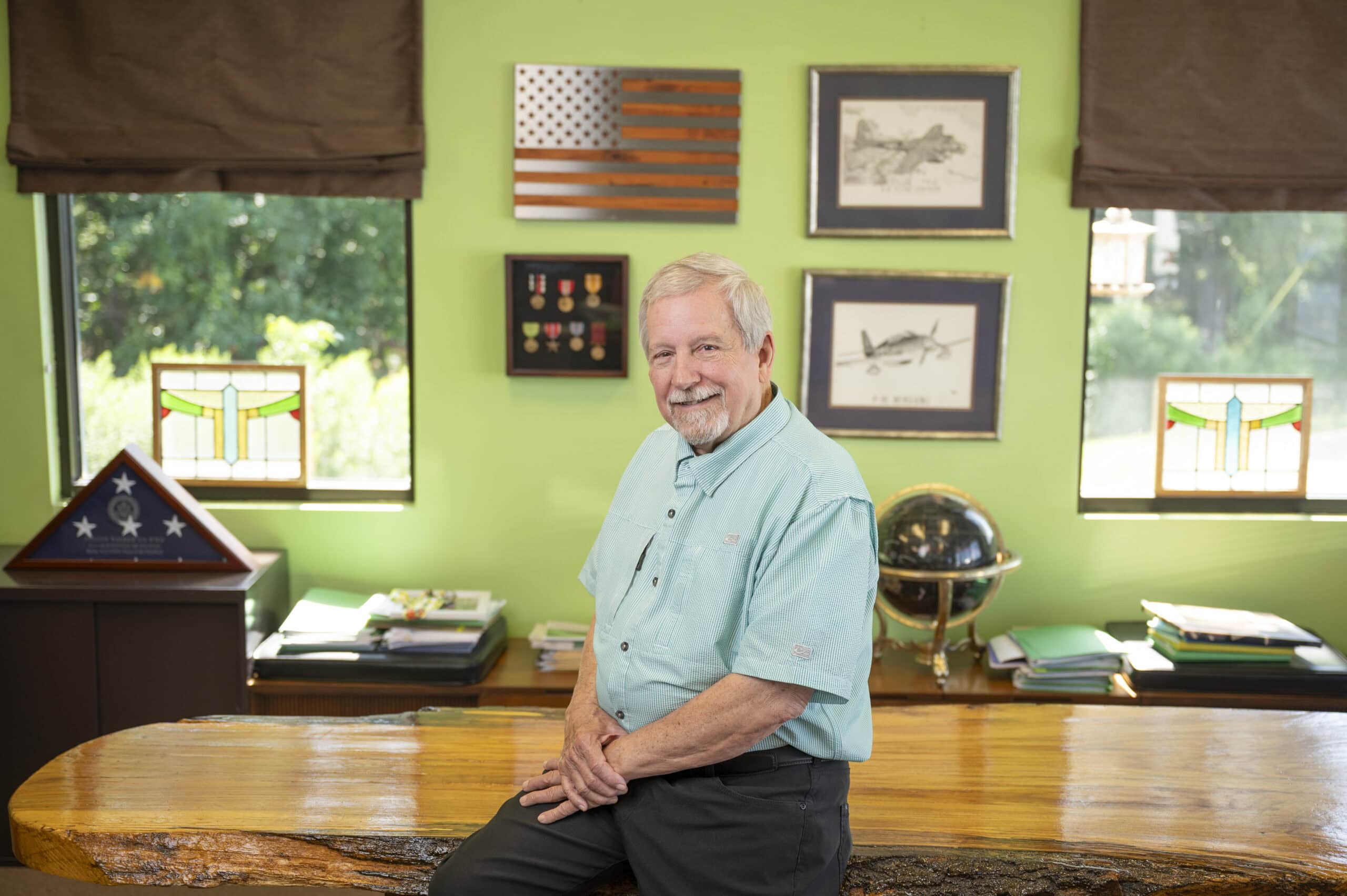
Gary Robertson's myeloma journey began in July 2024.
Image by Evan Lewis
Myeloma Patient Thankful for Chance to Participate in Clinical Trial
| Gary Robertson thinks his multiple myeloma diagnosis came at good time, if such a thing is possible.
“I’d never any had health issues to speak of,” said the 73-year-old Robertson, whose multiple myeloma diagnosis coincided with a groundbreaking clinical trial at the University of Arkansas for Medical Sciences (UAMS) Winthrop P. Rockefeller Cancer Institute.
His referral to the Cancer Institute’s Myeloma Center occurred as the Myeloma Center was looking for patients to participate in an international clinical trial.
This study, known as CARTITUDE-6, aims to determine whether chimeric antigen receptor (CAR) T-cell therapy or autologous stem cell transplant is more effective for newly diagnosed multiple myeloma patients. The trial is being conducted at more than 100 locations worldwide and more than 25 locations in the United States. UAMS is the only participating institution in Arkansas.
Myeloma Center physician Carolina Schinke, M.D., co-leader of the Cancer Institute’s Cancer Therapeutics Research Program, explains the difference between the two procedures.
“Autologous stem cell transplant is a process where stem cells are collected from a patient and stored. The patient is then given high-dose chemotherapy to obliterate the bone marrow and any remaining myeloma cells. This causes low blood counts, and the patients require infusion of their own stem cells to revive the bone marrow and to produce blood cells,” she said.
“In CAR T-cell therapy, we collect T cells (immune cells), which are genetically modified to add a receptor that can recognize and bind to myeloma cells and attack them. The patient receives treatment to obliterate any circulating non-CAR T cells in the body, and then the CAR T cells are infused,” Schinke continued.
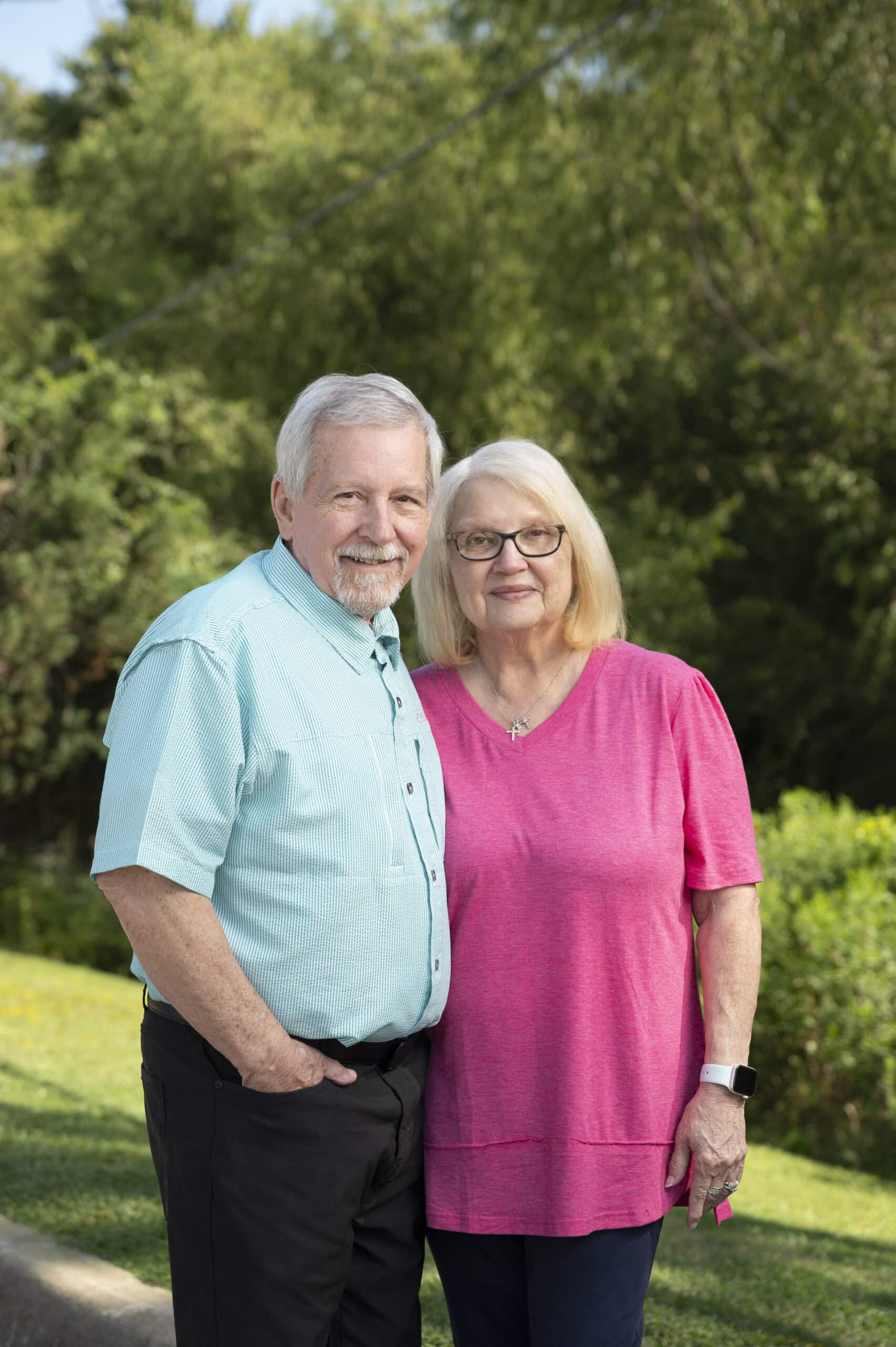
Gary and Suzanne Robertson.Image by Evan Lewis
Robertson was the first patient entered into the trial at UAMS, and his relatively good health made him an excellent candidate.
“I read about it and decided to do it,” said Robertson, who has been a financial advisor for more than 40 years, including the past 15 years at Pinnacle Wealth Management in North Little Rock.
His myeloma journey had an interesting beginning.
“In July 2024 I had a constipation issue. I had taken a lot of over-the-counter medicine, and nothing was working,” Robertson said. “My daughter suggested I get a scan. I had one, but they saw something and didn’t tell me anything initially. I had a second scan, which revealed that I had multiple myeloma.”
Robertson was told to go to UAMS. Initially, he didn’t realize multiple myeloma was a form a cancer.
“Most people fear hearing the ‘C’ word. I didn’t know what multiple myeloma was,” he said. “I started crying a little bit, but I didn’t get angry because I’ve had a good long life.”
Robertson underwent a four-drug regimen through December 2024 in preparation for CAR T-cell therapy. After a month’s break, he underwent the procedure the following February. Additionally, his stem cells were collected in case a transplant would be needed as part of the trial.
“I was at UAMS for 16 days for the preparation, the procedure, and monitoring for any side effects. The only thing I had was a little bit of fever,” he said.
Robertson is thankful for his process so far with multiple myeloma.
“This whole journey has been a cakewalk for me. I didn’t lose any hair, I didn’t lose any weight, although I wish I would have,” he said. “It just hasn’t been that hard for me at all.
“It has taken up a lot of time. At one point I was going to UAMS three times a week, and in March 2025 I had to go every day and give blood. I’ve continued to feel normal. I’ve gotten most of my strength back. My endurance is still low, but I think it’s low partly because of not being active for the last several months,” he continued.
When he came to UAMS, Robertson wasn’t aware of the Myeloma Center’s reputation.
“I did not know at the time that UAMS is world-renowned for multiple myeloma. I think about how blessed I am to have the best hospital for this type of cancer right in my own backyard. It’s not as much of a death sentence anymore. It’s treatable, and you can have a quality of life with it — that’s been true for me.”
He credited his faith with helping him on this journey. “I believe the Lord has walked with me to get me where I am today.”