View Larger Image
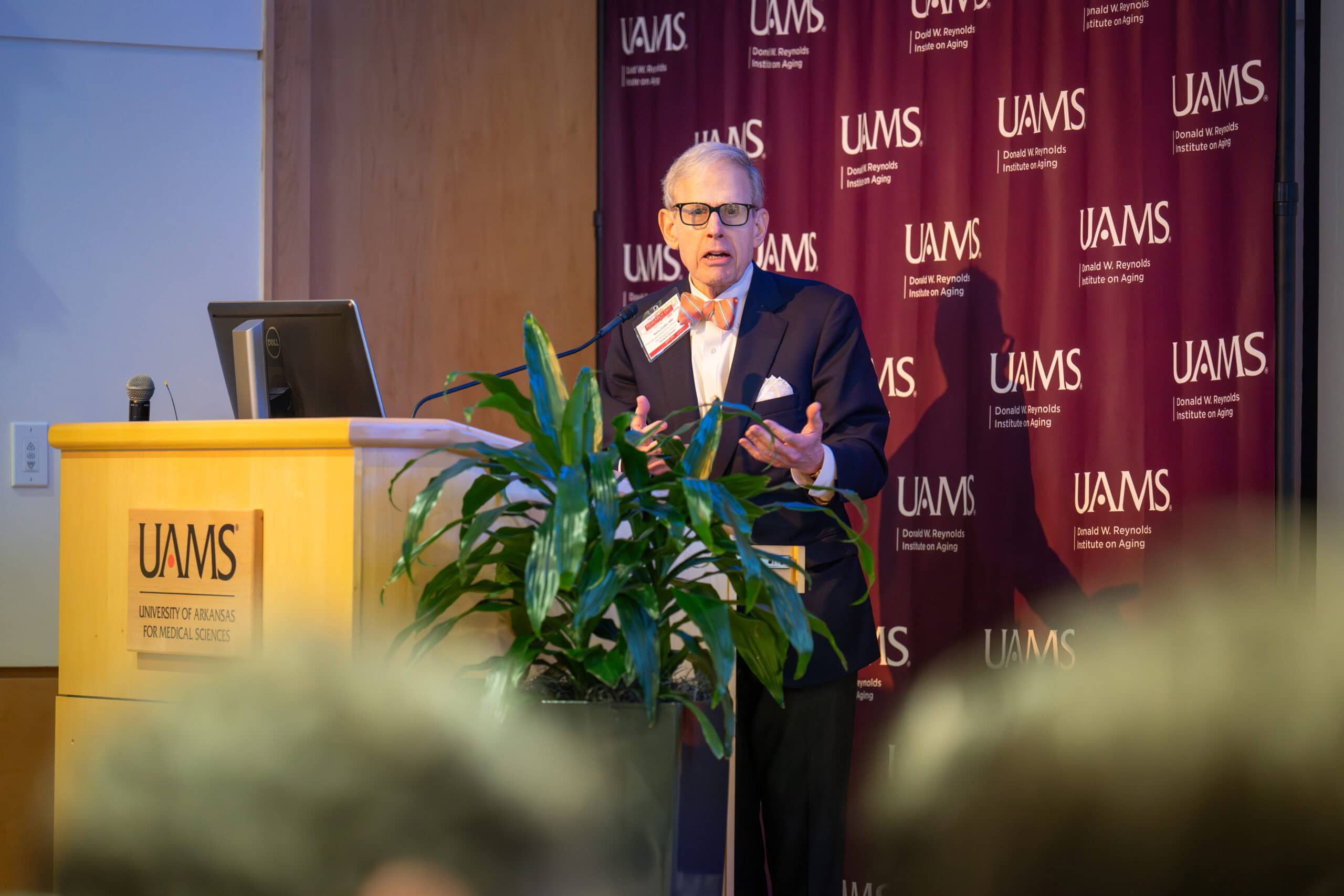
Barry Coller, M.D., of The Rockefeller University in New York, delivers the keynote presentation during the Translational Research Institute’s fifth annual Research Day.
Image by Bryan Clifton
Research Day Showcases Translational Science’s Impact in Arkansas
| The Translational Research Institute’s fifth annual Research Day highlighted the pivotal role of translational science in Arkansas, showcasing research presentations, panel discussions, and a poster session focused on scientific impact.
A keynote presentation was delivered by Barry Coller, M.D., the David Rockefeller Professor of Medicine and head of the Allen and Frances Adler Laboratory of Blood and Vascular Biology at The Rockefeller University in New York.
The April 9 event took place at the Donald W. Reynolds Institute on Aging on the University of Arkansas for Medical Sciences (UAMS) campus.
“It was great to hear from these talented UAMS and Arkansas Children’s Hospital researchers about their scientific explorations and impactful discoveries,” said Laura James, M.D., director of the Translational Research Institute. “The day demonstrated how various Translational Research Institute funding opportunities, resources and services, and career development and training opportunities help fuel translational science, and how these pursuits are leading to breakthroughs to improve health in Arkansas and beyond. I’m also thankful to Dr. Coller for attending and sharing his expertise.”
Coller’s keynote was titled “From Monoclonal Antibody to Crystal Structure to Clinical Trial: The Zalunfiban (RUC-4) Story.” He discussed the efforts to create the drug, which is intended for prehospital use in patients suffering a suspected ST-segment elevation myocardial infarction (STEMI), caused by total blockage of the coronary artery. (The drug, which has antiplatelet effects, completed testing through a Phase III clinical trial in 2025 and was shown to be safe and effective in opening blocked coronary arteries.)
Coller’s presentation ended with a slide listing the dozens of collaborators who have contributed to zalunfiban’s progress, prompting an audience member during the Q&A session to ask how one builds such a team.
“One by one,” Coller said. “People have to feel your passion for research, and they must see your vision. That’s the key to team science. Integrity, teamwork, sharing successes and failures are important, but people have to believe in the pursuit. I think that’s the key to team science leadership.”
Coller also offered advice on the often long, slow march of drug development and research from bench to bedside.
“You need a personality that can tolerate a long timeframe,” he said. “Also, you must remember that no matter how smart you are and how hard you work, it can blow up, and many days it looks like it has blown up. That’s the day when you say, ‘Under, around, or through, I’m solving this problem.’ And tomorrow, there will be 12 more problems. That’s the reality of drug development because it’s terribly complicated.”
Coller is renowned for his investigations into the role of blood platelets and the mechanisms of blood cell adhesion in vascular disease. When blood vessels break, platelets stop the bleeding by adhering to the damaged vessel walls. His research focuses on molecular interactions between blood cells and blood vessels, and on new therapies for thrombotic diseases such as heart attack and stroke.
Oral Presentations Highlight Work in TRI Programs
Research Day 2026 featured oral presentations by 10 researchers in five TRI programs.
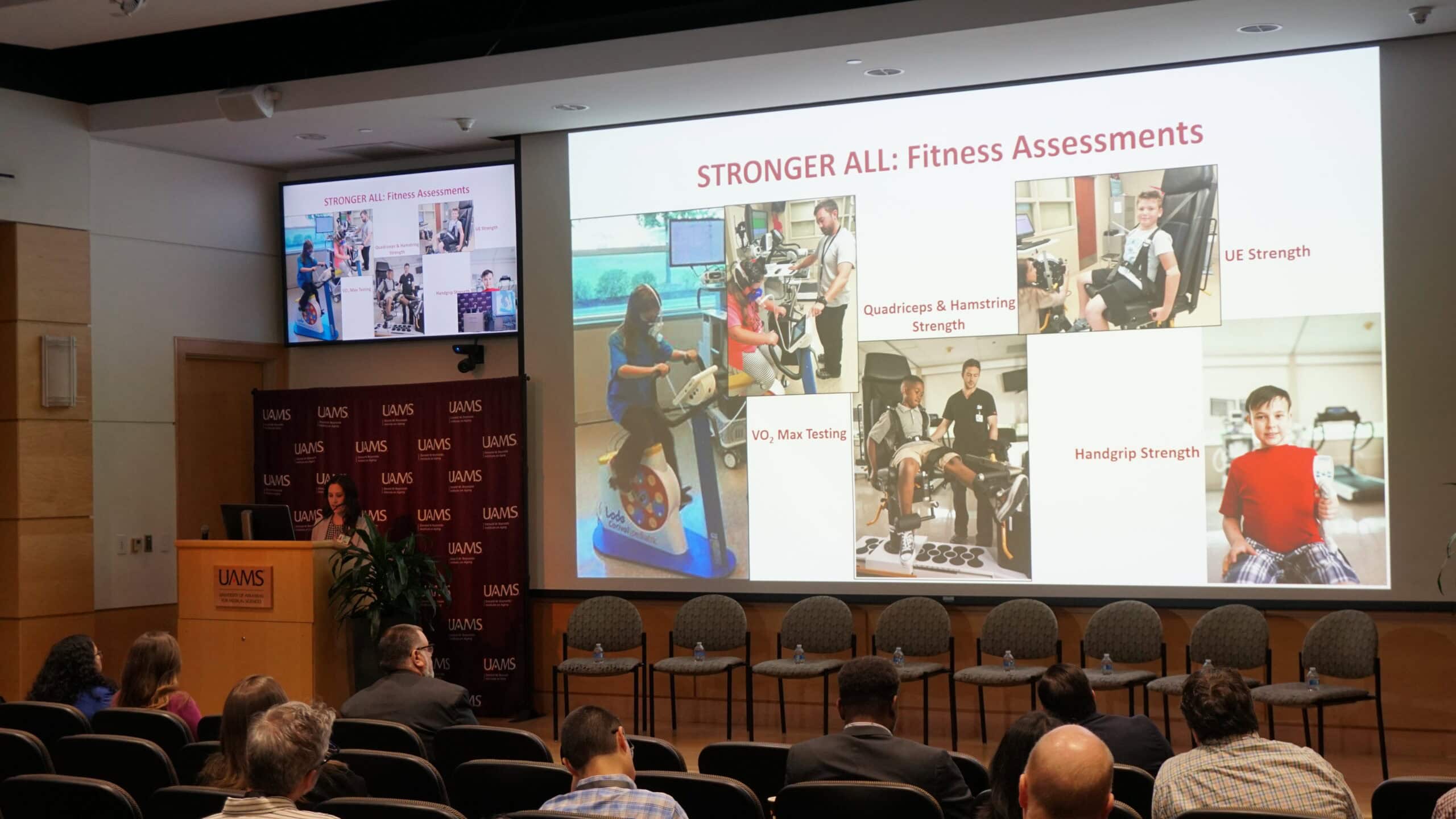
Research Day 2026 featured oral presentations by 10 researchers in five TRI programs.
K12 Mentored Research Career Development Program Presentations
- “Surviving & Thriving: Improving Survivorship for Children & Young Adults with ALL”
Lauren Appell, M.D., assistant professor of pediatric hematology/oncology, UAMS and Arkansas Children’s Hospital (ACH)
- “The Blood and Lower Respiratory Tract Immune Cell Inflammatory Transcriptomes Are Significantly Different in Patients with SA-PARDS”
James Garrett Williams, M.D., assistant professor of pediatrics, Division of Critical Care Medicine, UAMS and ACH
T32 Health Sciences Innovation and Entrepreneurship Postdoctoral Trainee Program Presentations
- “DNA-PKcs a Novel Immunosuppressive Target for Organ Transplantation”
Nicholas Callais, M.D., surgical resident research fellow, Department of Surgery, UAMS
- “Neurodevelopment in Diabetic Pregnancies Using Magnetoencephalography”
Alexa Escapita, Ph.D., postdoctoral fellow, Department of Obstetrics and Gynecology, UAMS
Clinical and Translational Science Pilot Awardee Presentations
- “SoNIC Teens: Sickle Cell Neurological Impact and Cognition in Teenagers”
Ellen van der Plas, Ph.D., associate professor of pediatric hematology/oncology, UAMS and ACH
- “Objective Quantification of Reported Chronic Back Pain Using PROMIS Scores and Spectrogram Analysis”
Leah Tobey-Moore, PT, DPT, MBA, assistant professor of psychiatry and geriatrics, UAMS; and Yasir Rahmatallah, Ph.D., associate professor of biomedical informatics, UAMS
Implementation Science Scholar Presentations
- “Optimizing Growth Hormone Utilization in Pediatric CKD and Kidney Transplantation: An Implementation Science Initiative”
Saritha Ranabothu, M.D., associate professor of pediatrics (pediatric nephrology), UAMS and ACH
- “From Discovery to Design: Implementing Integrated Behavioral Health in Primary Care”
Tisha Deen, Ph.D., director of Behavioral Health Integration; associate professor of psychiatry, UAMS
TRIumph Communications Program Presentations
- “From Behind the Counter to Communities: Pharmacists Leading Overdose Education”
Meghan Breckling, Pharm.D., assistant professor of pharmacy practice and psychiatry, UAMS
- “Unleashing the Brain’s Cleanup Crew After Stroke”
Carol A. Morris, Ph.D., postdoctoral researcher, Department of Pharmacology and Toxicology, UAMS
Offering Community Members Needed Research Tools
An afternoon panel featured several community members discussing “Building the Bridge: How TRI Strengthens Community-Engaged Research.” The panelists talked about their experiences with the institute’s Community and Stakeholder Engagement Core and how it supported their pursuits.
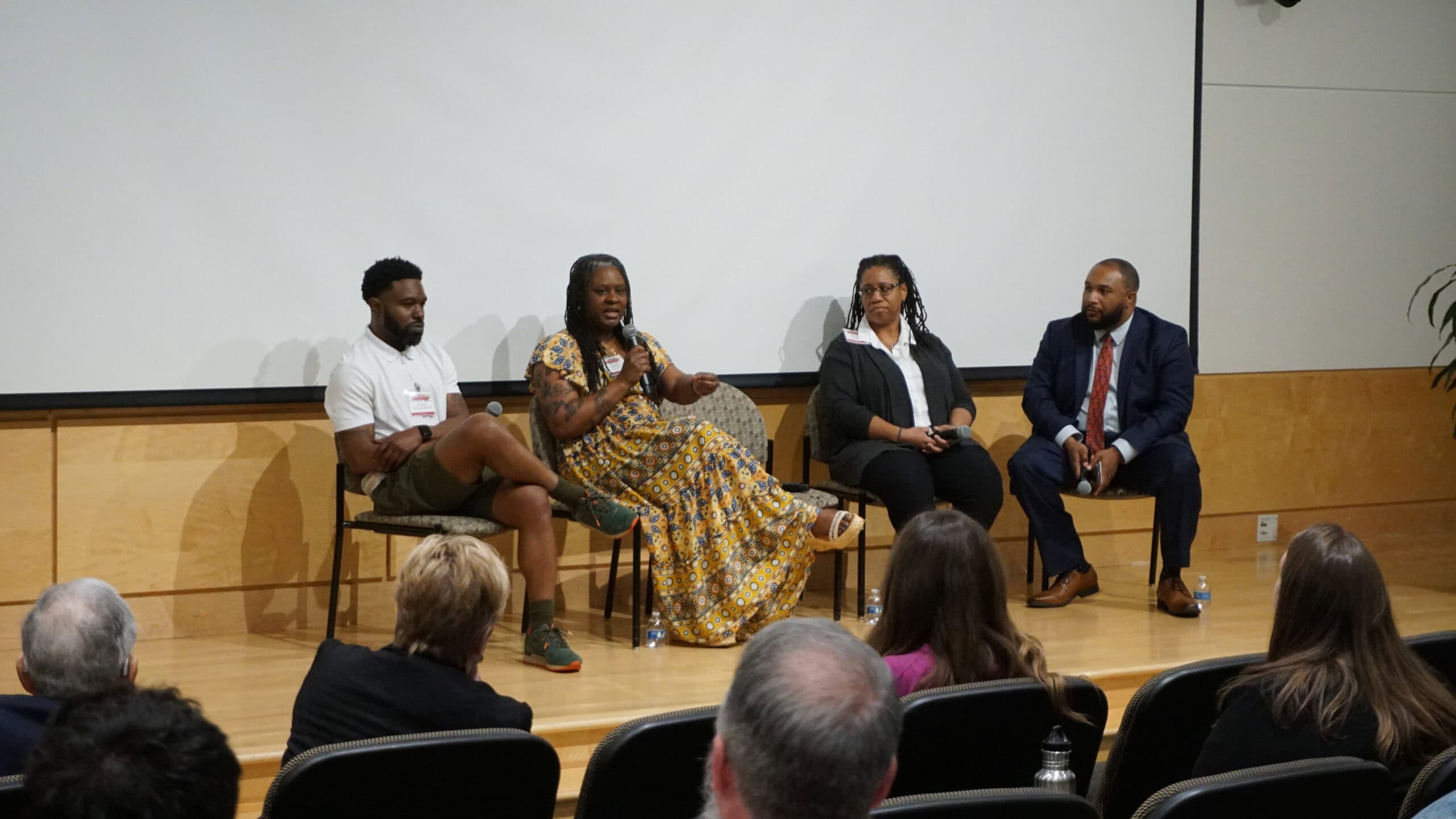
An afternoon panel featured several community members discussing how TRI strengthens community-engaged research.
The panelists were Tiffany Miles, Ph.D., an instructor of developmental nutrition at UAMS; Keneshia Bryant-Moore, Ph.D., RN, a professor of health behavior and health education at UAMS; and Kelvin Parker, the founder of Giving Others Ambition Together (G.O.A.T), who was a Community Partners Educated as Arkansas Research Leaders (CPEARL) Program participant.
The CPEARL training, which targets leaders and emerging leaders within Arkansas nonprofit community-based organizations, helped Parker grow his after-school program for 10–12-year-olds in Little Rock from three days a week with about a dozen children to five days a week with 45-50 children.
The panel was moderated by Tiffany Haynes, Ph.D., director of the Community and Stakeholder Engagement Core and an associate professor of health behavior and health education in the Fay W. Boozman College of Public Health at UAMS, and Kent Broughton II, co-chair of the TRI Community Advisory Board and interim director of the Center on Community Philanthropy at the Clinton School of Public Service.
Research Day 2026 Poster Contest Winners
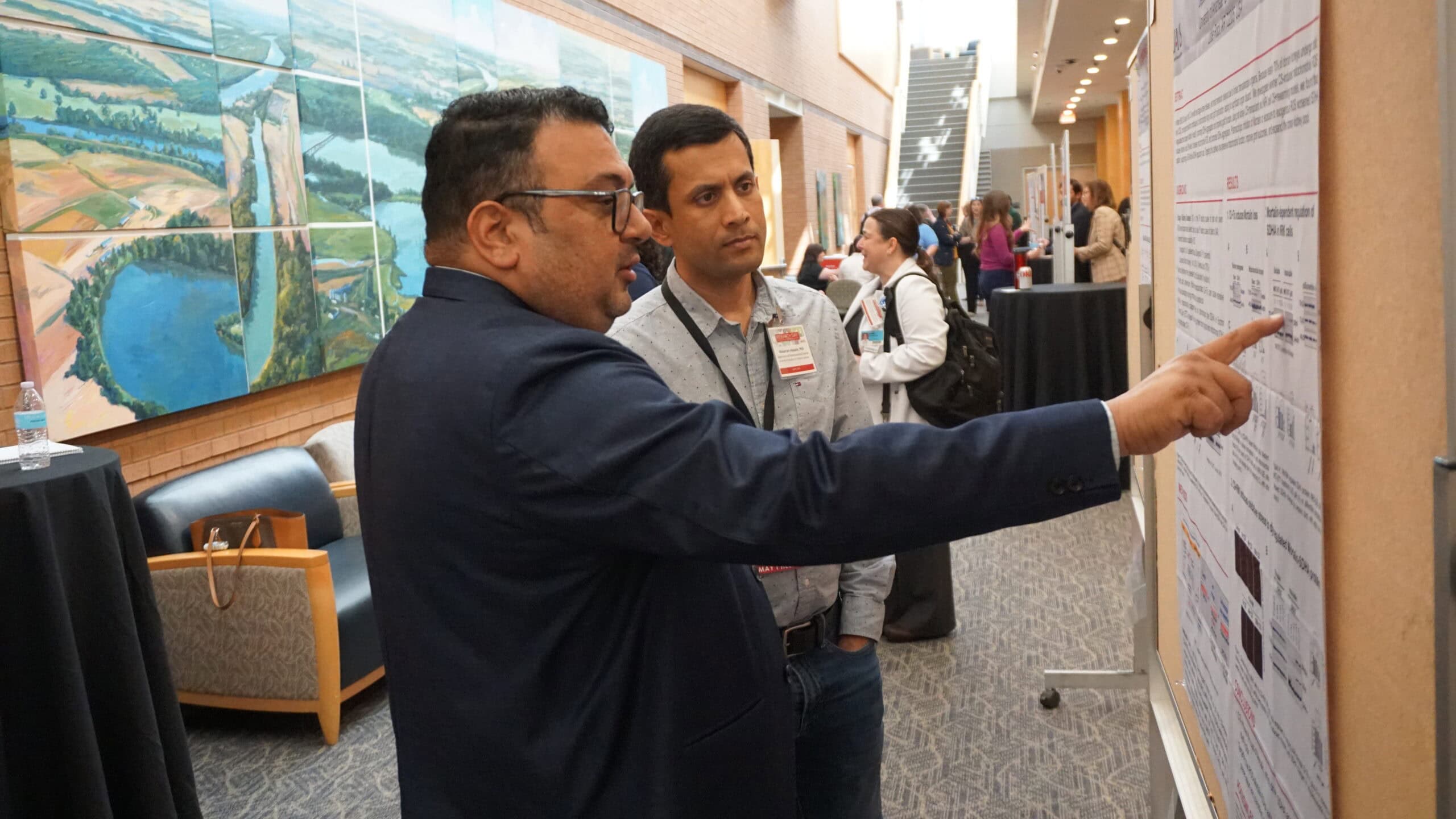
The day concluded with a poster presentation session, a light reception, and the announcement of the winners of
Research Day 2026 featured oral presentations by 10 researchers in five TRI programs.
the 2026 Research Day Poster Contest, which included 20 posters. Judges and Research Day attendees selected winners from six categories.
Best Overall Scientific Content
- “From Card to Cradle: Examining Medical Cannabis Purchasing Among Pregnant Women in Arkansas,” Nahed O. ElHassan, M.D., MPH, professor of pediatrics
- “The Blood and Lower Respiratory Tract Immune Cell Inflammatory Transcriptomes Are Significantly Different in Patients with SA-PARDS,” James “Garrett” Williams, M.D.
Best Overall Impact
- “STReNGth & Outpatient Exercise Regimen for Pediatric Patients with Acute Lymphoblastic Leukemia: STRONGER ALL,” Lauren Appell, M.D.
- “Assessment of Nutritional Status and Associated Postoperative Outcomes in Total Joint Arthroplasty Patients,” Shiloah Kviatkovsky, Ph.D., assistant professor of orthopaedic surgery
- “Understanding Brain Health in Teens with Sickle Cell Disease,” Ellen van der Plas, Ph.D.
Best Overall Visual
- “STReNGth & Outpatient Exercise Regimen for Pediatric Patients with Acute Lymphoblastic Leukemia: STRONGER ALL.” Lauren Appell, M.D.
- “Activating Neutrophils to Overcome Immunotherapy Barriers in Pancreatic Cancer,” Mokarram Hossain, Ph.D., assistant professor of pharmaceutical sciences
- “Using CBPR and Implementation Science to Explore Community Perspectives on Nutrition and Obesity in Phillips County, AR,” Tiffany Miles, Ph.D.
- “Understanding Brain Health in Teens with Sickle Cell Disease,” Ellen van der Plas, Ph.D.
Best Translational Science
- “Using CBPR and Implementation Science to Explore Community Perspectives on Nutrition and Obesity in Phillips County, AR,” Tiffany Miles, Ph.D.
- “The Blood and Lower Respiratory Tract Immune Cell Inflammatory Transcriptomes Are Significantly Different in Patients with SA-PARDS,” James “Garrett” Williams, M.D.
Community Advisory Board Choice
- “From Card to Cradle: Examining Medical Cannabis Purchasing Among Pregnant Women in Arkansas,” Nahed O. ElHassan, M.D., MPH
- “Using CBPR and Implementation Science to Explore Community Perspectives on Nutrition and Obesity in Phillips County, AR,” Tiffany Miles, Ph.D.
People’s Choice
- “Vocal Spectral Features as Candidate Biomarkers for Pain: Pilot Comparison of Voice Samples across Individuals with and without Persistent Spinal Pain Syndrome,” Leah Tobey-Moore, PT, DPT, MBA
The Translational Research Institute is supported by the National Institutes of Health (NIH) National Center for Advancing Translational Sciences (NCATS), Clinical and Translational Science Awards (CTSA) Program UM1 TR004909, K12 TR004924, and T32 TR004918.