View Larger Image
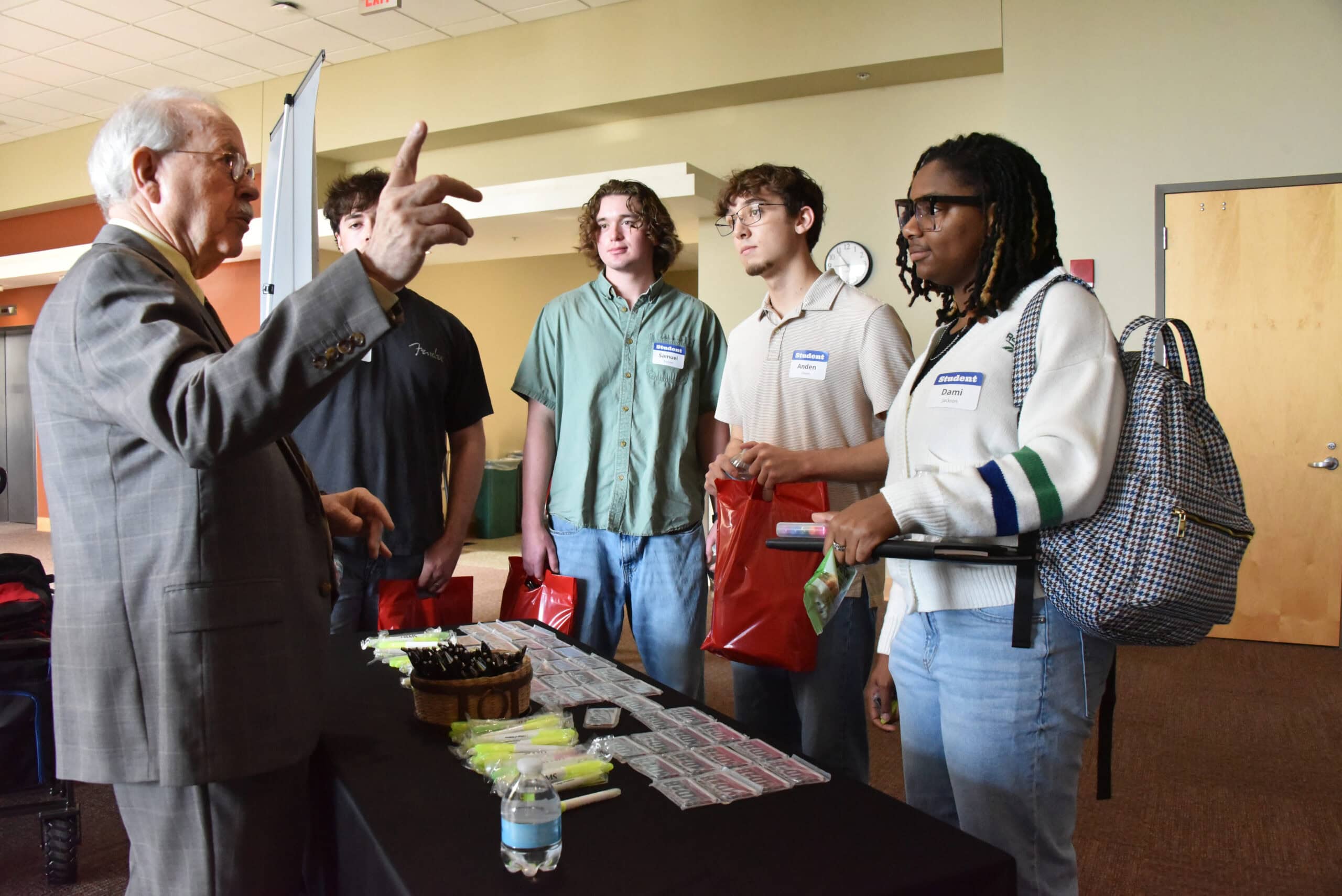
Tom South, assistant dean of medical school admissions for the UAMS College of Medicine, talks with students from the University of Arkansas at Monticello.
Image by Andrea Hooten
UAMS Pre-Health Conference Connects Students to Medical Career Paths
| College students exploring health care careers recently gathered at the University of Arkansas for Medical Sciences (UAMS) Undergraduate Pre-Health Conference, gleaning next-step advice from five UAMS college and graduate school representatives and a panel of current UAMS students.
The conference was hosted by UAMS Regional Campuses on April 17 to help build a pipeline of health professionals to serve Arkansas, particularly in rural and underserved communities.
Recruiters, directors, and deans from the colleges of Medicine, Pharmacy, Nursing, Public Health, Health Professions and the graduate school spoke after a welcome from UAMS Chancellor C. Lowry Barnes, M.D. Representatives described a variety of disciplines, admission requirements, and careers after graduation.
Almost 60% of those registered for the conference listed medical school as their primary interest.
Tom South, assistant dean of medical student admissions for the College of Medicine, said that the students can apply for medical school while working on their bachelor’s degree, and it can be any degree, not just the traditional sciences, biology or chemistry.
“Now, you do not have to major in one of the science courses, but you do have to do well in those courses,” said South.
He also mentioned the new accelerated six-year Bachelor of Science to Doctor of Medicine track beginning fall of 2027 as an alternative to the traditional eight-year program.
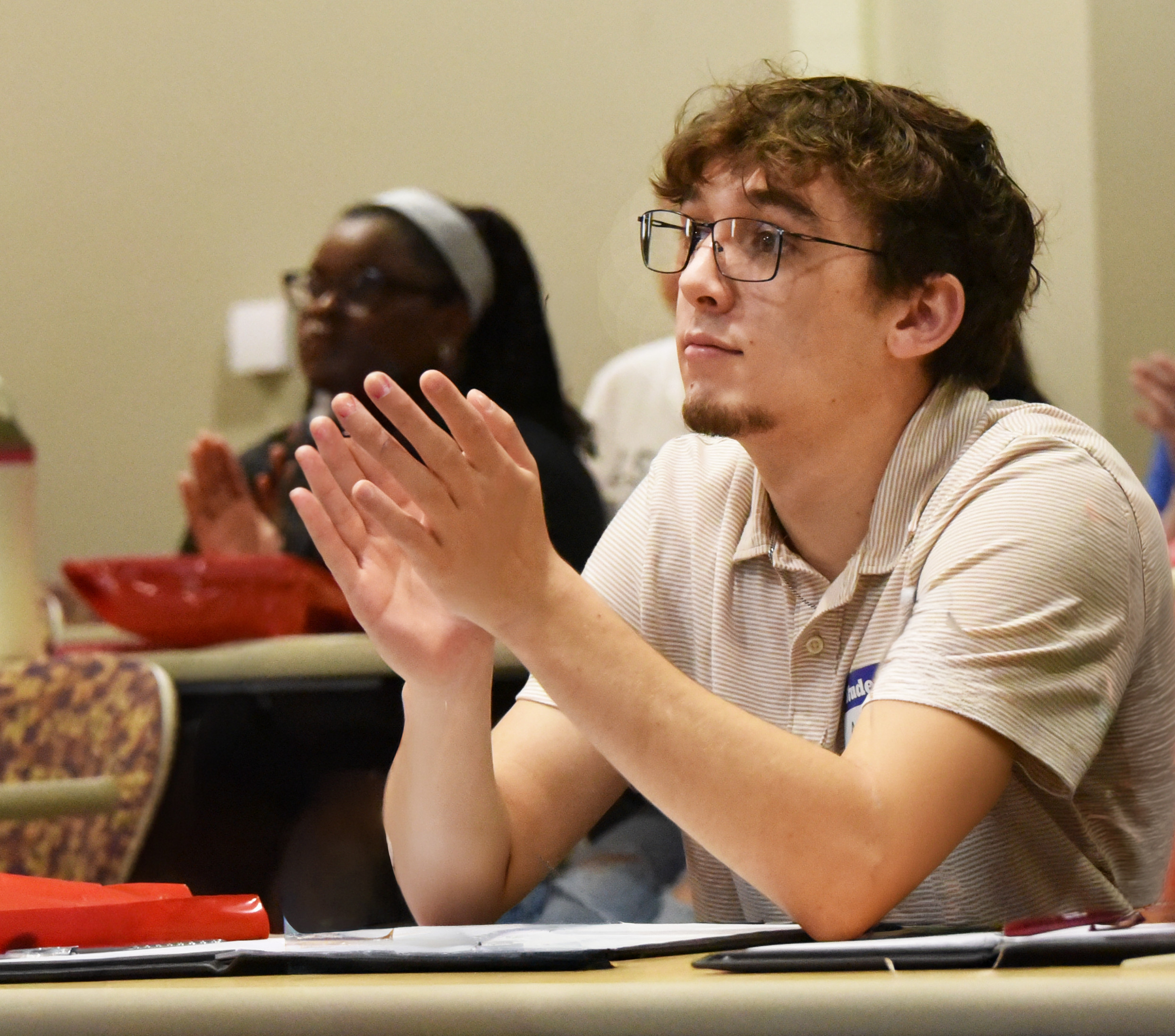
Anden Owen, a junior at the University of Arkansas at Monticello, participated in a regional campus MASH camp which piqued his interest in medical school.Andrea Hooten
Either track will require an MCAT score of 500 (for students from Arkansas), a good GPA, and rich experiences that illustrate a dedication to health care.
“Writing a personal statement is important, and we will usually give preference to Arkansas residents with ties to the state,” said South, adding that the faculty interview could determine whether a student gets accepted or not.
“You should be yourself. Listen to the questions. One student talked his way out of medical school. He was so scared that he just talked the whole way through in case the faculty asked questions he couldn’t answer,” said South.
Once they’ve been accepted, students will have ample time to decide what kind of practice to pursue.
Anden Owen, a junior pursuing a double major in biology and biochemistry at the University of Arkansas at Monticello, said he is interested in medical school but isn’t set on any specific area of practice. He attended a UAMS South Central MASH camp in 2021, which stoked his desire to be a doctor. Danielle Harris, education coordinator who planned Owen’s MASH camp five years ago, has kept track of his academic career and is excited to see how he’ll choose to serve the state.
Pharmacy focus a vehicle for reaching rural populations
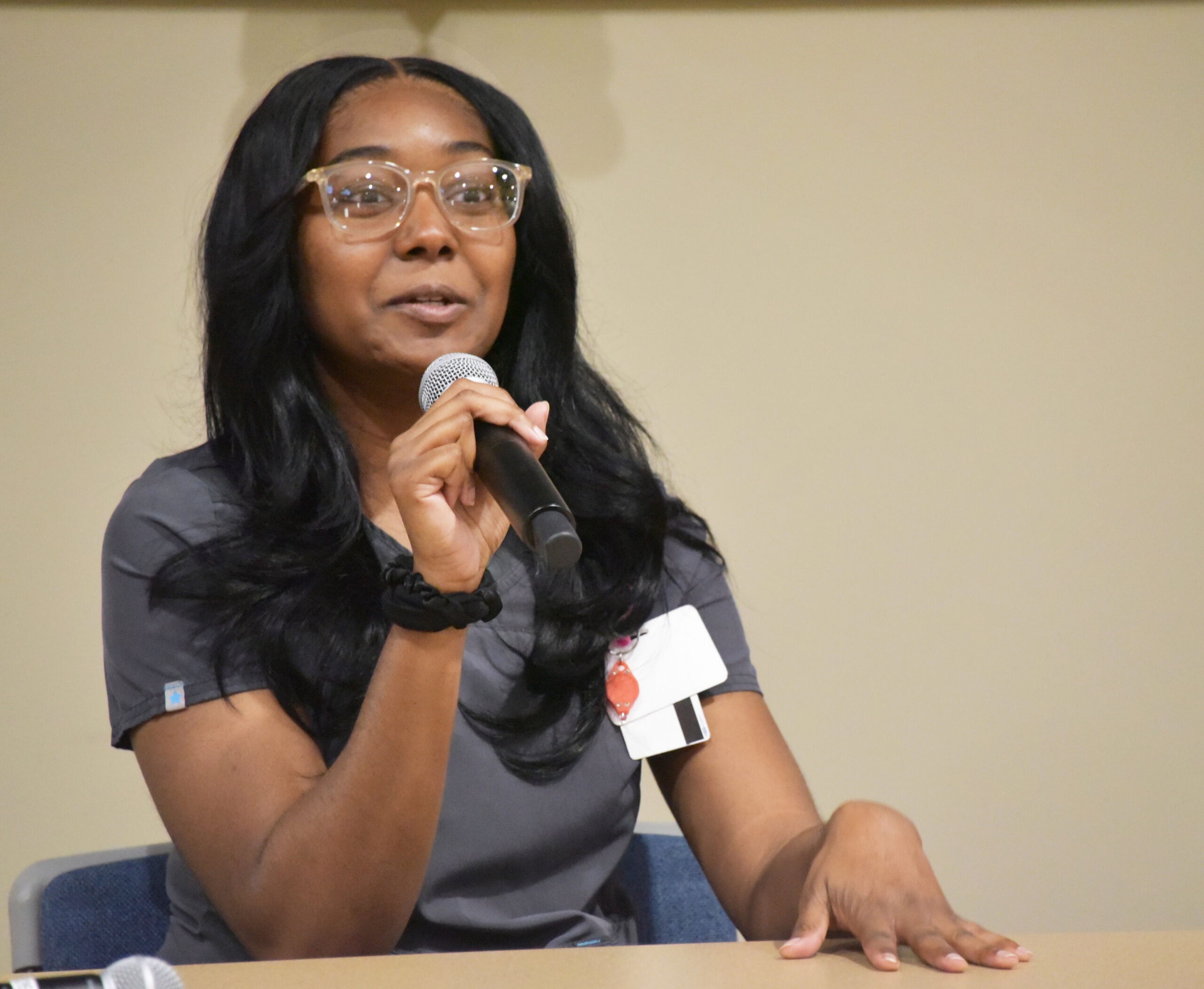
Marissa Bones, AHEC scholar and fourth-year pharmacy student, tells about her choice to marry pharmacy with helping the underserved, rural populations.Andrea Hooten
For students weighing other career paths, third-year pharmacy student Marissa Bones said she originally couldn’t decide between pharmacy and medical school. But her passion for reaching a large number of people in underserved, rural communities led her to pharmacy. Bones is also an Area Health Education Center scholar through UAMS Regional Campuses, which offers additional training for those focused on rural health care.
January Marriott, a freshman at Hendrix College, asked fourth-year pharmacy student Aimsley Moran what the final year of pharmacy school entailed. Moran said the final year shifted from
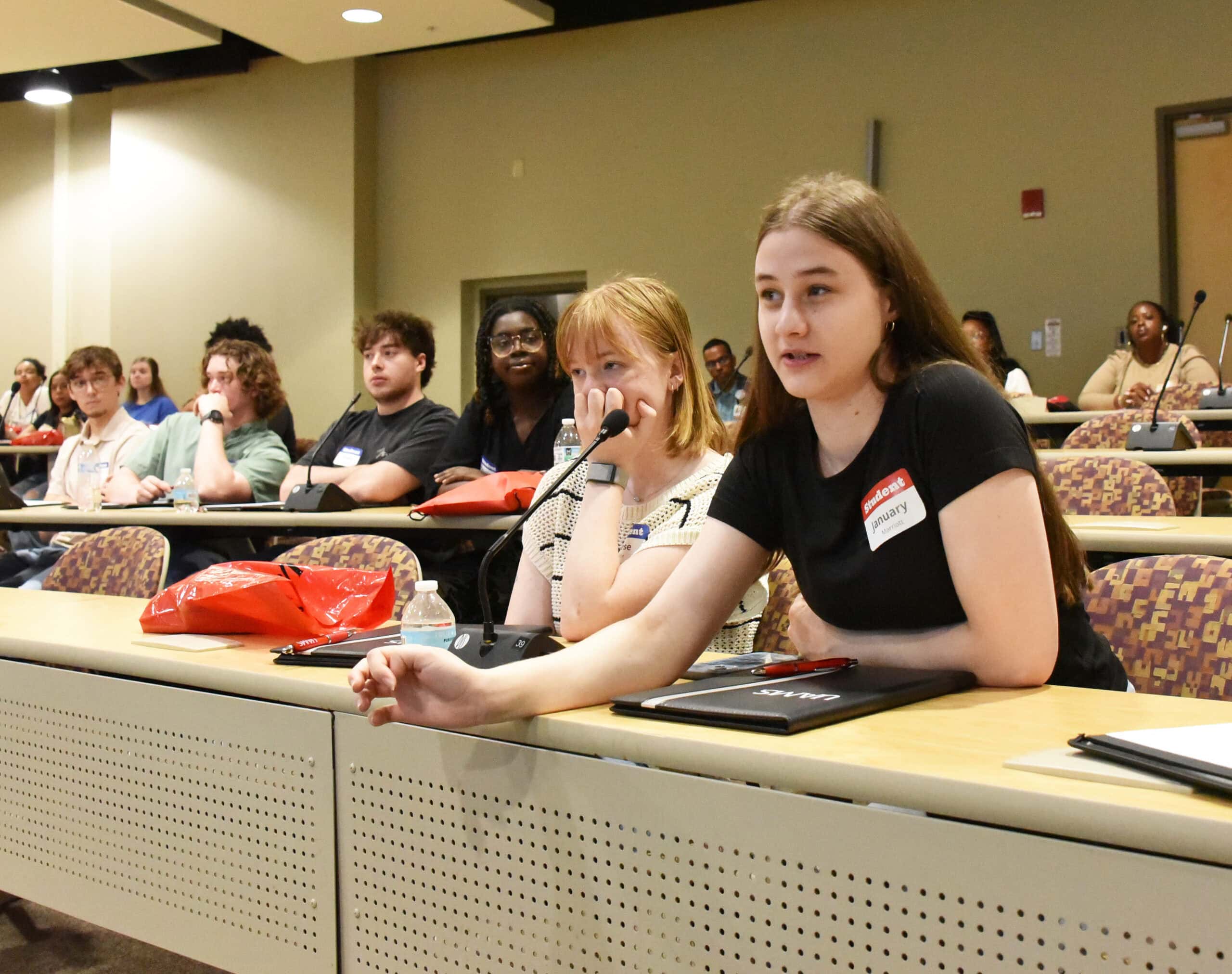
January Marriott, Hendrix freshman, asks about the rigors of pharmacy school.
traditional classroom learning to 40 hours a week of rotations in such settings as Arkansas Children’s Hospital, UAMS, retail pharmacies, or family clinics, for instance. She chose to train at Arcare, a network of Arkansas primary care clinics.
“It’s almost like you’re a pharmacist on training wheels, and you get to learn more and you get to be able to experience more things in a family clinic setting,” said Moran, who wants to focus on pharmacogenomics in a family clinic setting.
Representatives advise on colleges and surviving as a student
Karl Boehme, Ph.D., spoke about the UAMS Graduate School and its 15 programs including basic research, pharmaceutical sciences and environmental health sciences. He directs the Graduate Program in Interdisciplinary Biomedical Sciences, which blends research with several areas such as cancer biology, neuroscience, pathobiology, and pharmacology.
“The graduate school is a little bit different in that it connects and reaches across all the other colleges that we have here. You can couple some of these graduate school degrees on top of other degrees,” said Boehme.
Representatives warned the students that two professions in high demand are also highly competitive to enter. Nurses seeking an advanced degree as a certified registered nurse anesthetist will vie with 400 other nurses applying for only 20 spots in the Doctor of Nursing Practice program’s nurse anesthesia track.
The physician assistant program in the College of Health Professions has grown quickly, too. Chance Gee, assistant professor in the Department of Physician Assistant Studies, cautioned that more than 600 consistently apply for the program that only accepts 40 students in each class.
The final phase of the conference featured a panel of seven UAMS students with practical advice for anyone seeking a degree from UAMS.
When asked how to stand out in the crowded field of medical school applicants, panelist Raul Giron, a second-year medical student, suggested having a story to tell. His story made the difference on his third attempt at medical school.
“In the interviews, everyone’s trying to be impressive and say the exact same thing with the amount of research they’ve done and the amount of volunteer hours. You want to be able to find a story that you can tell that shows your passion, that shows that you learned something, and what it contributes to your moving forward in your health care education,” said Giron.
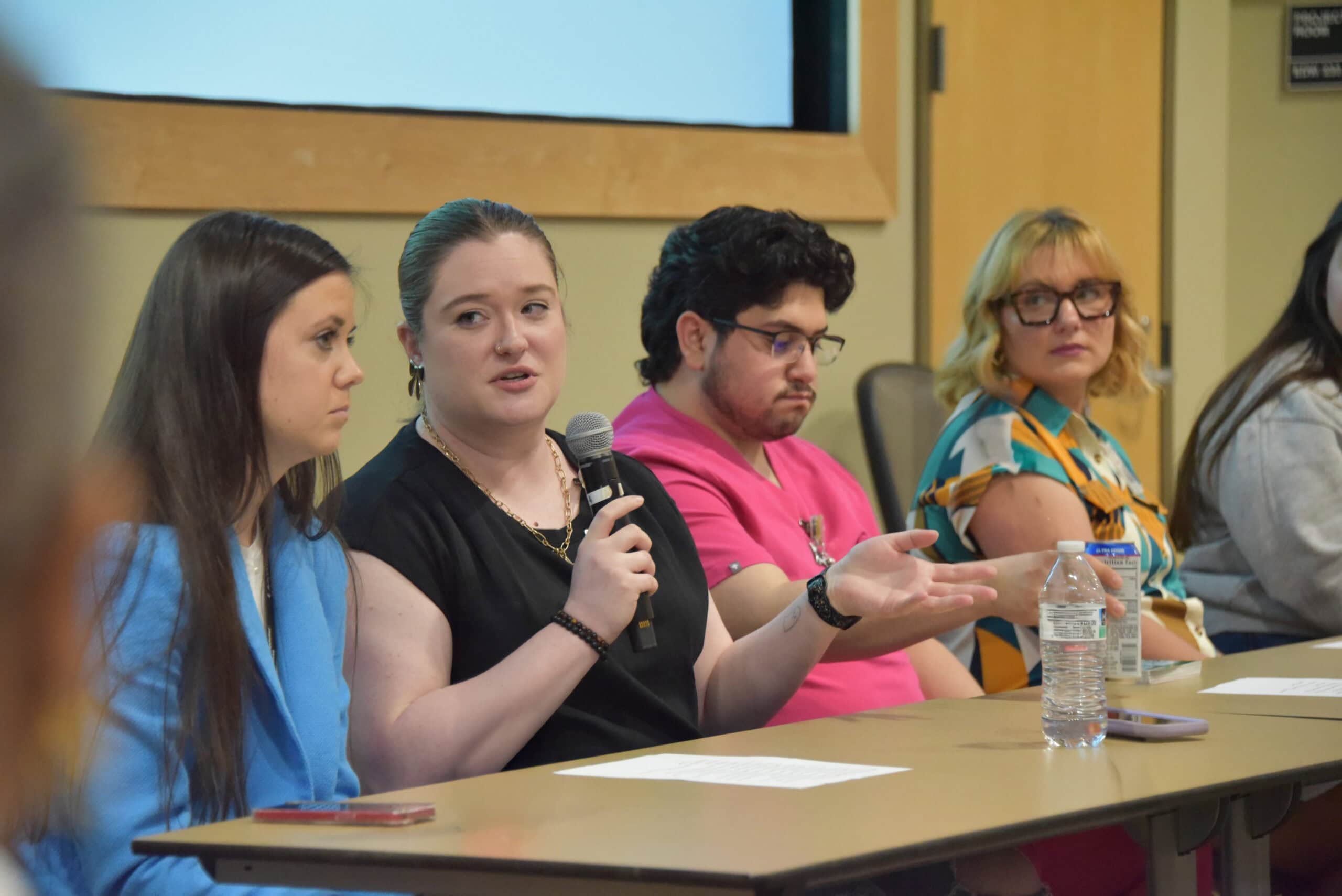
A graduate school student advises the audience to listen to criticism and view it positively.
Sydnye Shuttleworth, a dual M.D./Ph.D. degree student, suggested taking breaks from studying.
“Study from 8 to 2, eat lunch, do something else, maybe go home, cook dinner and study for the rest of the night,” said Shuttleworth, who won a prestigious fellowship award last year for aspiring physician-scientists from the National Institutes of Health National Cancer Institute.
A broader look at UAMS’ rural healthcare programs that impact the health and well-being of rural Arkansans can be found at the UAMS rural health hub.
This conference was a collaboration between UAMS Regional Campuses and the Health Resources and Services Administration (HRSA) of the U.S. Department of Health and Human Services (HHS) and was partially supported through federal grants. The views expressed are those of the author(s) and do not necessarily reflect the official perspectives of, or an endorsement by, HRSA, HHS, or the U.S. government.