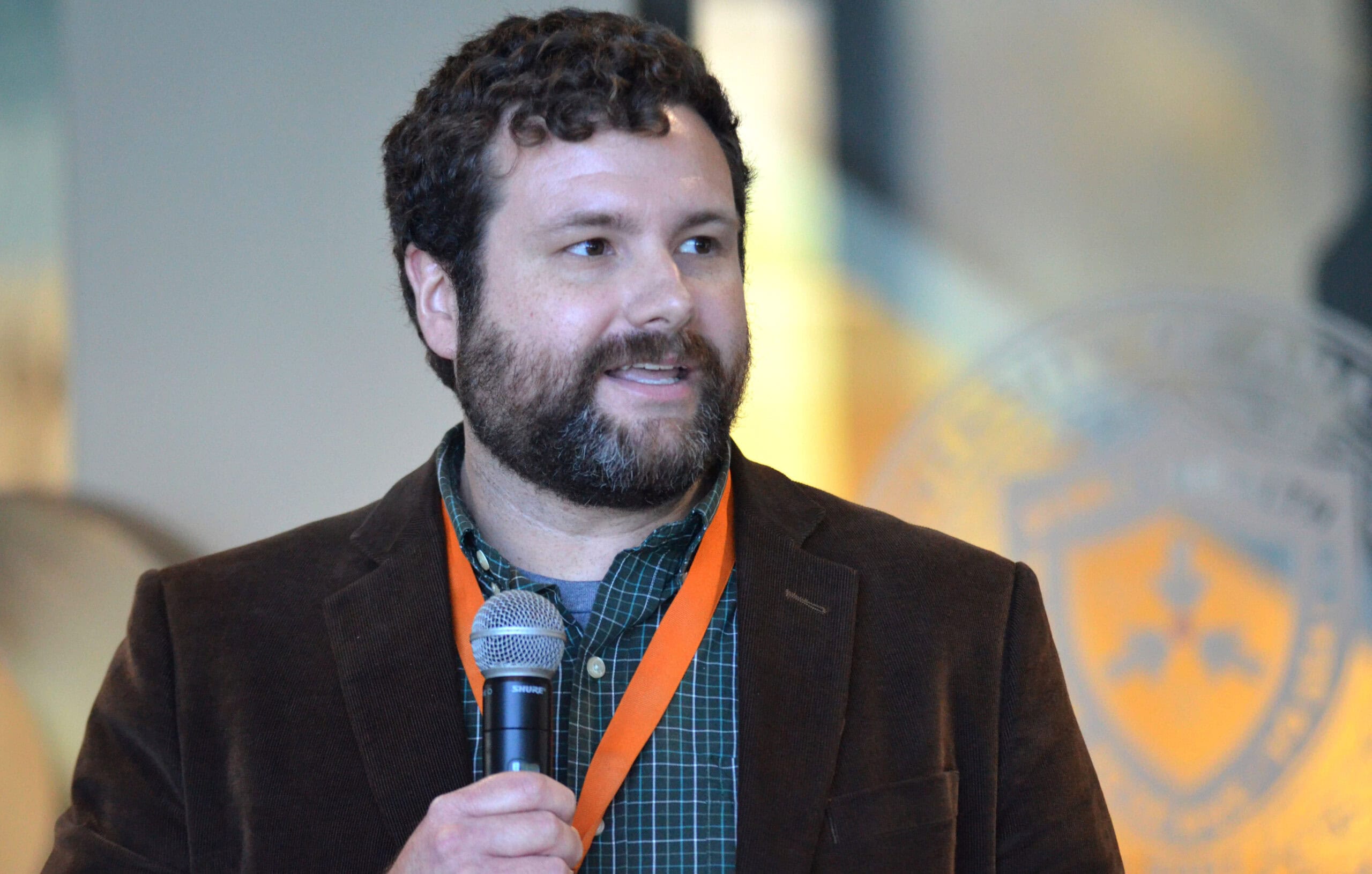
Mitch McGill, Ph.D., Is Part of Research Group Examining Liver Safety Biomarker
| Mitch McGill, Ph.D., faculty at the University of Arkansas for Medical Sciences (UAMS), is part of a nationwide collaboration that recently succeeded in obtaining FDA acceptance of a new biomarker, dehydrogenase (GLDH) biomarker.
Glutamate dehydrogenase is an enzyme located primarily in the liver.
According to the United States Food and Drug Administration (FDA), a biomarker can provide information that may reduce uncertainty in regulatory decisions during drug development. Typically, multiple individuals and groups coalesce to develop a biomarker for qualification.
McGill, an associate professor in the UAMS Fay W. Boozman College of Public Health, has conducted several liver safety and drug-induced liver injury research projects. In spring 2021, McGill accepted an invite from the Critical Path Institute to contribute to this biomarker study, which produced the published paper, “Serum Glutamate Dehydrogenase Activity Enables Sensitive and Specific Diagnosis of Hepatocellular Injury in Humans.”
In March, it was named the 2025 Paper of the Year by the Society of Toxicology.
The goal of the study was to test the specificity of GLDH for liver damage. Currently, another enzyme, alanine aminotransferase (ALT), is measured in blood to determine if a drug causes liver injury. ALT is released into blood when liver cells are injured. However, ALT is found in both liver and muscle. This poses a problem during clinical trials of new drugs to treat muscle diseases, like Duchenne muscular dystrophy, as ALT is often already elevated in those diseases.
The group that included McGill demonstrated that both ALT and GLDH increase in blood during liver injury but, unlike ALT, GLDH is not elevated by muscle damage. This means that GLDH could be an alternative to ALT to test for liver damage.
Getting a new biomarker accepted by the FDA for use in clinical trials is a long, multistep process. By getting GLDH validated as a biomarker, the team has possibly provided pharmaceutical developers with a way to more accurately monitor patient safety.
“I’m working with a group of people who have skills, resources, and access to samples that would never be possible for me to get by myself,” McGill said. “In addition to academia, this collaboration consists of people from the government and pharmaceutical industry. Everyone brings a different skillset and access to different sample banks. What we’re trying to accomplish and the challenges we’re trying to address require groups of people from different backgrounds who provide different tools.”
“Our research has the potential to facilitate development of new and improved treatments for people who have a musculoskeletal condition,” he said. “It could facilitate development faster and lead to better drugs to treat these conditions.”
McGill enjoyed participating in this biomarker initiative.
“I’m grateful for the opportunity to take our research from our lab at UAMS to the real world and contribute to human knowledge. Projects like this have an immediate impact,” he said.