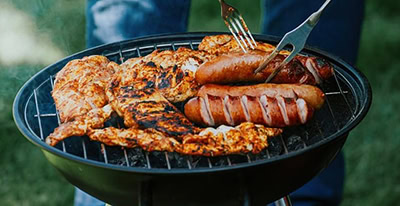
Outdoor Cooking
Raw and cooked
| Download this episode | Summer is in full swing and that means a lot of you are cooking out, whether it’s on the grill, on a smoker or even a campfire. Whether you prefer a gas or charcoal grill or a flat-top griddle, many types of food just seem to taste better when cooked outdoors. No matter how you cook, always keep raw food separated from cooked food. Don’t use a plate that has potentially touched or has been contaminated by raw meat, poultry, or seafood for anything else unless you first wash the plate in hot, soapy water. Keep utensils and surfaces clean. Don’t use the same utensil to place raw meats on a grill, then remove the cooked meats as this may introduce cross contamination. It is recommended to wash utensils that have touched raw meats if they must also be used to handle cooked meats. And don’t forget to wash your hands often. If you’re in an outdoor setting with no bathroom, use a water jug, some soap and paper towels. | Planning on cooking hamburgers outdoors this weekend? Do you know the difference between ground beef, ground chuck and plain old hamburger? According to the U.S. Food and Drug Administration, beef fat may be added to “hamburger” but not to “ground beef.” A maximum of 30 percent fat is allowed in either hamburger or ground beef. Both hamburger and ground beef can have seasonings, but no water, phosphates, extenders or binders added. Ground chuck typically costs slightly more than regular ground beef. This is because ground chuck is made exclusively from the chuck roast, a cut of beef from the shoulder and neck area of the cow. This particular cut has more marbling and flavor, making it the premium choice compared to ground beef. Regular ground beef can contain meat from the chuck roast but usually consists of less marbled, less juicy cuts like the round steak and the sirloin in a mix. | Many people like to marinate their food before cooking outdoors on a grill or smoker. A marinade is a savory, acidic sauce in which a food is soaked to enrich its flavor or to tenderize it. Most recipes for marinating meat and poultry recommend anywhere from six to 24 hours. It is safe to keep the food in the marinade longer, but after two days it is possible that the marinade can start to break down the fibers of the meat, causing it to become mushy. Always marinate meat and poultry in the refrigerator, not on the counter. If some of the marinade is to be used as a sauce on the cooked food, reserve a portion of the marinade before putting raw meat and poultry in it. Boil the used marinade if you want to brush it on the meat or poultry while it’s grilling. Whenever marinade that’s used on raw meat or poultry is to be reused, make sure to let it come to a boil for a few minutes to destroy any harmful bacteria. | Preparation is key when it comes to cooking outdoors safely. Precooking food partially in the microwave, oven, or stove is a good way of reducing grilling time. Just make sure that the food goes immediately on the preheated grill to complete cooking. You should always cook food to a safe minimum internal temperature to destroy harmful bacteria. Meat and poultry cooked on a grill often browns very fast on the outside so it’s a good idea to use a food thermometer to be sure the food has reached a safe minimum internal temperature. Cook beef, pork, veal, and lamb, whether they are steaks, roasts or chops, to 145 degrees Fahrenheit and allow them to rest for three minutes. Hamburgers made of ground beef, pork, veal, and lamb should reach 160 degrees Fahrenheit. All poultry, including ground, should reach a minimum of 165 degrees. And never partially grill meat or poultry that you plan to finish cooking later. | If you are planning an outdoor barbecue at a location other than your home, when transporting the food, be sure to keep it cold to minimize bacterial growth. Use an insulated cooler with sufficient ice or ice packs to keep the food at 40 degrees Fahrenheit or below. Pack food right from the refrigerator into the cooler immediately before leaving home. Keep meat and poultry refrigerated until ready to use. Only take out the meat and poultry that will immediately be placed on the grill. When using a cooler, keep it out of the direct sun by placing it in the shade or shelter. You should always pack beverages in one cooler and perishables in a separate cooler. Store raw meat and poultry in well-sealed packages in the bottom of the cooler underneath other food items, this will help to avoid cross-contamination. If poultry juice leaks onto other meats, then that meat needs to be cooked to an internal temperature of 165 degrees.
Transcript
Beef or chuck
Transcript
Marinating meat
Transcript
Precooking food
Transcript
Transporting food
Transcript