Jones Eye Institute Celebrates 100th ‘Gift of Sight’ Cataract Surgery
| Atmon Leviticus wanted to return home, but to do that, he needed to be able to see again. Thanks to a team of ophthalmologists with the University of Arkansas for Medical Sciences’ (UAMS) Harvey & Bernice Jones Eye Institute, he finally can.
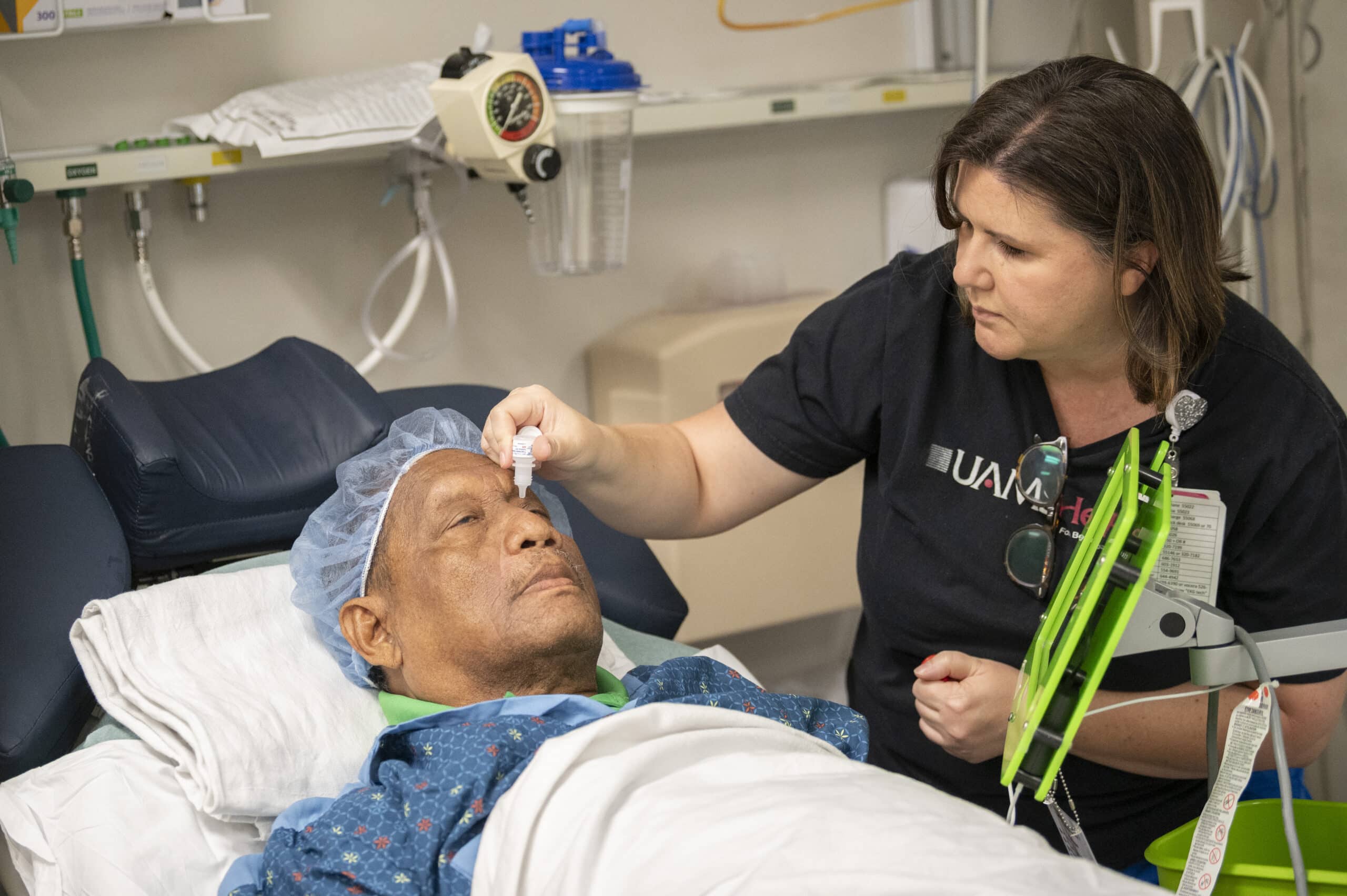
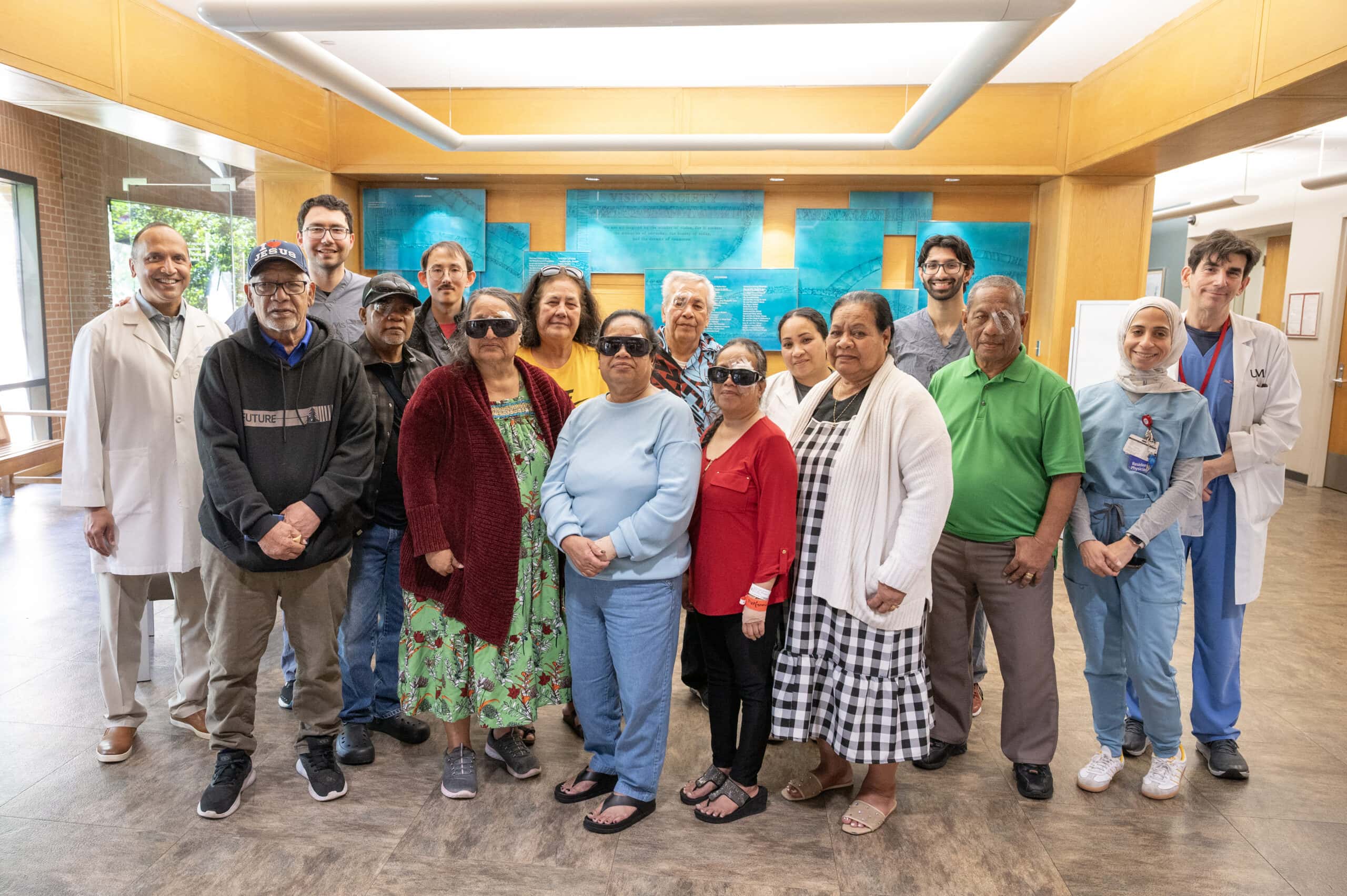
At dawn on Friday, May 29, Leviticus and 11 other Marshallese boarded a chartered bus to Little Rock, arriving early that morning to prep for surgery. Most of the patients saw significant improvement in their sight before they went home that evening.Evan Lewis
The institute recently celebrated completing its 100th cataract surgery for its “Gift of Sight” initiative, which provides these surgeries at no cost thanks to generous Eye Institute donors. Medicaid also partially covered many of the patients.
Leviticus, 68, of Rogers, was surgery number 100. His wife, Marlin, 66, has also received the surgery. They both arrived in Arkansas in 2023 and heard about the “Gift of Sight” program.
Northwest Arkansas is home to the largest Marshallese population in the continental United States. Their legal migration occurred after the U.S. detonated more than 65 nuclear test bombs between 1946 and 1958 that destroyed some of their islands and ecosystems.
Limited access to health care in the past has resulted in many health issues for the Marshallese people, including cataracts. In 2014, the UAMS Northwest Regional Campus in Fayetteville opened a free clinic for their Marshallese neighbors and discovered that many of them had cataracts but lacked the means for sight-correcting surgery. Over the last decade, the Jones Eye Institute has refined its “Gift of Sight” program, with doctors volunteering their services every two months.
A cataract causes the lens of an eye to become cloudy, leading to vision issues or blindness. Cataract surgery removes the cloudy lens and usually replaces it with a clear, artificial lens. The surgery typically takes less than 30 minutes but costs thousands of dollars without insurance.
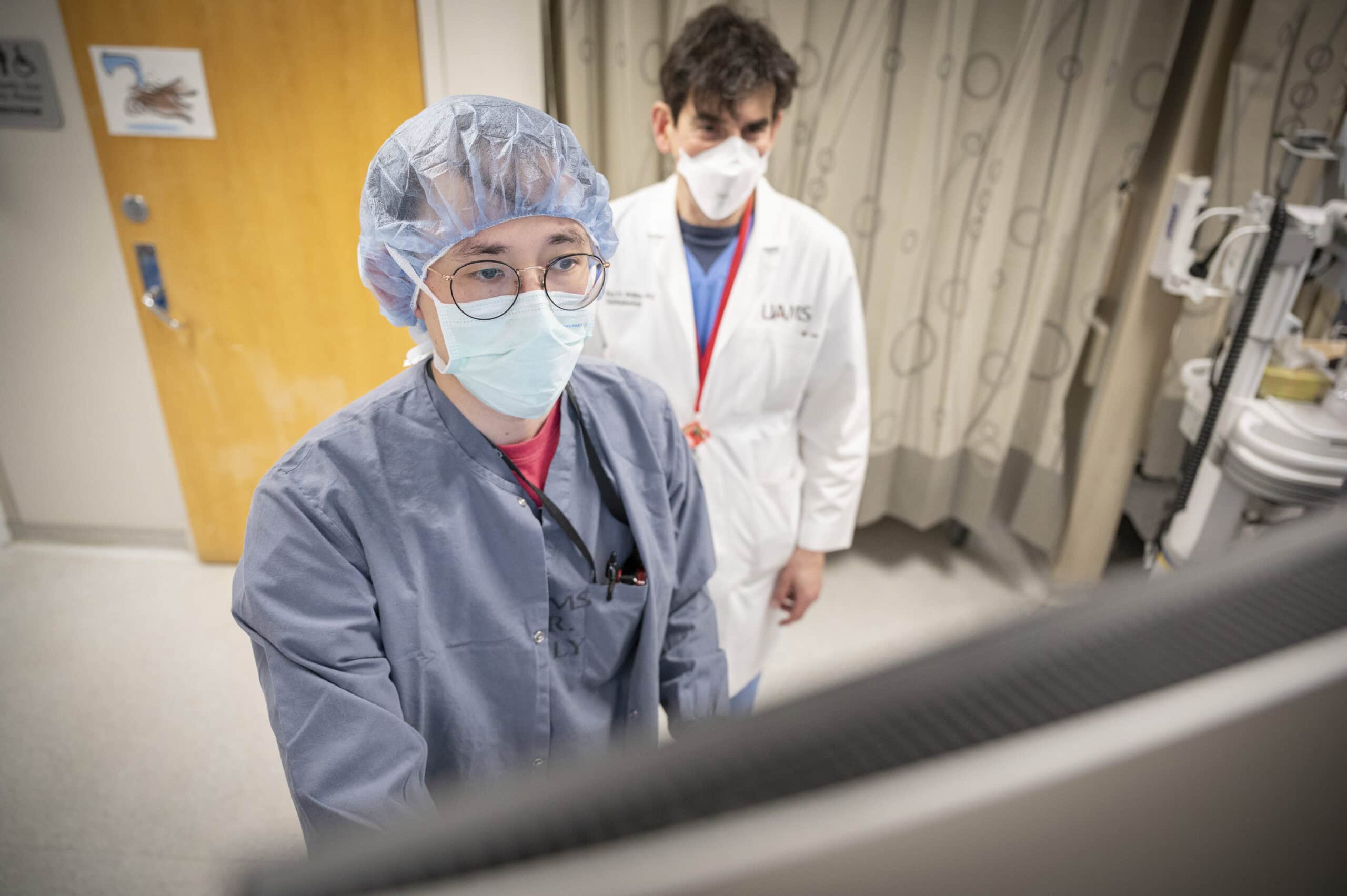
Alex Kwok, M.D., (left, with institute director Paul Phillips in the background) was one of several providers who volunteered to perform the surgeries.Evan Lewis
Terry Takamaru, a community health worker and translator with UAMS Northwest who has been involved with the program since its inception, said it has mostly grown through word-of-mouth. She said that it’s exciting to see people “able to do everything” after the surgeries.
“When they usually first come [to UAMS], they can’t see anything — they can only hear mine and [interpreter] Pearl Atlan’s voices when they call the clinic,” Takamaru said. “But after their surgery, they’re like, ‘Now I can see your face. Now I can put a face to the voice.’ I feel like we are a blessing to these patients. All of us that do this, Dr. Phillips, the whole coordinating team, the doctors preparing for each event our bosses, all the funders — I am beyond grateful that I get to be a part of this.”
Many more Marshallese in Arkansas still need this surgery, said Paul Phillips, M.D., director of the Jones Eye Institute. He hopes to increase the frequency of the surgeries over time.
“It is tragic that these folks have decreased vision and often blindness when a 30-minute procedure can restore their normal vision,” Phillips said. “It is an honor to take care of these patients and restore their vision. We’re looking forward to continuing to grow the program to serve more people.”
“I Am So Grateful”
Leviticus’ home is more than 6,000 miles away from Arkansas, on Kili Island. Coconuts are one of tiny island’s chief exports.
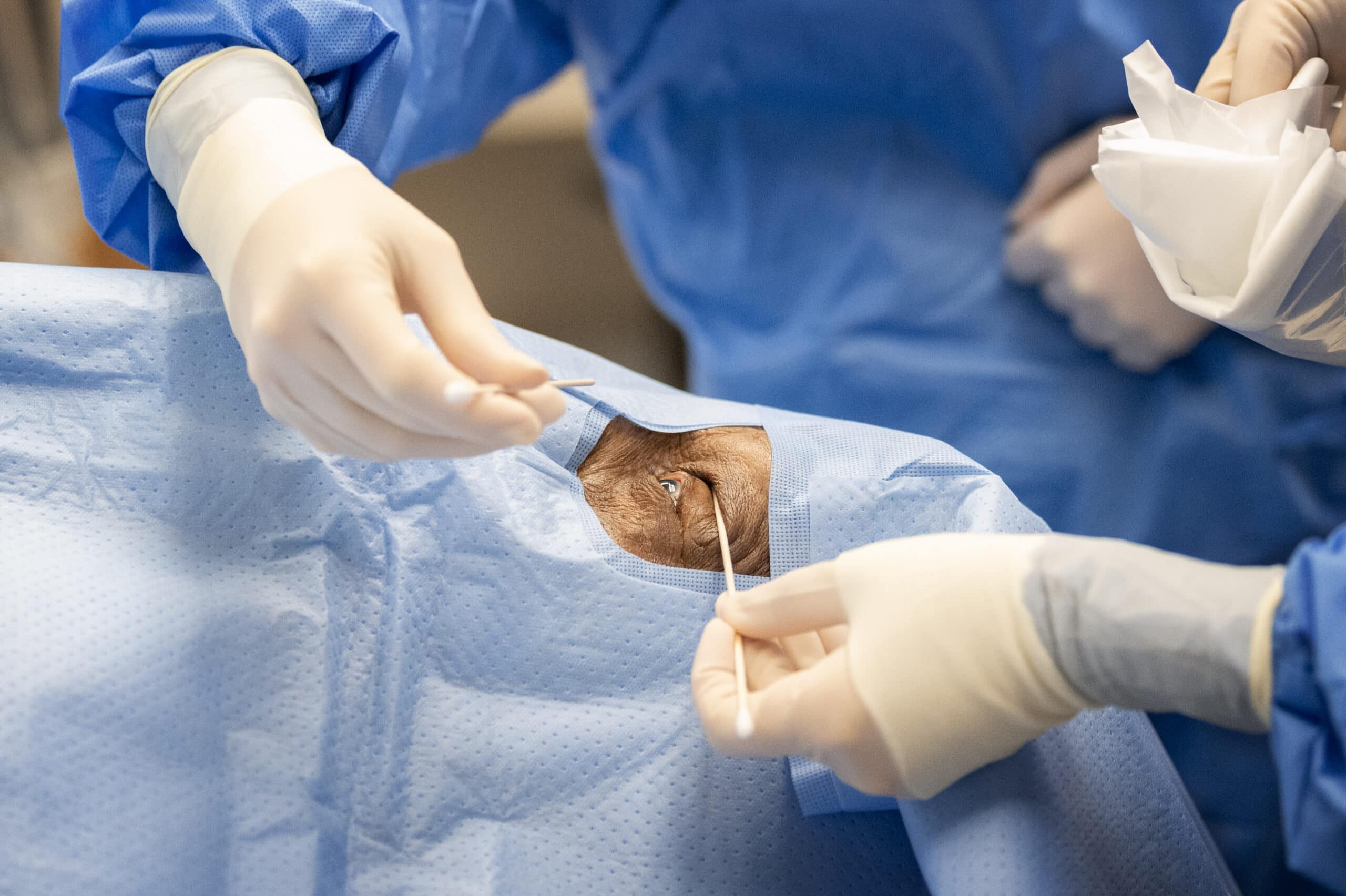
Many more Marshallese in Arkansas still need this surgery, Phillips said. He hopes to increase the frequency of the surgeries over time.Evan Lewis
Some time ago, Leviticus realized that he could no longer see well enough to husk or prepare coconuts. As his vision worsened, he became unable to do household chores or read his Bible. Often, he had to be led around by hand so that he didn’t bump into things or fall down.
“I am a deacon at the church [at home],” Leviticus said, through an interpreter. “I want to be able to read the Bible like I really want to, do carpentry and things around the house, and to be able to go place to place without assistance.”
Leviticus received his first cataract surgery at UAMS about a year ago and saw immediate improvement. Over time, however, his repaired right eye could no longer compensate as well, so he returned to have surgery on his left eye.
At dawn on Friday, May 29, Leviticus and 11 other Marshallese boarded a chartered bus to Little Rock, arriving early that morning to prep for surgery. Doctors and residents performed the surgeries one at a time, finishing around noon, and performed post-op exams that afternoon. Most of the patients saw significant improvement in their sight before they went home that evening.
Leviticus now has excellent vision for the first time in years. Alex Kwok, M.D., a fourth-year resident who performed the surgery, said Leviticus’ vision is now 20/30, and should improve further.
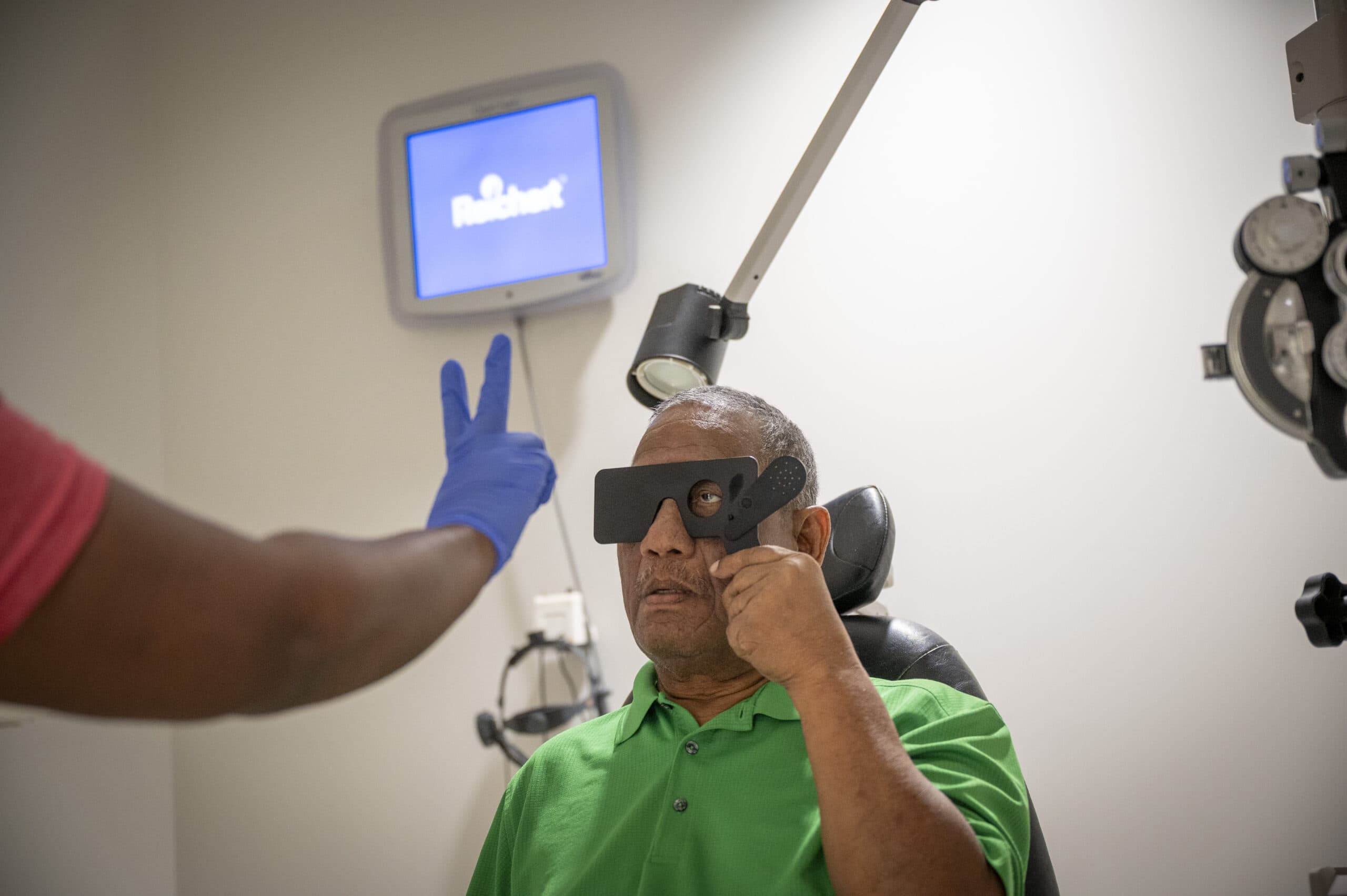
“I am so grateful,” Leviticus said through an interpreter. “I would like to express my gratitude to all of the providers, and thank God.”Evan Lewis
Kwok, who has performed several of these surgeries in his time as a resident, said that the organization and efficiency of the program is a strong testament to good teamwork.
“I think it’s a force of nature to take 10 people, bring them in, do exams, do all of their surgeries in the same day, and then send them on their way,” Kwok said. “It takes a lot of leadership, and a lot of effort from surgeons, technicians, and residents.”
Leviticus, a former councilman for eight years in the Marshall Islands, plans to return home and run for reelection to serve his people. After surgery, with a small plastic patch covering his left eye, he laughed and shook hands with Eye Institute team members to express his thanks.
“I am so grateful,” Leviticus said through an interpreter. “I would like to express my gratitude to all of the providers, and thank God.”
“This is a Really Great Program”
Patients recuperated from their surgeries in an adjoining room and ate lunch. Mandy Ritok, 51, of Springdale, had just received her first cataract surgery that day. Between bites, she reflected on the difficulties she had endured and the milestones she looked forward to celebrating.
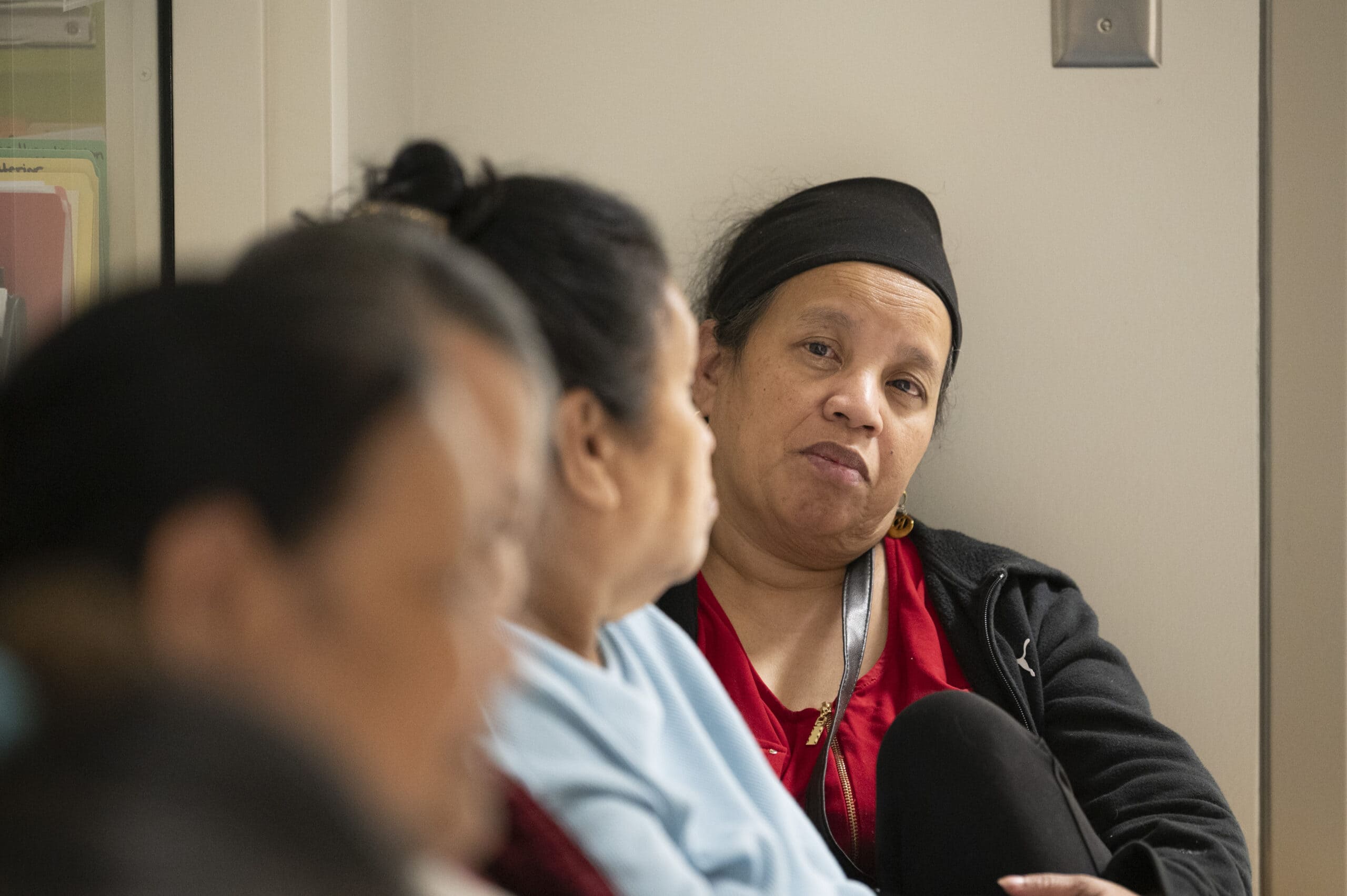
Mandy Ritok (facing camera) received her first cataract surgery so that she could see the faces of her five grandchildren again.Evan Lewis
Ritok, who is diabetic, started noticing blurred vision sometime last year. Not long after, she was involved in a car accident because she couldn’t see a vehicle in the other lane. She voluntarily stopped driving. Later that year, her workplace reorganized and she lost her job. Although she was asked to come back, Ritok decided not to return to work until her vision improved.
With her vision diminished, Ritok has needed help getting around. She stays indoors because the sun is too bright, making it harder to see. The hardest thing, she said, is not being able to see the faces of her five grandchildren — aged 10 months, 2, 3, 9 and 12.
At some point, Ritok said she heard about the “Gift of Sight” program from others in her community.
“I heard great things about people coming here,” she said. “People who’ve lost their vision, they come here and then when they’re done with their surgeries, they have their vision back, like really clear. That’s when I decided I should ask to be referred over here.”
With her left eye now repaired, Ritok was enthusiastic about being able to see her grandchildren again once her protective patch came off and her vision improved.
“I can’t wait!” she said. “I’ve prayed for that.”
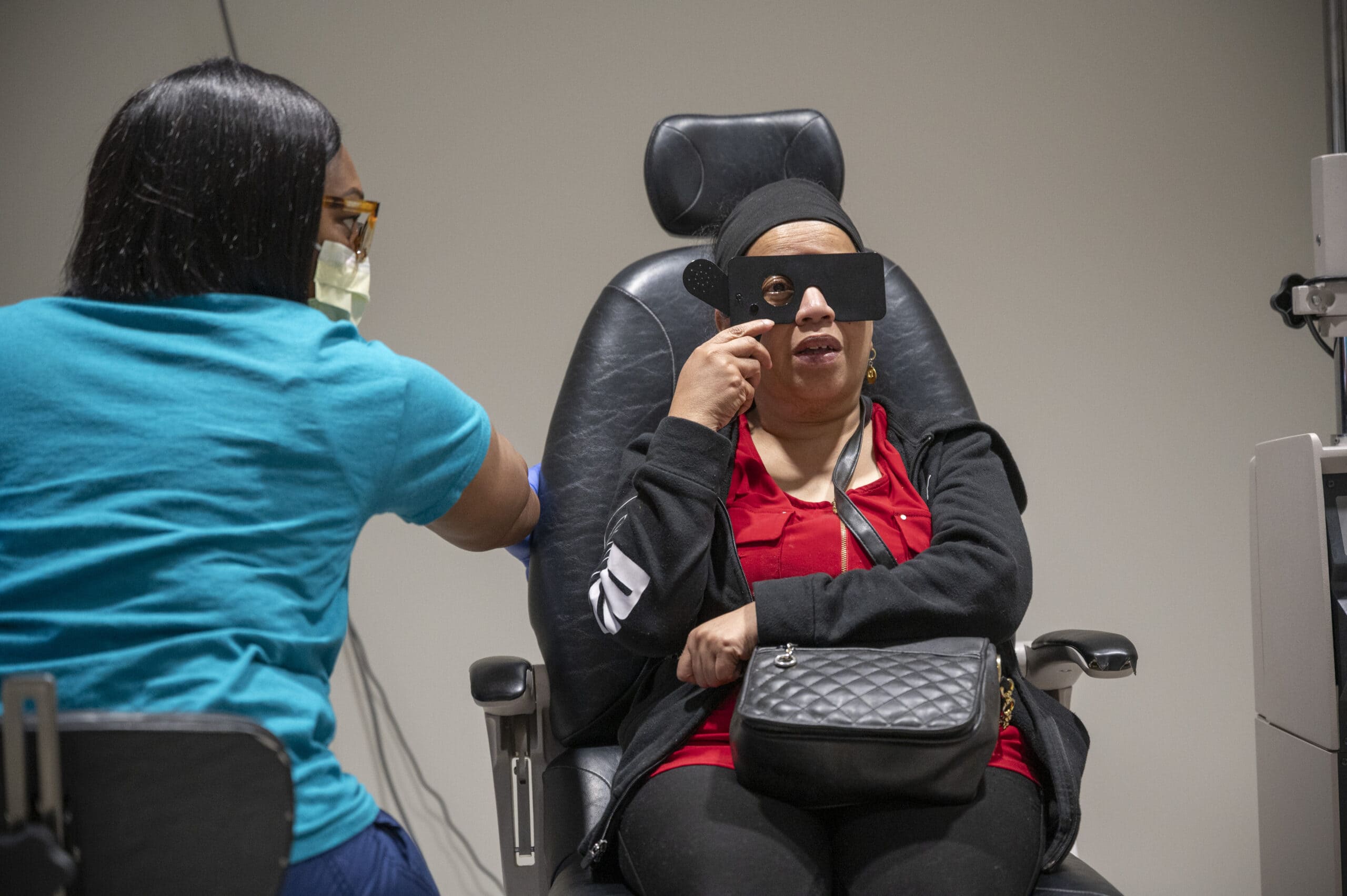
Ritok prayed for her vision to improve. She said she applied for the program after hearing about it from members of her community who had their sight restored.Evan Lewis
Ritok added that the program has made a big difference for her and many Marshallese.
“This program, I really like it,” she said. “I see a lot of people from my community, they got their vision back because of coming here. I want this program to be here in the future, because a lot of people cannot afford to see an eye doctor or pay for their surgeries. This is a really great program, and it has helped a lot of people, especially people with low income.”
Before they climbed back on the bus to Northwest Arkansas, several of the Marshallese patients gathered in the Eye Institute’s first floor lobby, where they serenaded staff with folk songs in what has become a small tradition. It’s another way to say thank-you before they return home.
Carina Sanvicente, M.D., said refining the program over several years has enabled Jones Eye to treat more patients with cataracts, as well as other conditions like diabetic retinopathy. When asked if she has gotten used to patients’ reactions when they regain their vision following the surgeries, Sanvicente simply laughed and shook her head.
“That never gets old,” she said, smiling. “That is definitely the best part — impacting them in a positive way.”