High School Students Conduct Research at UAMS’ Summer Under the Microscope Camp
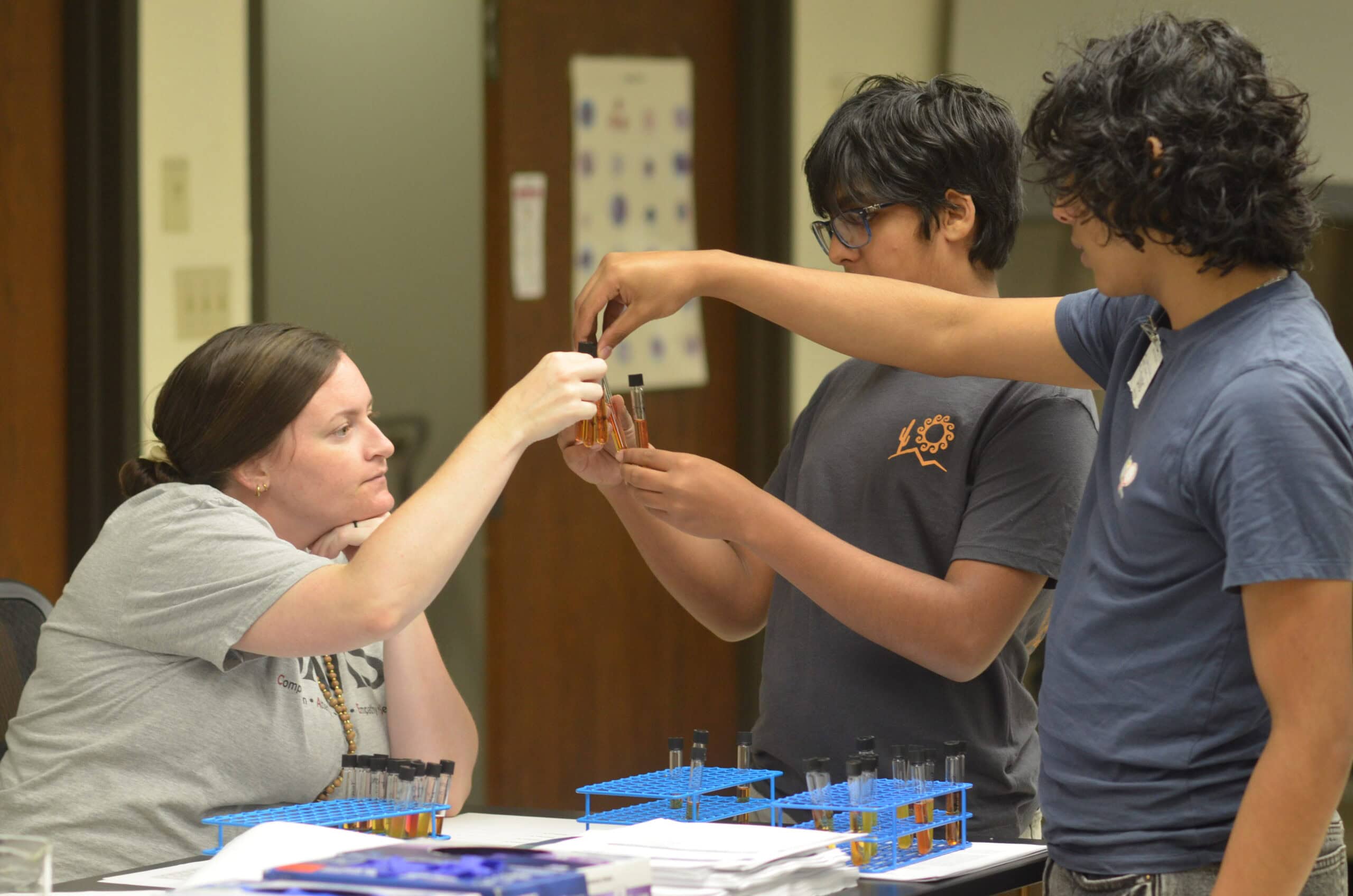
| The University of Arkansas for Medical Sciences (UAMS) Fay W. Boozman College of Public Health Department of Environmental Health Sciences (EHS) welcomed nearly 20 high school students to its inaugural Summer Under the Microscope camp.
Under the supervision of the department’s faculty, the students from around central Arkansas conducted various science-based research projects at UAMS labs. The students also participated in career discussions with environmental health science, toxicology, and public health professionals during the week-long camp that ran June 8-12.
Shelbie Stahr, Ph.D., MPH, assistant professor in the department, lauded the students’ intelligence, dedication to learning, and networking skills. Stahr said the participants elevated her enthusiasm for the next generation of scientists.
“This camp was a great opportunity for the students as well as us adults,” she said. “The number of questions and answers to discussions that the students had was impressive. It was rewarding and necessary to have the youths engaged in these science conversations to keep their minds rolling throughout the summer.
“I was blown away by the level of passion and interest the kids had.”
Yaseen Younus, a student at Little Rock Central High, was among the attendees. He had a blast being outdoors setting traps for, and examining, ticks.
“I had the chance to see how ticks contain viruses and pathogens,” he said. “I also got the chance to break it down to the ticks’ DNA to see what portions hold a pathogen. That was a lot of fun.
“Being part of this camp gave me a chance to work with the lab equipment, and I appreciate that. I’ve attended other camps and high school students don’t usually receive the chance to work in the lab. So, this camp was a lot of fun.”
Joleanna Churchwell, a student at Southwest Christian Academy in Little Rock, was impressed by the friendly, down-to-earth vibe of the camp. Being around good people while discussing science made the program fun, she said.
“I learned a lot,” Churchwell said. “We learned about vectors, arsenic, basically anything relating to environmental science. The camp was so full of information. In fact, what you’re often learning in school over a two-week period — we learned in just 30 minutes at the camp. It was awesome. I didn’t know that I could easily take in a large amount of information like that.”
Angela Koturbash, an Arkansas homeschool student, enjoyed the chance to be around other youths who shared her enthusiasm for science.
“I enjoyed the opportunity to participate in real science activities,” she said. “I came in expecting to do simple science lab procedures, but the camp far surpassed what I expected. We received the chance to conduct DNA extractions, tick identification, we set traps for mosquitoes, we analyzed our own water samples. It was all so interesting because we were very involved and constantly learning.”
Avi Moffitt, of Mount Saint Mary Academy in Little Rock, was grateful for the opportunity to work in a research lab. She knows the lab activities will prove beneficial for years to come.
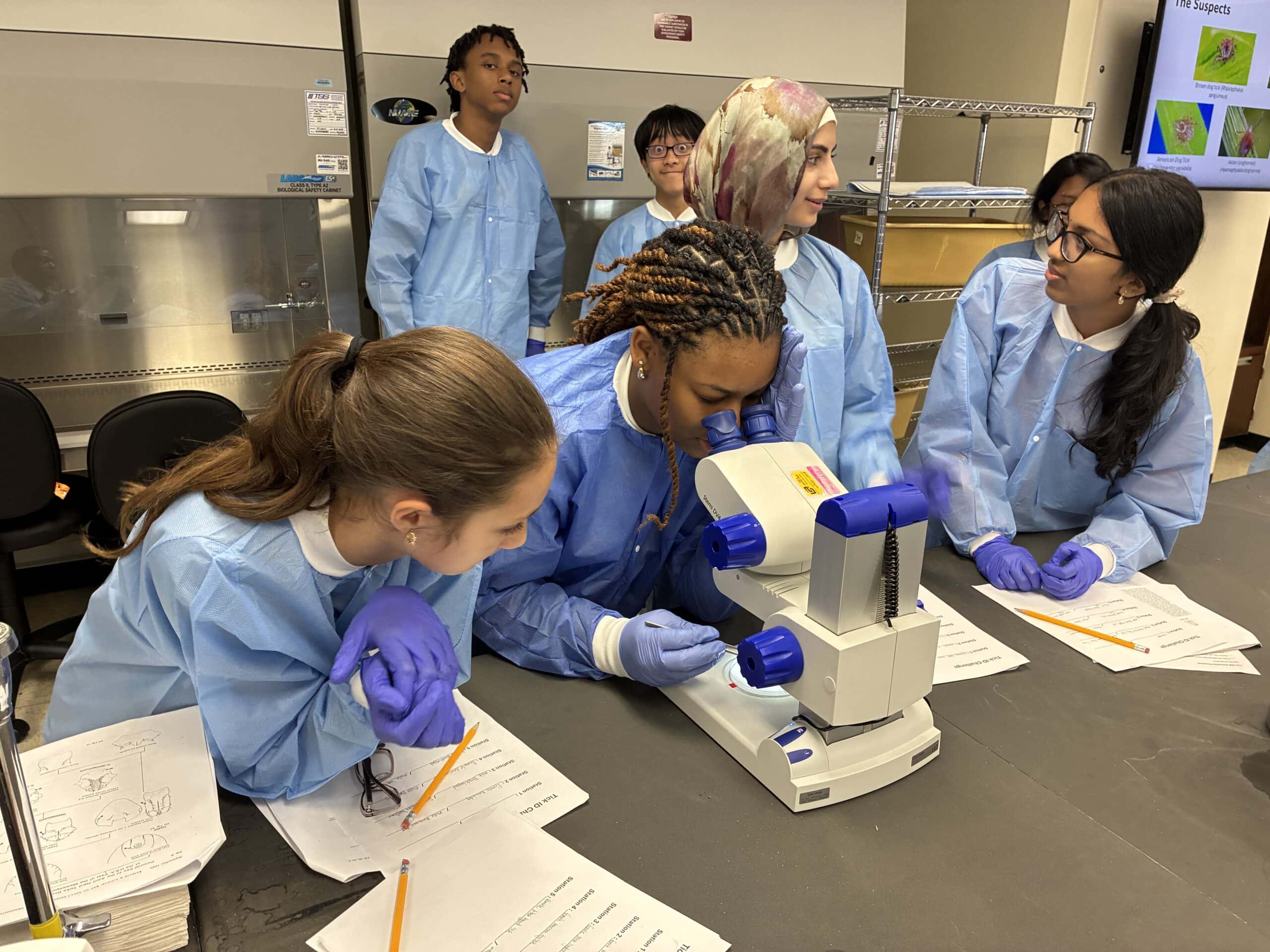
Students at the Summer Under the Microscope camp examine tics.
“The camp was very hands on and I didn’t expect that,” she said. “I enjoyed it. It was all very cool. The camp exceeded my expectations. This was an amazing experience. Working hands-on in labs was not something I expected to do this summer.”
Igor Koturbash, M.D., Ph.D., chair of the Department of Environmental Health Sciences, said his team worked more than a year to launch Summer Under the Microscope. Interacting with the students and seeing their enthusiasm was something he’ll always cherish.
“We knew there were a lot of high school students in Arkansas who had an interest in environmental health sciences,” he said. “We’re also aware that the state lacks environmental health sciences experts. The camp is a way to try and help to bridge that gap by working with high school students to develop a new generation of environmental health practitioners.”
“The most rewarding component was seeing how engaged the students were,” he added. “Before the camp started, we knew we had a great group of students who were passionate about science. But we didn’t expect the level of engagement they had. Throughout the week they constantly had an interest in the activities. They wanted to work and get hands-on environmental science experiences.”