View Larger Image
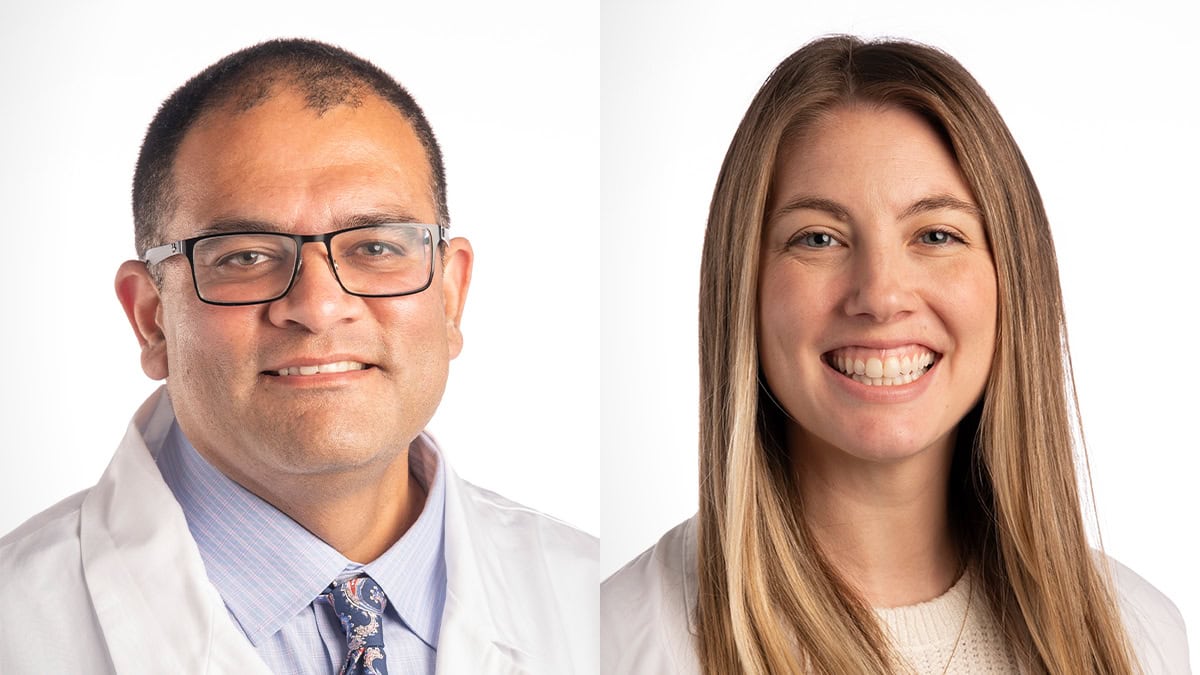
Meer Akbar Ali, M.D., and Lexie Vaughn, M.D.
UAMS Now Offers Enterra Therapy, a Minimally Invasive Treatment for Gastroparesis
| LITTLE ROCK — The University of Arkansas for Medical Sciences (UAMS) now offers Enterra Therapy, a treatment designed to relieve chronic nausea and vomiting due to gastroparesis, a medical condition that causes food to digest more slowly than normal.
In a minimally invasive procedure lasting one to two hours, a small gastric stimulator is implanted just under the skin, usually in the lower abdominal region, while the patient is under general anesthesia. The Enterra Therapy device gently stimulates the stomach muscles by sending mild electrical pulses through two attached wires that connect the neurostimulator to the stomach muscles. The neurostimulator also interrupts signals to the brain that cause repeated nausea and vomiting.
In a healthy digestive system, strong muscular contractions move food from the stomach through the digestive tract. But with gastroparesis, the stomach muscles work poorly or not at all, preventing the stomach from emptying properly.
After implantation, most patients go home the same day.
“We are excited to offer this novel treatment to our patients,” said Meer Akbar Ali, M.D., a neuro-gastroenterologist at UAMS who specializes in interactions between the nervous system and the digestive system. “Chronic nausea and vomiting caused by gastroparesis can be devastating. It can lead to constant discomfort that can disrupt work and relationships. While there is no cure, advanced therapies can improve symptoms and offer hope for a better quality of life for those who have not responded to traditional diet and medication treatments.”
One patient who had the device implanted nearly a year ago, in August 2025, calls it “phenomenal.”
“My quality of life is so much better now,” said Miranda Curbow, a Charleston woman who worked as a registered nurse for 35 years until four years ago, when an inherited condition, Ehlers-Danlos Syndrome (EDS), forced her to retire early.
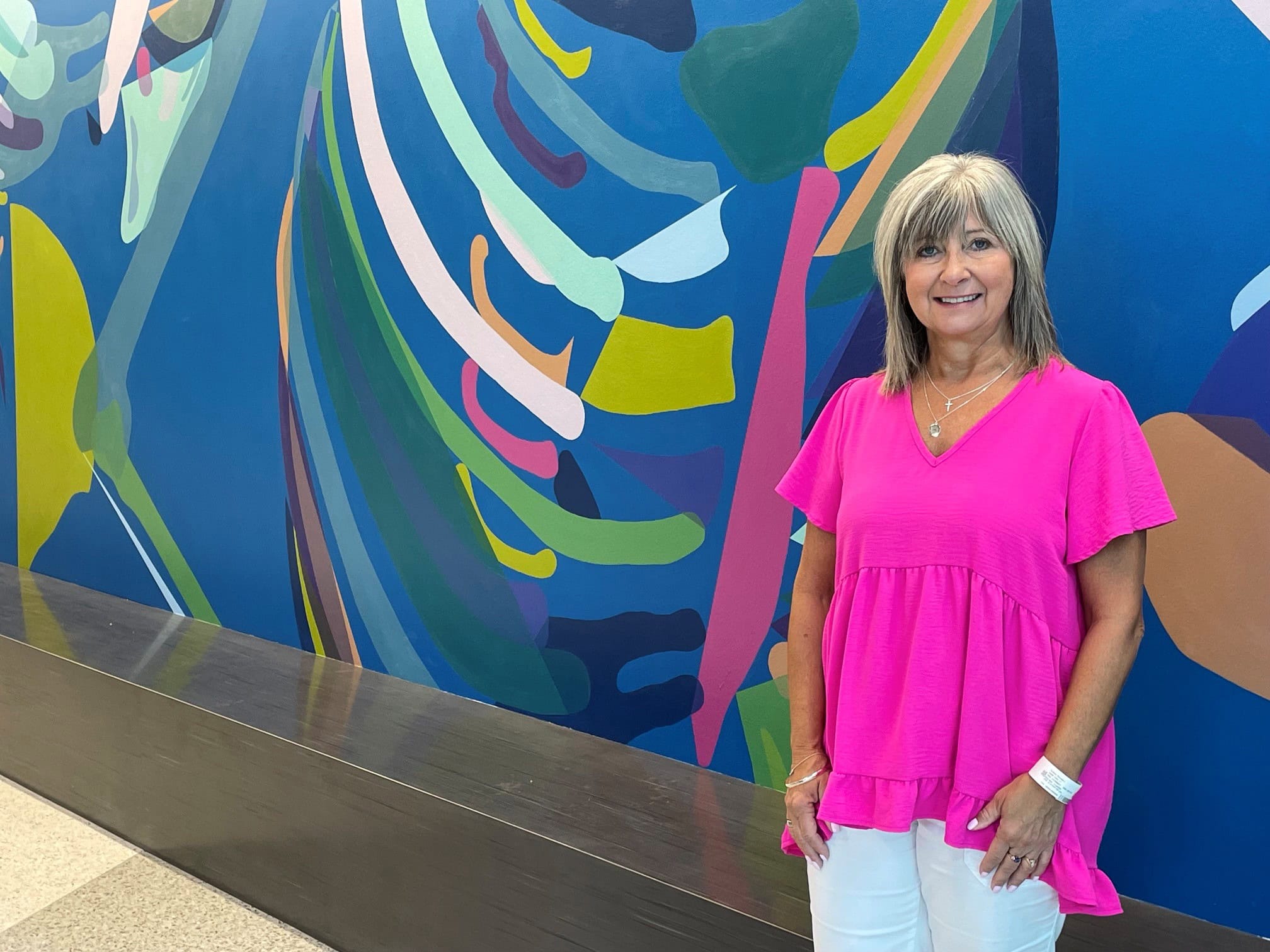
Miranda Curbow on a visit to The Orthopaedic and Spine Hospital for a checkup.
EDS includes 13 connective tissue disorders that, among other things, can render the nervous system unable to regulate involuntary bodily functions such as digestion.
Curbow, now 56, said she wasn’t diagnosed with EDS until she was in her late 40s. Then she developed new symptoms over the years, and in early 2025, her gastroparesis worsened to the point that her body couldn’t automatically signal the intestines to empty.
“All of a sudden, you can’t eat or have a bowel movement,” she said. “You start slowly dwindling away because you’re not absorbing nutrients. I had absolutely no appetite. I had gotten down to 123 pounds — my normal was 150 — and I lived on protein shakes and applesauce.”
Specialists who treated other aspects of her EDS told her that she needed to see a neuro-gastroenterologist, but she couldn’t find one until an online search turned up Ali, the only one in Arkansas, at UAMS.
“I was ready to do just about anything,” she said, when Ali told her about the Enterra procedure, then got on the phone himself to persuade her insurance company to cover it.
Before surgeon Lexie Vaughn, M.D., performed the outpatient procedure at UAMS, Curbow said she was so weak that “I couldn’t even say a whole sentence” without pausing to catch her breath.
“I couldn’t walk up a flight of stairs. Sometimes I couldn’t even walk across a room without having to have assistance,” she added. “My brain didn’t click well enough to really carry on a conversation, and I didn’t have enough air, because my heart and lungs were so taxed because I wasn’t giving them enough nutrition.”
Two or three weeks after the procedure, she said, “I had more energy. I could do things like make the bed or not have to sit down and rest while doing a load of laundry. I could actually stand up at my sink to rinse off my dishes instead of having to sit on a stool to do it.”
One day, she said, “I was in the kitchen, and I got a peanut butter cracker, started eating it, and I started crying. I didn’t know that there are different tastes in this. I could taste the peanut butter, I could taste the salt, I could taste the cracker. That’s a huge — huge — quality of life issue.”
Curbow lives on a Franklin County farm with her husband. Their three adult children have homes on the property, which helped her manage her EDS. She is also in an online support group and has recommended Ali to others in the group with gastroparesis.
“I know personally of about six people who have gone to Dr. Ali because of my recommendation, and they all say it is just unbelievable, the relief they found,” she said.
“As a nurse,” she added, “I am very picky, and he is so wonderful. He includes you in everything. He lets you help make decisions. He explains everything so well.”
Curbow returns to Ali every three months to make sure the implanted device is working as expected. During those visits, he can simply place a handheld programmer over the device to adjust the level of stimulation.
The device uses a battery that may last for five to seven years, depending on therapy settings, and is replaceable. It doesn’t interfere with a patient’s anatomy, allowing it to be paused or removed without leaving any damage behind.
Jenny Rogers, education and outreach coordinator for Enterra Medical, the device’s manufacturer, said that many times, dietary changes for gastroparesis, such as increasing liquid intake and restricting fats and plant fiber, and prescribed medications that are designed to improve the rate of stomach emptying and control nausea and vomiting, do not provide adequate symptom relief. In a recent survey of gastroparesis patients, she said, only 4% reported that they were satisfied with available treatments. She said that often times, the medications can’t be taken long-term.
When not managed well, gastroparesis can result in frequent emergency room visits and hospitalizations, Rogers said.
“Some patients throw up 20 to 30 times a day,” she said, adding that after the symptoms begin, the path to diagnosis can be “a long journey,” often taking five years.
Over time, the chronic symptoms and discomfort caused by gastroparesis can lead to low blood sugar, malnutrition, exhaustion, isolation, reduced activities, and a significant reduction in quality of life.
Enterra Therapy is the first and only device designed specifically to relieve nausea and vomiting symptoms. The advanced treatment option was FDA-approved as a humanitarian device more than 20 years ago for people aged 18-70 who have chronic intractable nausea and vomiting from gastroparesis stemming from diabetes or an unknown cause.
Rogers said that about 700,000 people in the United States have been diagnosed with gastroparesis, but the condition is believed to be underdiagnosed. Most gastroparesis patients are women in their 30s and 40s, while about one-third of diabetes patients develop gastroparesis. Enterra therapy is an option for a subset of those with gastroparesis. Rogers said more than 20,000 people across the country have received Enterra Therapy.
Anyone interested in learning more about the treatment at UAMS should seek a physician referral to Ali, who will determine if they are appropriate candidates. If they are, the implants are performed robotically by Vaughn.
UAMS is the state’s only health sciences university, with colleges of Medicine, Nursing, Pharmacy, Health Professions and Public Health; a graduate school; hospitals in Little Rock and Bryant; an orthopaedic hospital; a main campus in Little Rock; a Northwest Arkansas regional campus in Fayetteville; a statewide network of regional campuses; and seven institutes: the Winthrop P. Rockefeller Cancer Institute, Jackson T. Stephens Spine & Neurosciences Institute, Harvey & Bernice Jones Eye Institute, Psychiatric Research Institute, Donald W. Reynolds Institute on Aging, Translational Research Institute, and the Institute for Community Health Innovation. UAMS includes UAMS Health, a statewide health system that encompasses all of UAMS’ clinical enterprise, including partnering hospitals in Pine Bluff, Helena-West Helena, Mena, and Warren. UAMS is the only adult Level 1 trauma center in the state. UAMS has 3,813 students and 1,030 medical residents and fellows, and two dental residents. It is the state’s largest public employer with about 12,000 employees, including 1,200 physicians who provide care to patients at UAMS, its regional campuses, Arkansas Children’s, the VA Medical Center and Baptist Health. Visit www.uams.edu or uamshealth.com. Find us on Facebook, X (formerly Twitter), YouTube or Instagram.
###