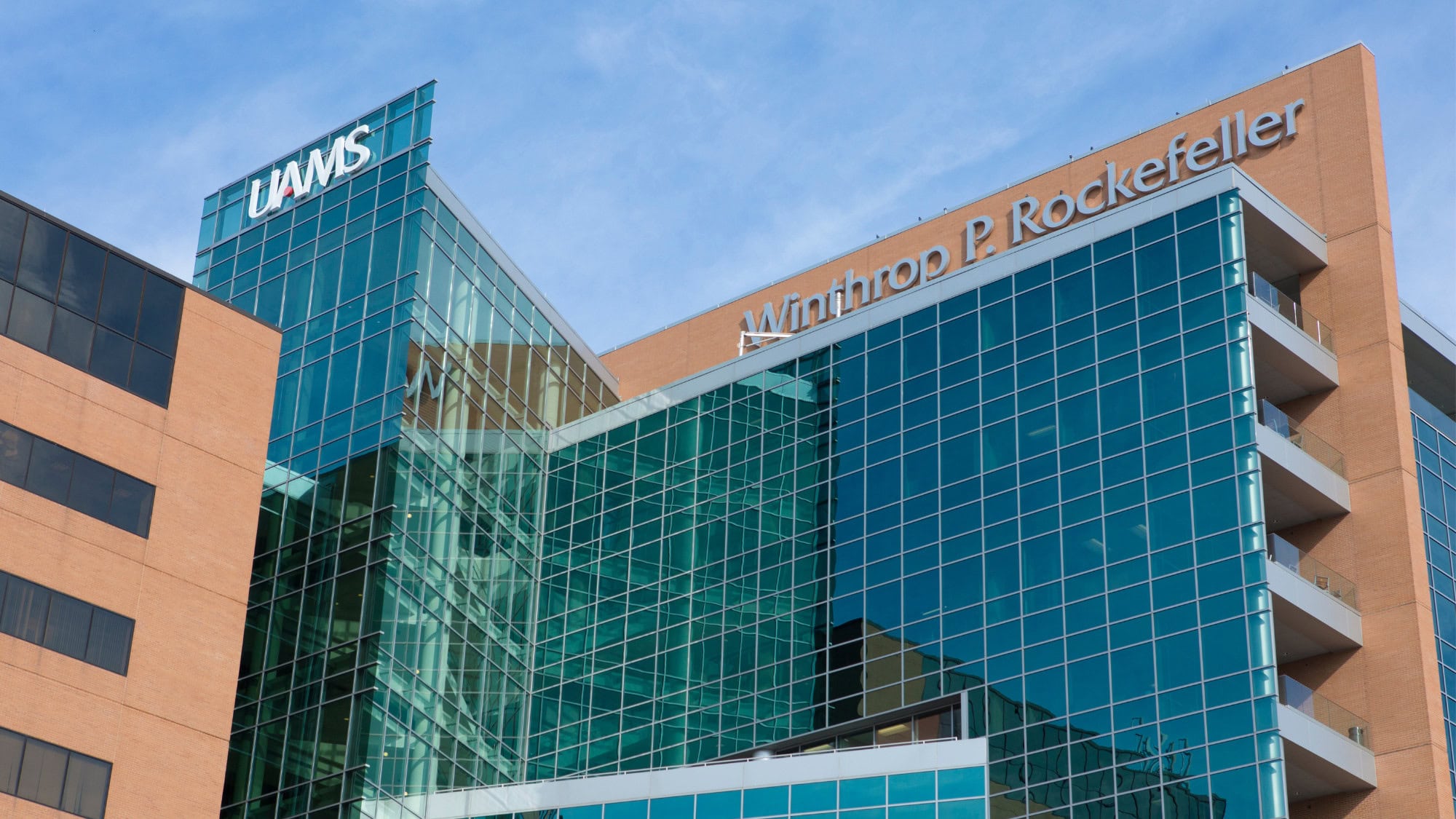
UAMS Winthrop P. Rockefeller Cancer Institute Researchers’ Blood Cancer Therapy Discovery Published in Top Journal
| LITTLE ROCK — Researchers at the University of Arkansas for Medical Sciences (UAMS) College of Medicine and Winthrop P. Rockefeller Cancer Institute made a breakthrough while studying a new therapeutic strategy for blood cancer that may lead to better future treatment options.
The successful study was published in Genes & Development, one of the top 10 research journals in the field of molecular biology and genetics.
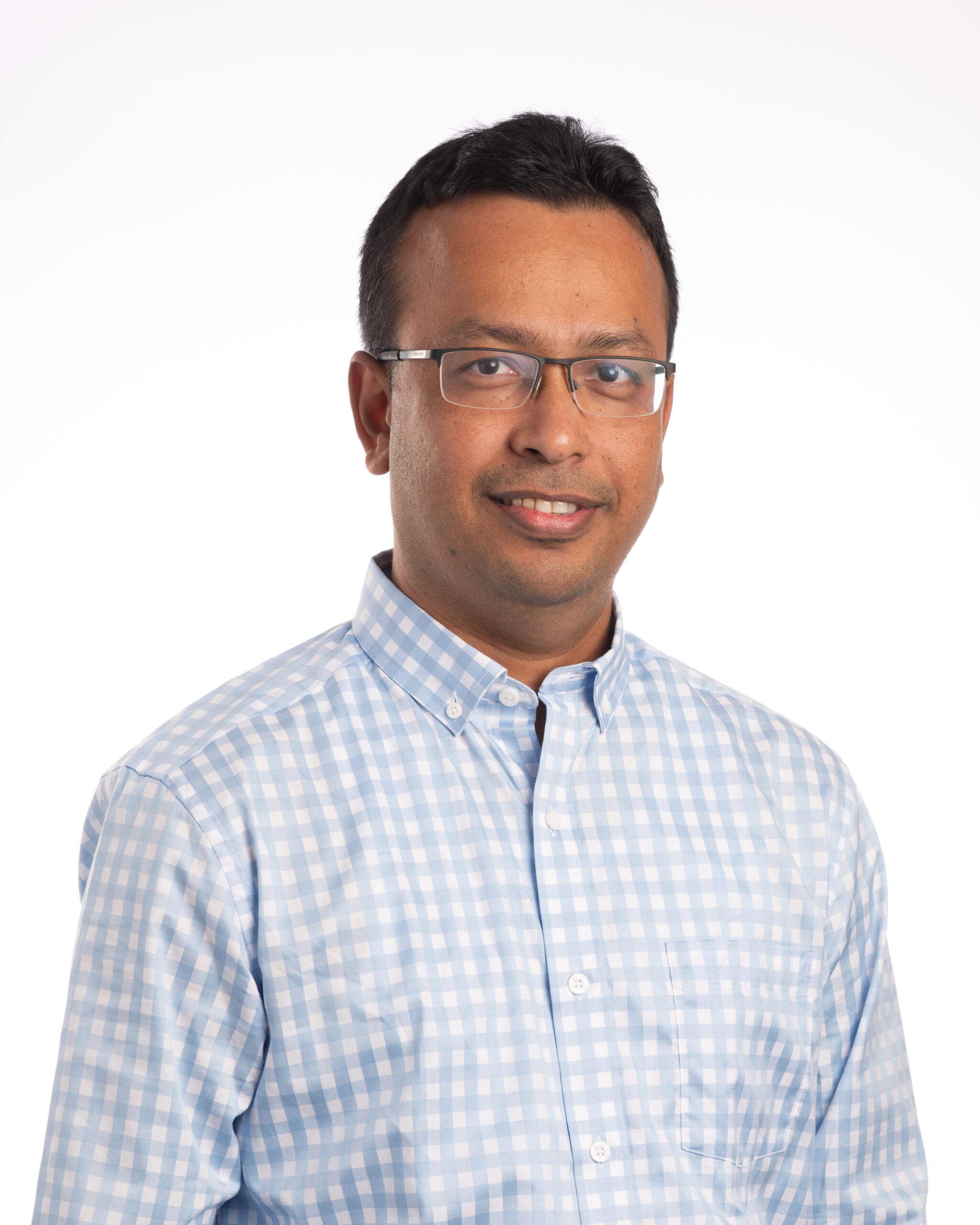
Mohammad Rahman, Ph.D.
This research was led by Mohammad Rahman, Ph.D., in collaboration with leading scholars in the field Omar-Abdel-Wahab, M.D., at Memorial Sloan Kettering Cancer Center, Adrian Krainer, Ph.D., at Cold Spring Harbor Laboratory, and William Dalton, M.D., Ph.D., at Johns Hopkins University. The lead authors of this study are two postdoctoral trainees in Rahman’s lab, Rafikul Islam, Ph.D., and Preeti Nagar, Ph.D.
The paper entitled, “Targeting EZH2 Oncogenic Splicing: Decoding the Regulatory Network and Antisense Correction,” focuses on the team’s efforts to use a treatment called antisense (ASO) pharmacology to correct mutations that can lead to blood cancer.
“This study exemplifies the innovative, high-impact research the Winthrop P. Rockefeller Cancer Institute is committed to,” said Michael Birrer, M.D., Ph.D., vice chancellor of UAMS and director of the Winthrop P. Rockefeller Cancer Institute. “Breakthroughs like this bring us closer to developing more effective treatment options for certain cancers.”
Research in recent decades has established that repeated mutations in proteins called splicing factors can cause several types of blood cancer and a variety of other tumors. Splicing factors play a critical role in human cells by helping our cells read and use genetic information. When these functions do not work correctly, cells can become unhealthy. Rahman’s team previously published research studying the impact of recurrent mutations in SRSF2. This current work builds on that discovery.
“We extended our focus to develop a therapeutic strategy to correct splicing that leads to cancer and conceived this study,” said Rahman.
When mutations occur in SRSF2, the tumor suppressing gene known as EZH2 is altered, ultimately weakening one of our body’s natural defenses against cancer. For this study, EZH2 was chosen as the target for therapy. The research team successfully demonstrated that using an ASO can repair the damage to EZH2 and partially restore the body’s ability to produce new blood cells.
Ultimately, this is an important step toward developing new treatment options for blood cancers that are difficult to treat. The team plans to continue testing this treatment strategy, expanding their focus to include additional genes.
“Our future research will develop ASOs targeting multiple genes and test the efficacy of a combined treatment,” said Rahman. A provisional patent application has been filed for the lead ASO developed in this study, with Rahman, Islam and Nagar listed as the inventors.
Rahman, assistant professor in the College of Medicine Department of Biochemistry and Molecular Biology and member of the Winthrop P. Rockefeller Cancer Institute, centers his research on alternative splicing (AS) and nonsense-mediated mRNA decay (NMD) two cellular processes that control genes as needed. Tumor cells often use AS and/or NMD, this work aims to detail how this happens with the goal of developing new effective cancer therapies.
This study was supported by the Winthrop P. Rockefeller Cancer Institute, the National Institute of General Medical Sciences of the National Institutes of Health awards R35GM154991 and P20GM152281, and Edward P. Evans Foundation.
UAMS is the state’s only health sciences university, with colleges of Medicine, Nursing, Pharmacy, Health Professions and Public Health; a graduate school; a hospital; a main campus in Little Rock; a Northwest Arkansas regional campus in Fayetteville; a statewide network of regional campuses; and seven institutes: the Winthrop P. Rockefeller Cancer Institute, Jackson T. Stephens Spine & Neurosciences Institute, Harvey & Bernice Jones Eye Institute, Psychiatric Research Institute, Donald W. Reynolds Institute on Aging, Translational Research Institute, and the Institute for Community Health Innovation. UAMS includes UAMS Health, a statewide health system that encompasses all of UAMS’ clinical enterprise. UAMS is the only adult Level 1 trauma center in the state. UAMS has 3,553 students and 1,030 medical residents and fellows, and two dental residents. It is the state’s largest public employer with about 12,000 employees, including 1,200 physicians who provide care to patients at UAMS, its regional campuses, Arkansas Children’s, the VA Medical Center and Baptist Health. Visit www.uams.edu or uamshealth.com. Find us on Facebook, X (formerly Twitter), YouTube or Instagram.###