UAMS College of Pharmacy Celebrates 75th Anniversary
| Seventy-five years ago, the University of Arkansas for Medical Sciences (UAMS) inherited a struggling pharmacy program from the College of the Ozarks and moved it to Little Rock. Today, the UAMS College of Pharmacy ranks among the nation’s best and serves as the primary pathway for the majority of Arkansas’ pharmacists, with campuses in Little Rock and Fayetteville.
Since 1951, the UAMS College of Pharmacy has worked to stay ahead of the needs of the profession and patient care. With only five deans over 75 years, the college has shown remarkable growth and continuity, while maintaining close ties to its graduates and the profession. More than 5,000 pharmacists have graduated from the college.
The story of the College of Pharmacy mirrors not only the growth of UAMS, but also that of Arkansas and the nation at large — adapting to the needs of patients across decades while maintaining relationships that span generations.
Beginnings in Clarksville, Continued Growth (1951-1976)
Between 1906 and 1951, Arkansas students aspiring to become pharmacists matriculated at several places, many of them out of state. As 1950 ended, the nexus of pharmacy education in the state was a department within the College of the Ozarks in Clarksville. When the program at Clarksville faced challenges beyond its fiscal means, then-Gov. Sid McMath and the University of Arkansas arranged its transfer to Little Rock. The campus was named University of Arkansas Medical Center once the two colleges — Medicine and Pharmacy — were located together.
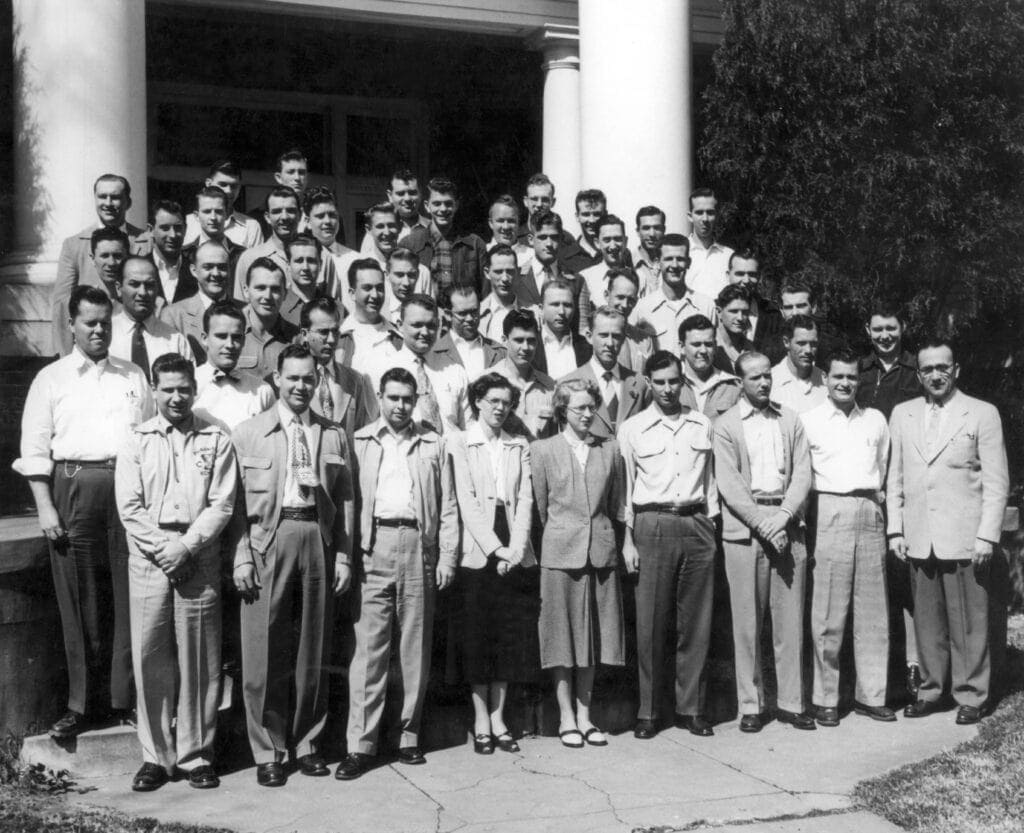
The UAMS College of Pharmacy Class of 1952.
This final relocation proved rewarding for the academic program and for the profession at large.
In 1951, McMath used funds from a new cigarette tax to secure $7.4 million for a new University Hospital on a 26-acre site on West Markham Street in what was then the outskirts of Little Rock. College of the Ozarks second-year students moved to Little Rock at summer’s end. At that time, the pharmacy school was located in a surplus state-owned facility at 16th and Lewis Streets that had served as the Graduate Center.
Students in their first year of study took courses at the University of Arkansas in Fayetteville. Founding Dean Stanley Mittelstaedt, Ph.D., and another faculty member commuted to Fayetteville to teach the pharmacy college component of the curriculum to first-year students. Courses for the final year of study were taught in Little Rock. After 1952, all students studied in Little Rock.
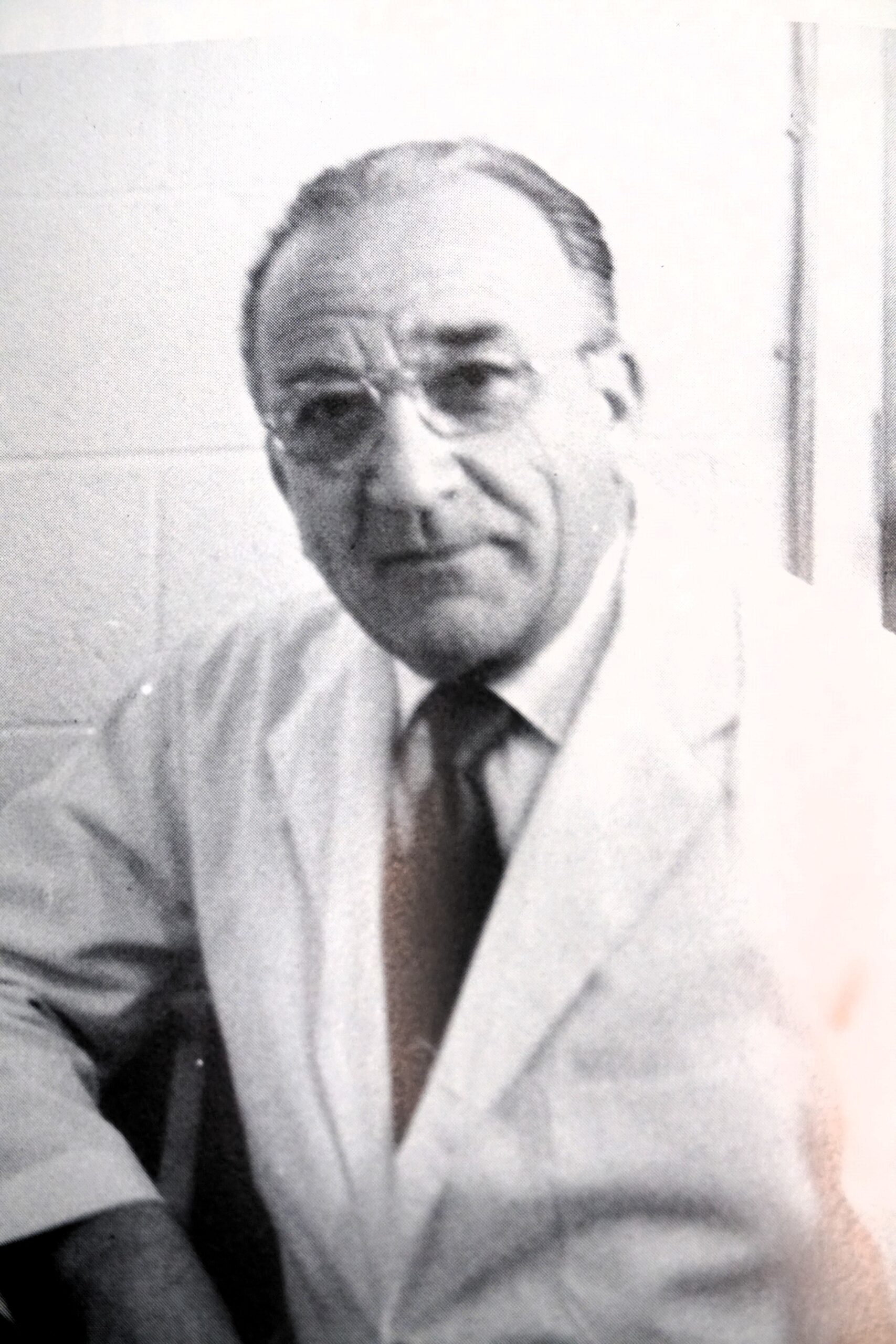
Stanley Mittelstaedt, Ph.D., was the college’s first and longtime dean.
By 1956, the college relocated to the present-day UAMS campus in Little Rock, the same year the new University Hospital, now UAMS Medical Center, opened. By this time, the faculty had grown and all classes in the curriculum were taught on the new campus. The third floor of the Winston K. Shorey Building became its new home.
As UAMS transformed from a small medical school with a charity hospital into an academic health center and research leader, the College of Pharmacy grew alongside it. It was also around this time that the pharmacy profession began to reshape itself to focus on patient-centered care.
In 1973, the college created the Arkansas Poison and Drug Information Center, centralizing the state’s seven poison treatment centers under one roof. Karrol Fowlkes, Pharm.D., then an assistant professor, advocated for pharmacy colleges to run poison centers, a novel idea at the time. Although it receives state funding now, for almost 20 years of the center’s history, the College of Pharmacy was its sole financial support. Today, the center provides a free, statewide resource.
More significant milestones were yet to come, bringing the school national recognition.
Transformative Change in the Milne Era (1977-2003)
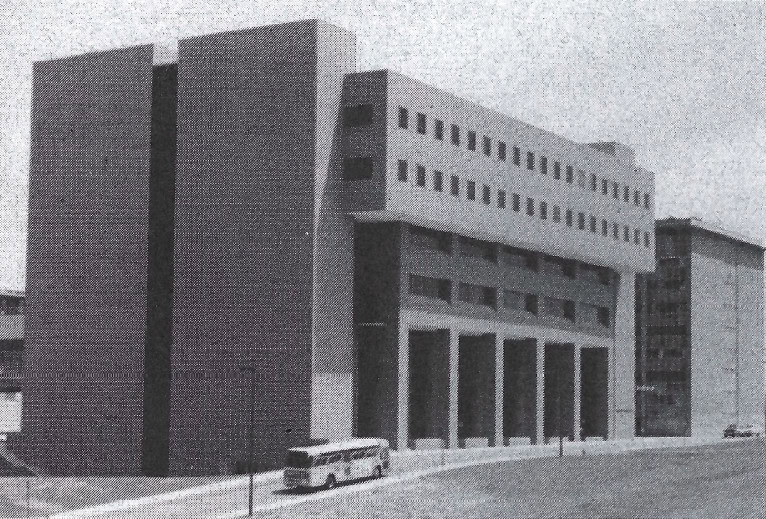
The newly built Education II building in 1977.
In 1977, the College of Pharmacy changed locations once more, taking up residence in the newly built Education II Building, where it remains today. In that same year, Mittelstaedt retired as founding dean and Larry D. Milne, Ph.D., arrived. He was then the youngest pharmacy dean in the country, and ultimately the longest-serving dean of a college of pharmacy in the United States when he retired in 2003. During his three decades as dean, Milne made changes that built an educational foundation that profoundly influenced the future of the profession.
The 1980s saw the adoption among some American colleges of the Doctor of Pharmacy degree in place of the Bachelor of Science in Pharmacy degree. Milne and the faculty determined that the Pharm.D. would in time be required as the entry-level degree for pharmacy licensure.
Milne was instrumental in transforming the college’s curriculum to include more patient care instruction. He also set what would become a national benchmark by converting the college’s three-year B.S. in Pharmacy degree into the now-standard four-year Pharm.D. Under his leadership, the college graduated the first all-Pharm.D. class in 1993, well ahead of the mandated roll out of the Pharm.D. degree in 2000. The work of the 1980s enabled Arkansas students to stand among the early doctoral graduates. It was a change that transformed pharmacy practice and patient experience into the future.
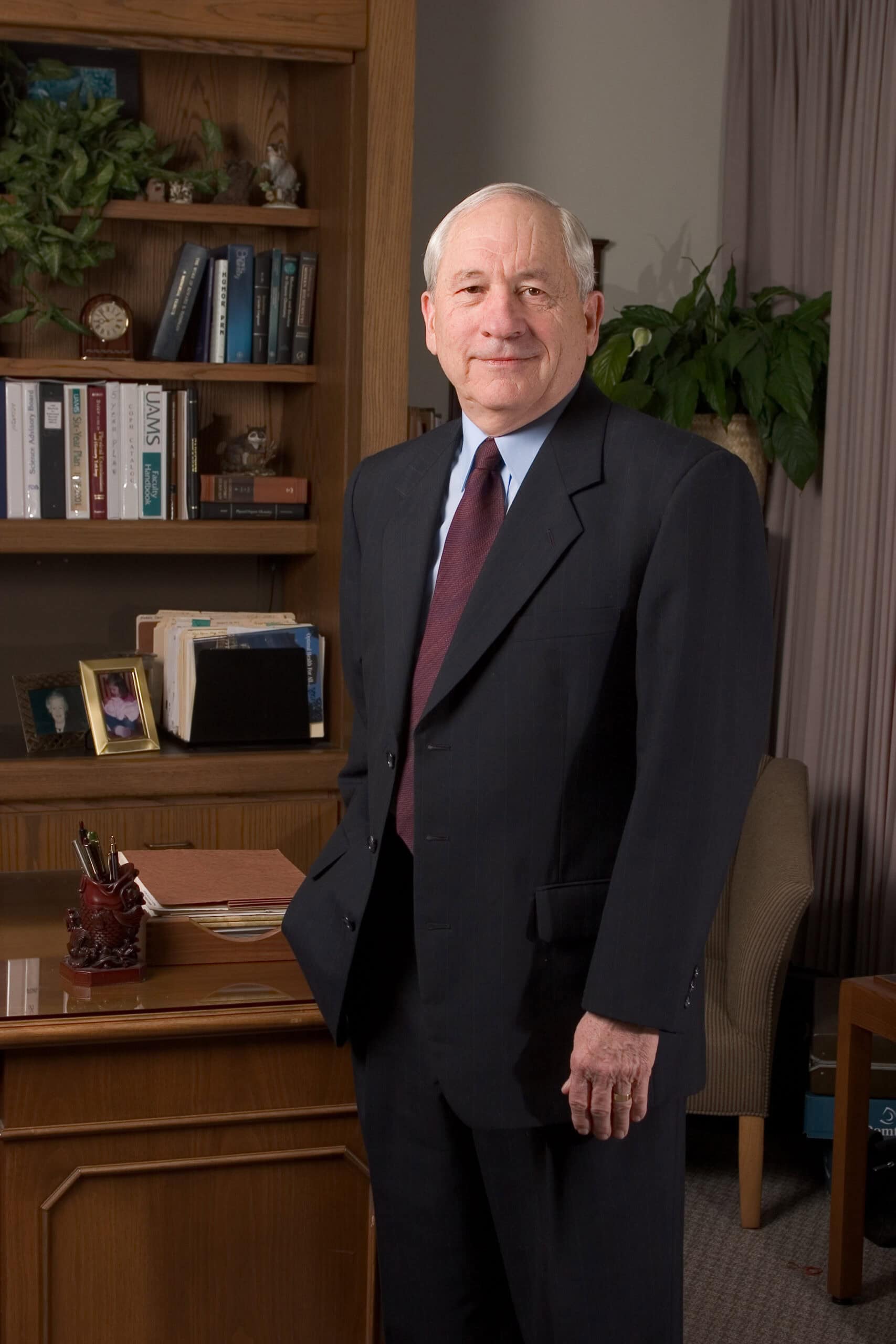
Milne was instrumental in transforming the college’s curriculum and national profile.
Milne also worked to ensure that the Pharm.D. degree was made available for pharmacists holding the bachelor’s degree. The college did this by building a curriculum that did not require them to leave established practices to return to campus. The faculty developed courses that delivered the new curriculum in distance learning formats, enabling nearly 1,000 pharmacists to earn the Pharm D. through the nontraditional Pharm.D. degree pathway.
Around this time Arkansas emerged on the major level of pharmacy leadership. Charles M. West, P.D., served as president and then executive vice president for both the Arkansas Pharmacists’ Association (APA) and the National Community Pharmacists Association (NCPA). Lester Hosto, P.D., served as executive director of the Arkansas State Board of Pharmacy and became the first Arkansan to serve as president of the National Association of Boards of Pharmacy (NABP). They helped elevate the collaborative, collegial profile of Arkansas pharmacy into a national model. This has continued to the present day, with notable contributions from Gene Graves, Pharm.D.; James Rankin, Pharm.D.; Mark Riley, P.D.; Lenora Newsome, P.D.; Nicki Hilliard, Pharm.D.; Brandi Hamilton, Pharm.D., Kristin Riddle, Pharm.D.; and many others.
A Bridge to the Future (2004-2018)
After Milne accepted a role as UAMS vice chancellor for academic affairs and research administration, the college recruited Stephanie Gardner, Pharm.D., Ed.D., as its third dean. Under her leadership, the College of Pharmacy increased its enrollment by over 40%, added new programs, and built a nationally recognized research enterprise.
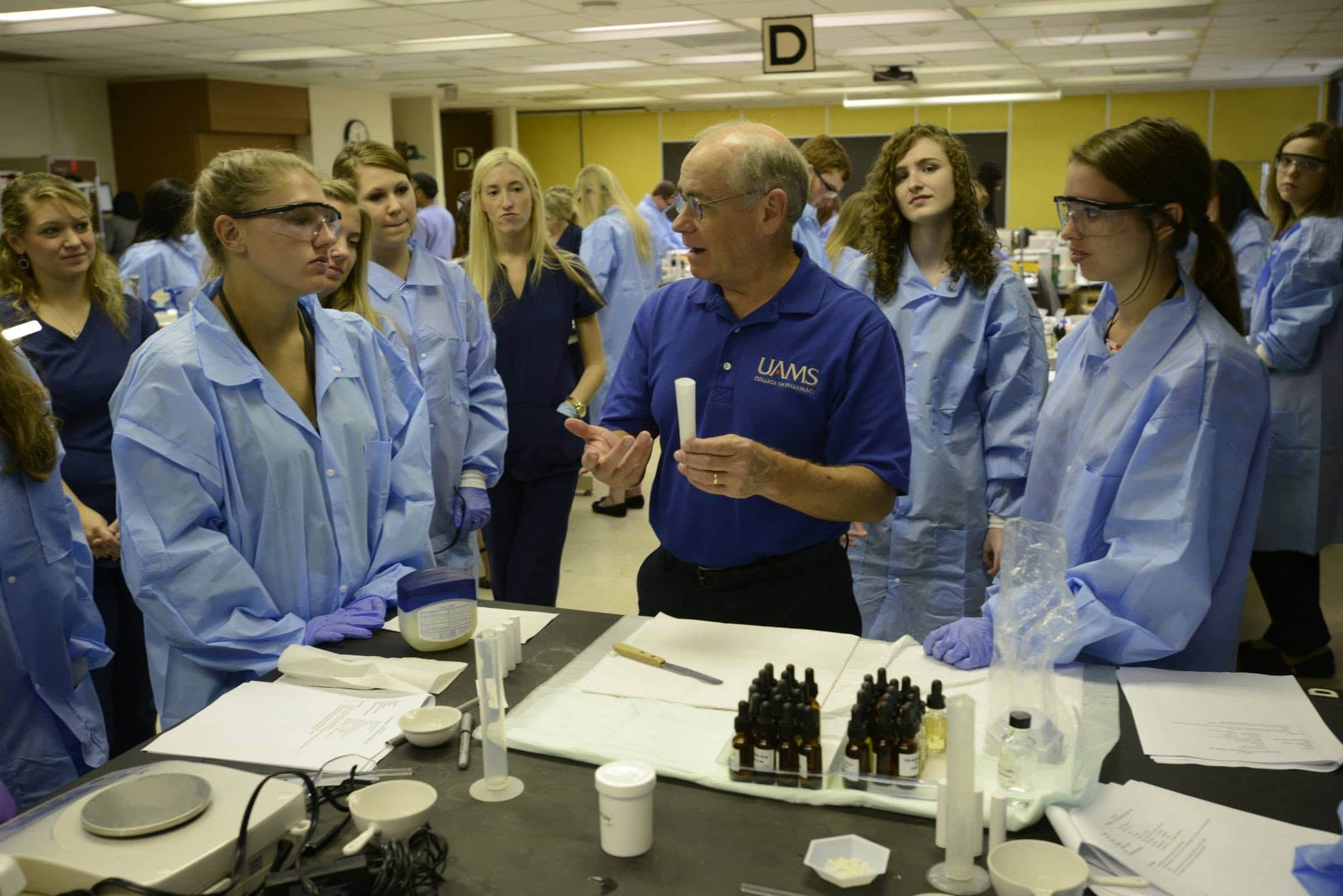
Eddie Dunn, Pharm.D., teaches students at pharmacy camp in 2012.
In 2004, the college established the Evidence-Based Prescription Drug Program (EBRx), with the priority of selecting the best quality of drugs for the state’s Medicaid patients. In just three years, the program saved Medicaid nearly $40 million. The program became a nationally recognized example of how academic pharmacy can directly enhance health policy, population health, and responsible stewardship of public resources.
The most dramatic transformation was in research. During Gardner’s tenure, the college assembled more than $12 million in resources, secured 17,000 square feet of additional research space, and recruited key researchers to build a world-class research program. The college went from having no extramural funding to being ranked in the upper third of extramurally funded colleges and schools of pharmacy almost overnight. Implementation research vaulted to national attention in 2012, thanks to the work of Geoffrey Curran, Ph.D., professor of pharmacy practice.
Gardner, a proponent of interprofessional education and collaboration, helped establish a primary care pharmacy residency program in partnership with UAMS Area Health Education Centers (now UAMS Regional Campuses) across the state. Other programs, such as the Pharmaceutical Evaluation & Policy or “PEP” track, began offering master’s and later doctoral degrees. The college also established its now-standard postgraduate year residencies across the state.
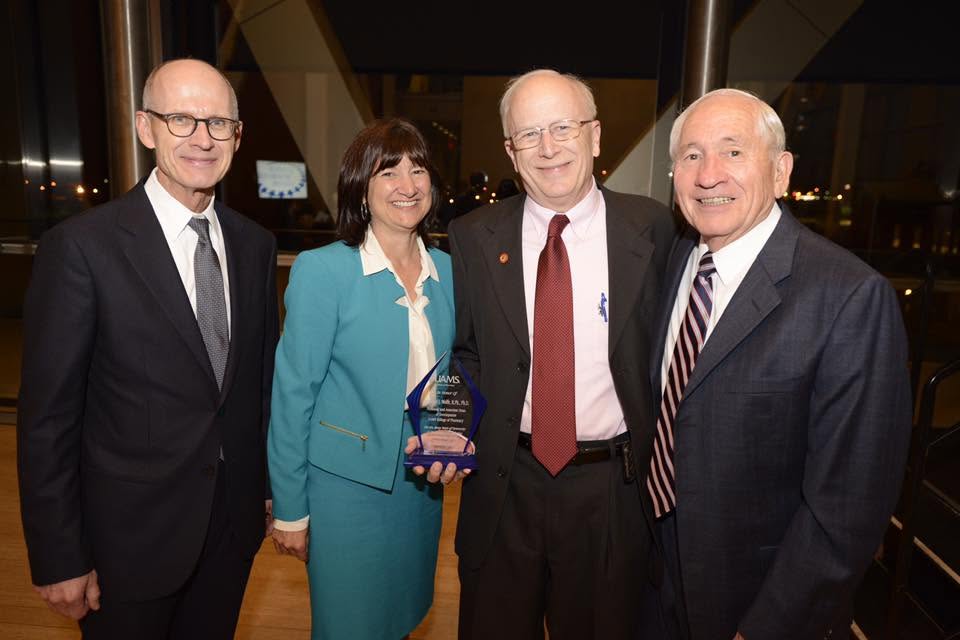
(From left to right) Keith Olsen, Pharm.D., Stephanie Gardner, Pharm.D., Ed.D., Jonathan Wolfe, Ph.D.., and Larry Milne, Ph.D., in 2016.
It was also during this time that the college expanded its footprint, opening a second campus in 2011 in Fayetteville to reach students and patients in rapidly growing Northwest Arkansas.
The college also saw a significant increase in philanthropic donations, creating its first endowed chairs, including the College of Pharmacy Dean’s Chair, established in 2010. A second endowed chair in Pediatric Therapeutics soon followed. The college progressed from having three endowed scholarships to having 34 during her tenure.
Keith Olsen, Pharm.D., the college’s fourth dean, largely continued the work that Gardner began after she accepted a position as UAMS provost and chief strategy officer in 2015.
Ultimately, the college would be well prepared to weather a new crisis in the coming years that tested the collective will of the healthcare industry, the nation, and the world.
From Pandemic to the Present (2019-2026)
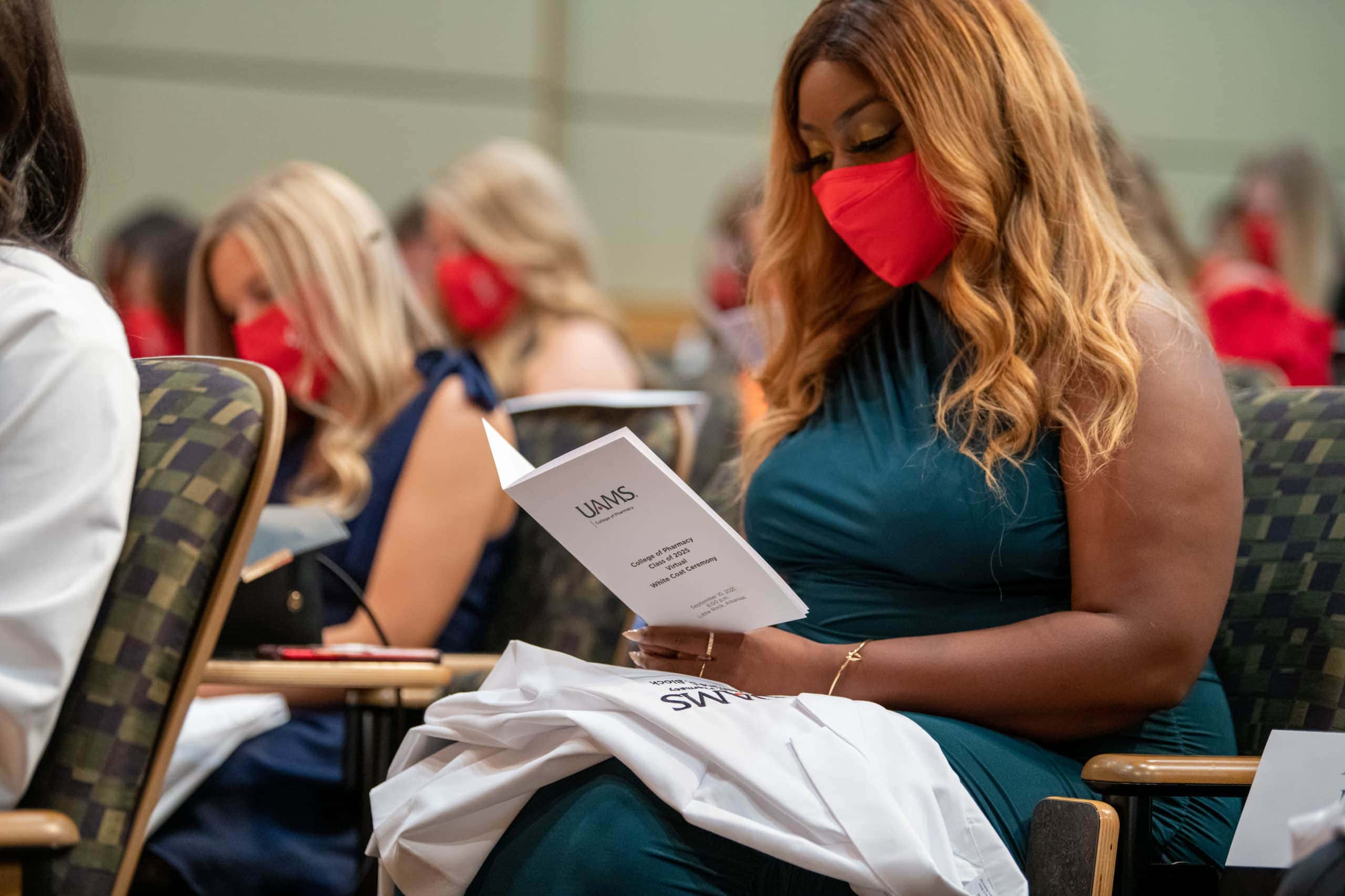
Masks became a facet of everyday life during the height of the COVID-19 pandemic.
Beginning in late 2019 and coming to a head in early 2020, the COVID-19 pandemic swept across the world with unprecedented power, causing widespread lockdowns, suspension of public services, and resulting in millions of deaths. One new element of the innovative Pharm.D. program had been instruction in vaccine administration. UAMS pharmacy graduates quickly used their education to demonstrate leadership as vaccination experts.
The pandemic brought on an increased role in patient care for pharmacists everywhere. It also put an increasing strain on poison control centers. Through its education, research, patient care, and service, the College of Pharmacy adroitly managed these new demands.
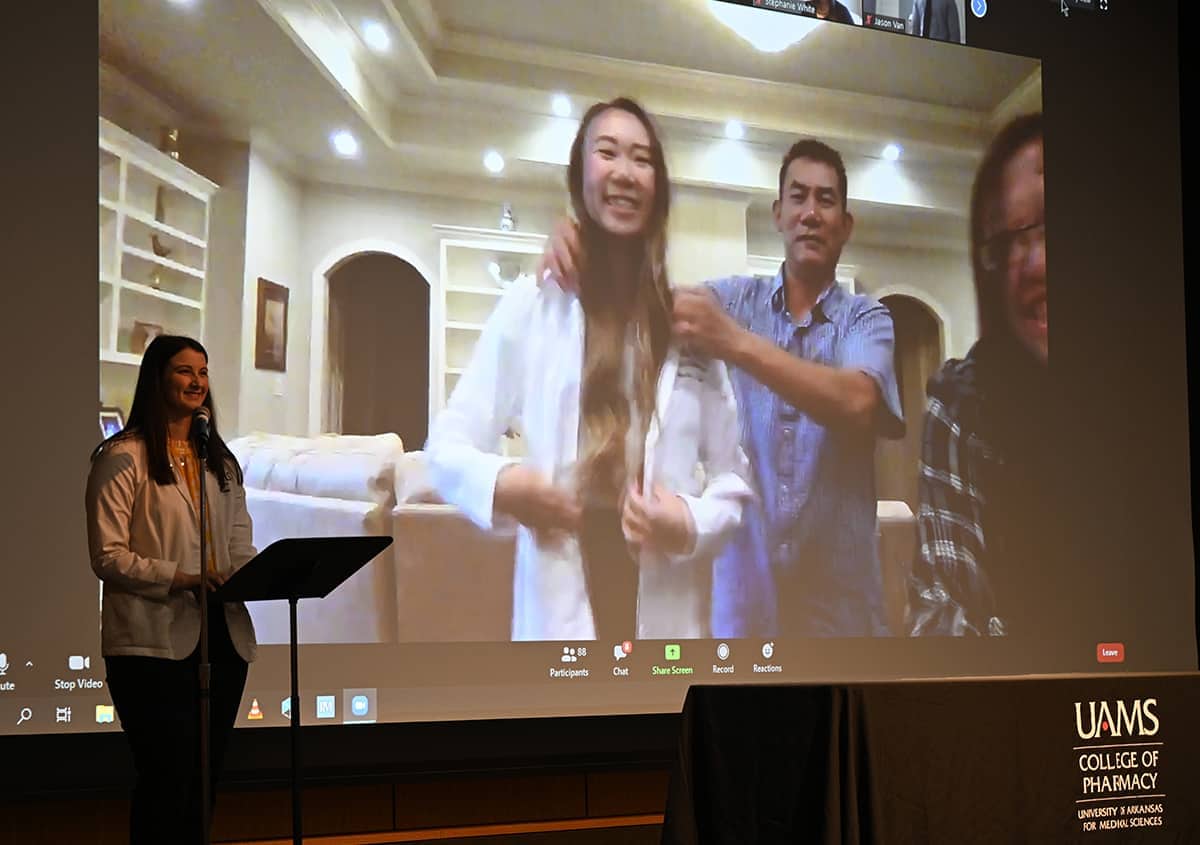
Virtual ceremonies during the pandemic allowed the college to honor its students remotely.
Cindy Stowe, Pharm.D., the college’s fifth dean, assumed her new role at UAMS just months before the pandemic struck. Under her leadership, the college quickly pivoted to remote instruction and held its first virtual convocation in May 2020. Students would eventually return in masks for in-person orientation in 2021, with in-person convocation returning in 2022.
Students participated in vaccination drives, endured the difficulties of virtual-only instruction, and made the best of ever-changing practice sites during rotations. Today, the college has two scholarships honoring the 2020 and 2021 graduating classes for perseverance and resilience.
Beginning in 2020, the college received greater national recognition, ranking in the top third of U.S. News & World Report’s best pharmacy colleges. The college maintains a lower tuition cost compared to many other private and state-supported pharmacy colleges, along with robust, award-winning student organizations and one of the nation’s few nuclear pharmacy certifications.
Stowe has reshaped the College of Pharmacy to meet this modern era.
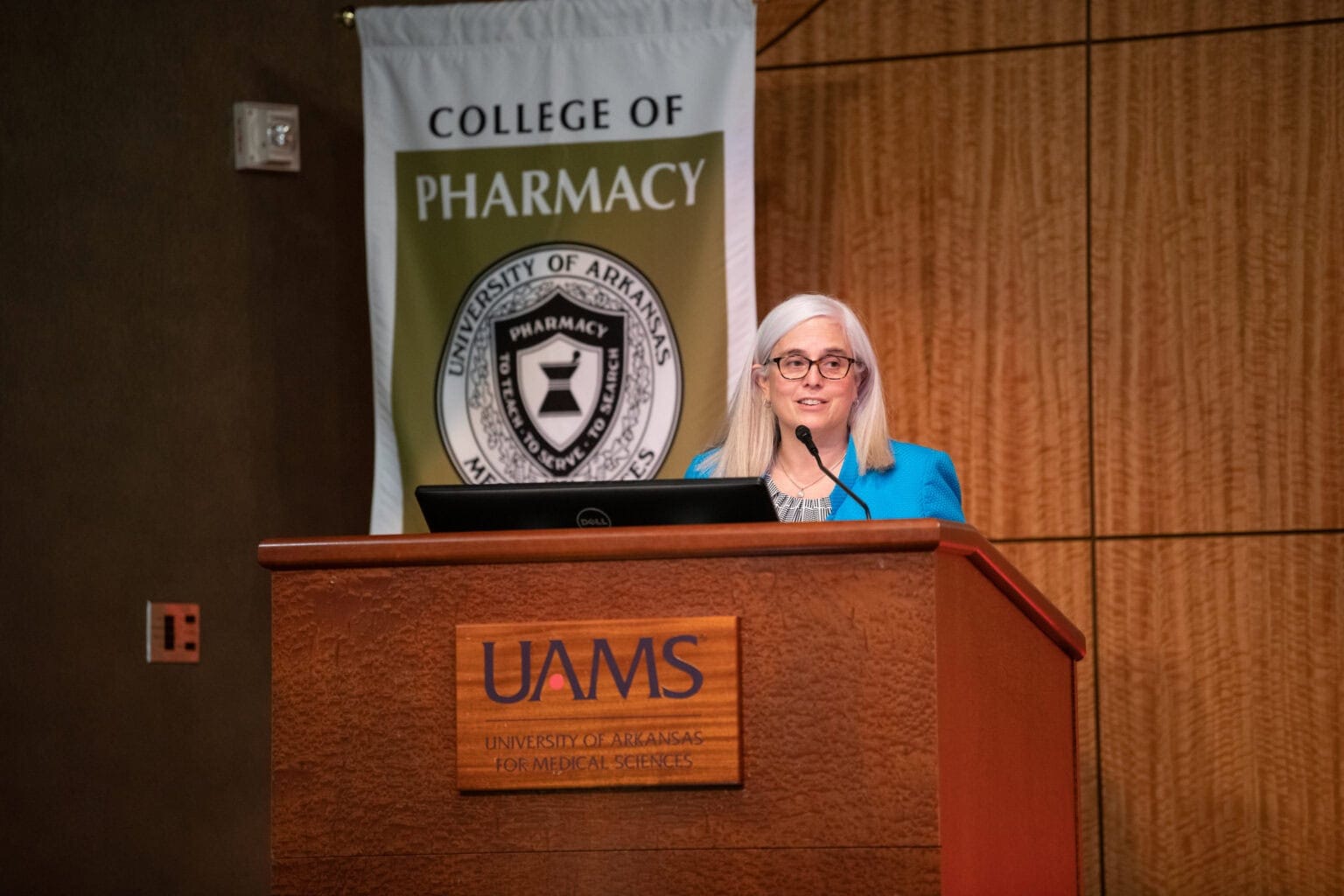
Stowe has reshaped the college to meet the modern era.
She oversaw the first significant change to the college’s curriculum in decades, beginning with the 2025 fall semester. The new curriculum, driven by changes in healthcare and education that were rapidly accelerated by the pandemic, bridges didactic and experiential education. There is more focus on practice transformation and implementation science to refine patient care. A new residency program in population health and data management became fully accredited. Her service as president of the Accreditation Council of Pharmacy Education reflects the national recognition of the college.
Philanthropic donations have continued to increase, with students receiving more scholarship funding than any point in the college’s history. College of Pharmacy researchers are now funded by multiple national organizations, including the National Institutes of Health, American Cancer Society, Department of Defense, NASA, along with other agencies and foundations working to advance biomedical research and drug development.
Much has changed over 75 years, across Arkansas and the profession. One thing that hasn’t changed is the college’s ongoing, decades-long commitment to producing the very best pharmacists. The UAMS College of Pharmacy remains a stalwart in an ever-changing field, pushing the boundaries of education, research, and patient care for a healthier future.