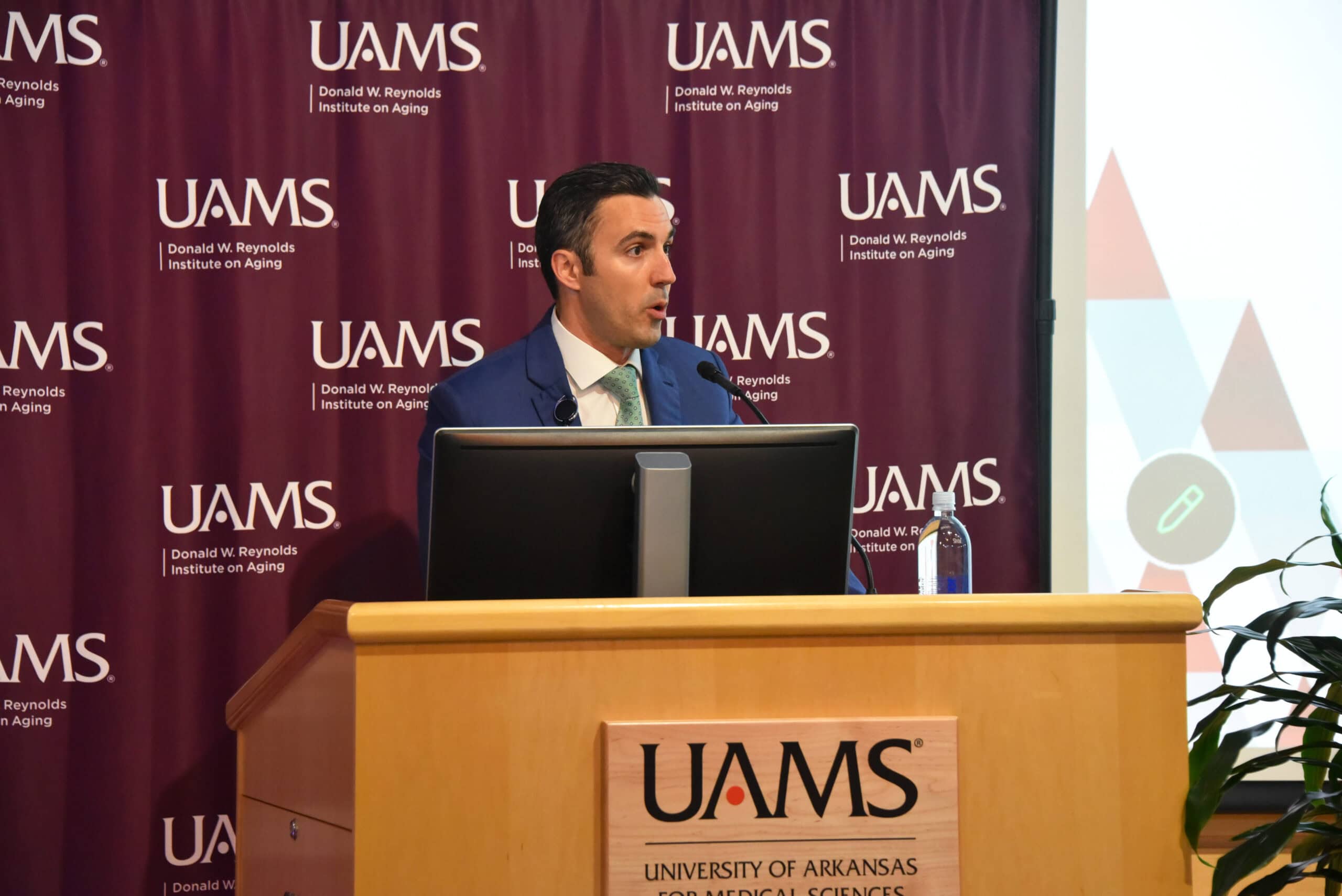
Conference Highlights Latest Developments in Geriatric Care
| Health professionals and members of the community recently convened at the University of Arkansas for Medical Sciences (UAMS) Donald W. Reynolds Institute on Aging for a three-day conference that offered updates on the latest developments in geriatric care.
This year’s Geriatrics Updates conference, held Oct. 1-3, focused on the theme of “Living in Health and Harmony.” More than three dozen presenters shared new insights on a wide variety of health conditions and treatments that affect the lives of older adults.
The conference opened with sessions that examined several cardiac and pulmonary conditions. Jeanne Wei, M.D., Ph.D., professor and chair of the Department of Geriatrics and executive director of the Institute on Aging, gave a presentation on the causes of syncope, also known as fainting.
Another segment covered cancer topics such as gastric and esophageal cancer and multiple myeloma.
Jennifer Dillaha, M.D., of the Arkansas Department of Health, who formerly trained in the UAMS Geriatrics Fellowship Program at the Donald W. Reynolds Institute on Aging, spoke about respiratory diseases that can cause severe illness in older adults. After explaining how RSV and the flu are transmitted, she highlighted prevention measures including vaccines and hand-washing.
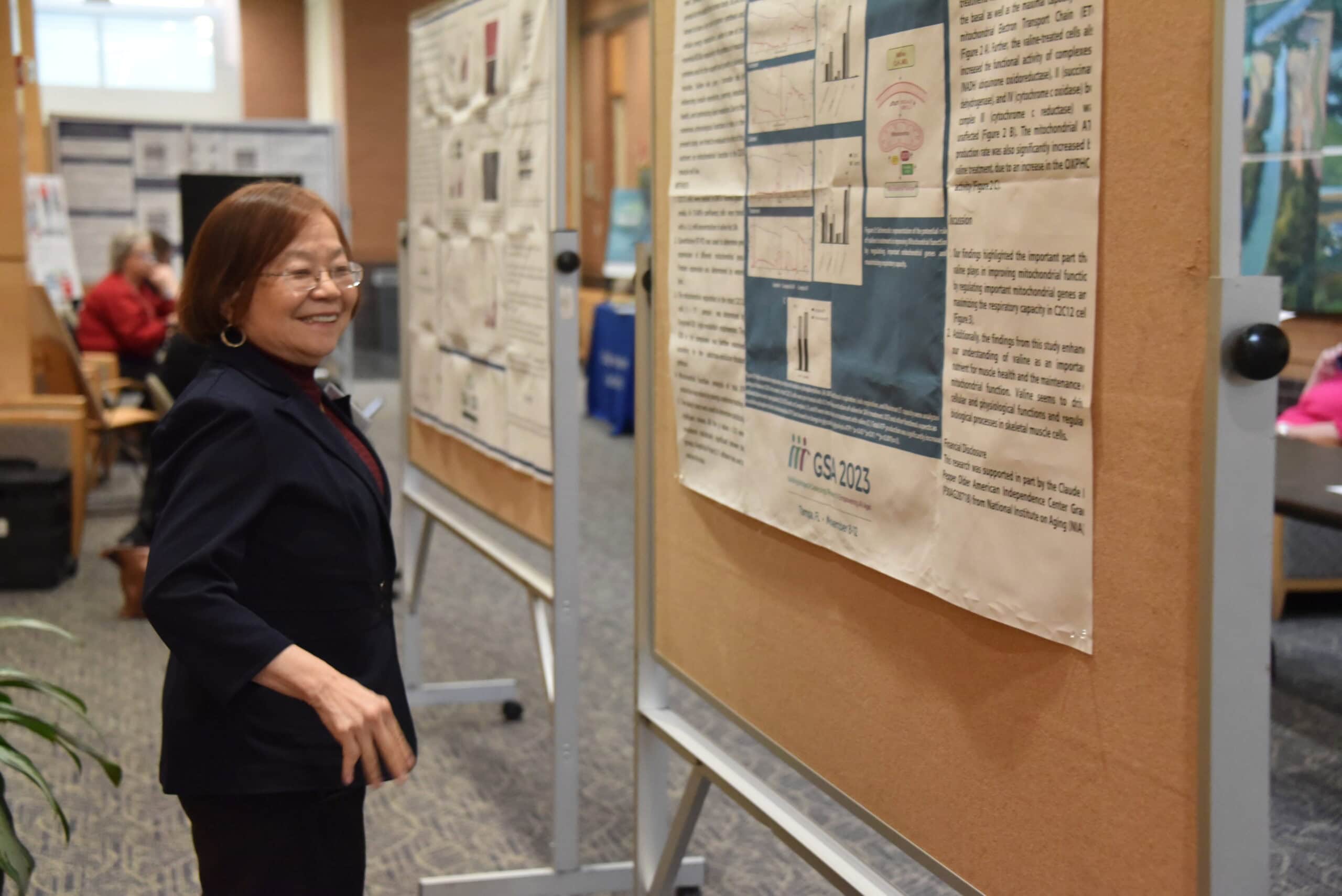
Jeanne Wei, M.D., Ph.D., professor and chair of the Department of Geriatrics and executive director of the Institute on Aging, looks at the research posters on display at the Geriatrics Updates conference.Image by Chris Carmody
The second day’s sessions addressed health conditions such as chronic kidney disease, diabetes management, difficulty swallowing, hearing loss, and osteoporosis. Susan McDougal, director of pastoral care and clinical pastoral education at UAMS, also provided a chaplain’s perspective on how to support those who are grieving with the loss of a loved one.
Gohar Azhar, M.D., professor in the Department of Geriatrics and director of the Institute on Aging’s Walker Memory Research Center and Memory Clinic, discussed the National Institute on Aging’s newest guidelines for diagnosing Alzheimer’s disease.
She also gave an update on multiple forms of anti-amyloid monoclonal therapy treatments that are offered at the Walker Memory Center. These include lecanemab, which is given to patients with Alzheimer’s disease through intravenous infusion therapy or in subcutaneous form.
In July, an autoinjector with a 500-milligram dose of lecanemab was approved by the U.S. Food and Drug Administration to initiate therapy in patients with Alzheimer’s disease. Patients can opt to receive the entire treatment course with the weekly autoinjector, which can be administered by the patient or caregiver at home after completion of training on how to use the device.
Marcelo Bigarella, M.D., urologic oncologist and assistant professor in the UAMS College of Medicine’s Department of Urology, discussed early detection and emerging therapies for prostate cancer during his presentation. Although it is one of the most commonly diagnosed cancers among men, it often is a slow-developing disease, he said.
“The average age of diagnosis for men in the United States is 66, but the cancer-specific mortality age is around 80,” he said. “That means patients on average have about 14 years to live with this condition.”
Early detection is nonetheless important, Bigarella said, to identify the more aggressive tumors that require immediate treatment. He said current guidelines recommend that most men talk to their doctor about prostate cancer screening around age 45, but those who are in higher-risk groups should consider screening around age 40.
The past 20 years have brought a change in approach for slow-growing cases of prostate cancer, Bigarella said. Realizing that they might have been overtreating many low-risk tumors, oncologists now evaluate whether their patients would benefit more from active surveillance than from treatment, he said.
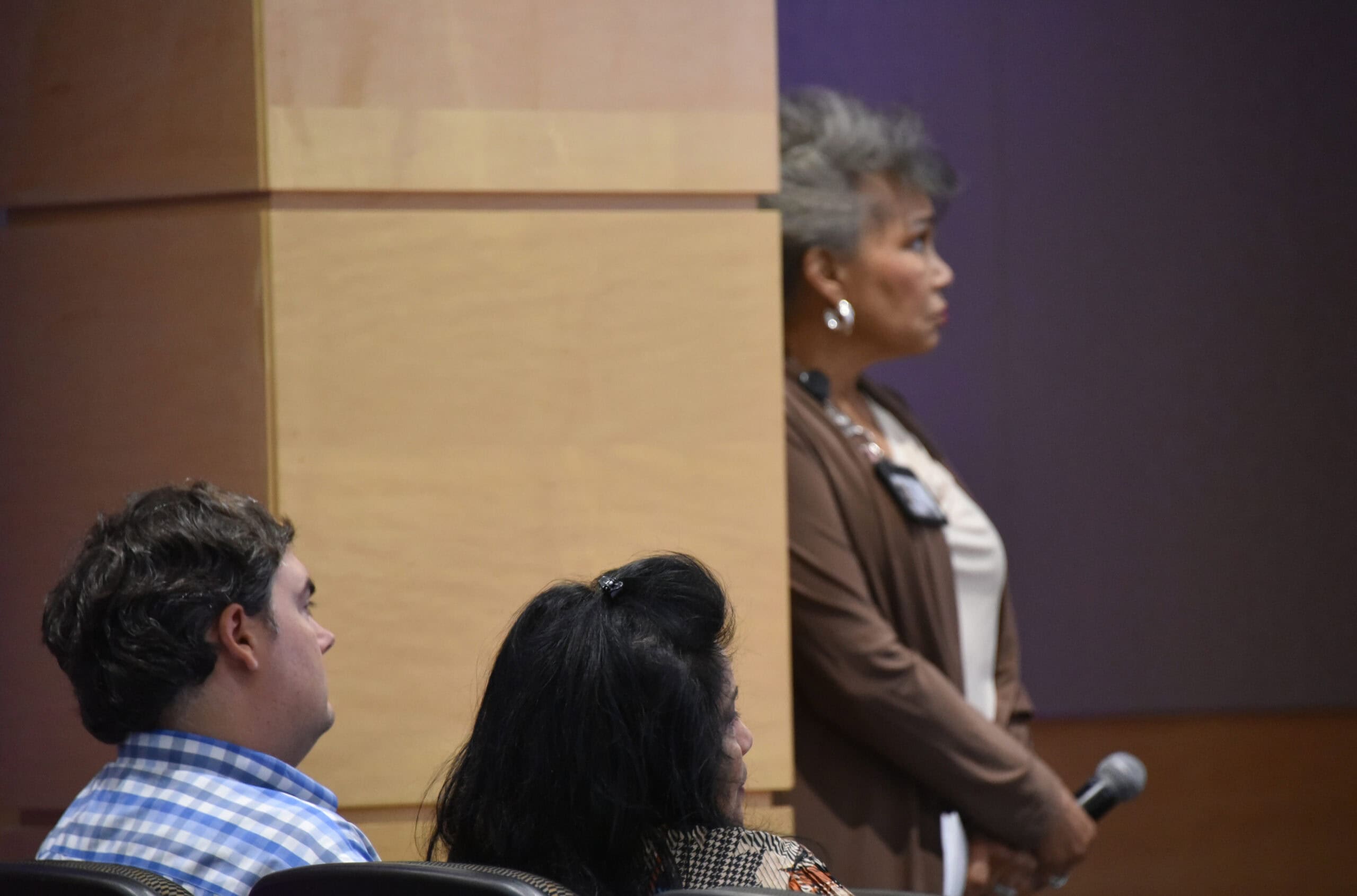
Faculty members from the UAMS College of Medicine’s Department of Geriatrics listen during a question-and-answer session at the Geriatrics Updates conference.Image by Chris Carmody
“Every cancer treatment comes with side effects that can have an impact on a person’s quality of life,” he said. “By actively monitoring the disease, with the expectation that we will intervene if the cancer progresses, we are doing the right thing for our patients.”
Bigarella emphasized that active surveillance involves regular follow-up to ensure that the cancer isn’t progressing unnoticed.
In another segment of the conference, Robert Wolfe, Ph.D., professor and researcher in the College of Medicine’s Department of Geriatrics, talked about the essential role of amino acids and proteins in slowing the rate of muscle loss in older adults.
Wolfe explained how new federal dietary guidelines, released in January by the U.S. Department of Agriculture and the Department of Health and Human Services, increased the recommended amount of daily protein intake.
“This change recognizes the underappreciated role of dietary protein in a variety of metabolic reactions in the body,” he said.
Wolfe noted the link between protein intake and muscle mass, which is vital for physical function. But muscle serves many other purposes, he said, including as a reservoir for amino acids that help maintain the functionality of tissues and organs.
He said muscle mass is also a crucial factor in survival for those who have cancer or other serious illnesses.
The issue of protein intake is particularly relevant for older populations because people lose muscle mass as they age, Wolfe said, adding that the new guidelines aim to slow the rate at which this loss occurs.
“It’s important to realize that this doesn’t just happen instantly when you turn 65,” he said. “This is a progression that starts around the time you’re in your early 30s and continues until you reach age 65.”
Much of the conference’s final day offered support for those who are living with neurocognitive disorders — as well as for their caregivers.
Debbie Brady, LCSW, a social worker and caregiving advocate at the Institute on Aging, led a question-and-answer session about how to serve as compassionate caregivers for people who are experiencing memory loss. David Cook, director of public policy and government affairs for the Arkansas chapter of the Alzheimer’s Association, gave an update on some of the resources available for patients and caregivers.
Wei, who had a front-row seat for most of the sessions throughout the three-day conference, said the presentations were informative not only for health professionals but also for the public.
“I always enjoy this conference because it offers something for everyone,” she said. “It gives clinicians a chance to talk about the science of geriatric care, but it also gives members of the community some practical information that will help them lead healthier lives.”