View Larger Image
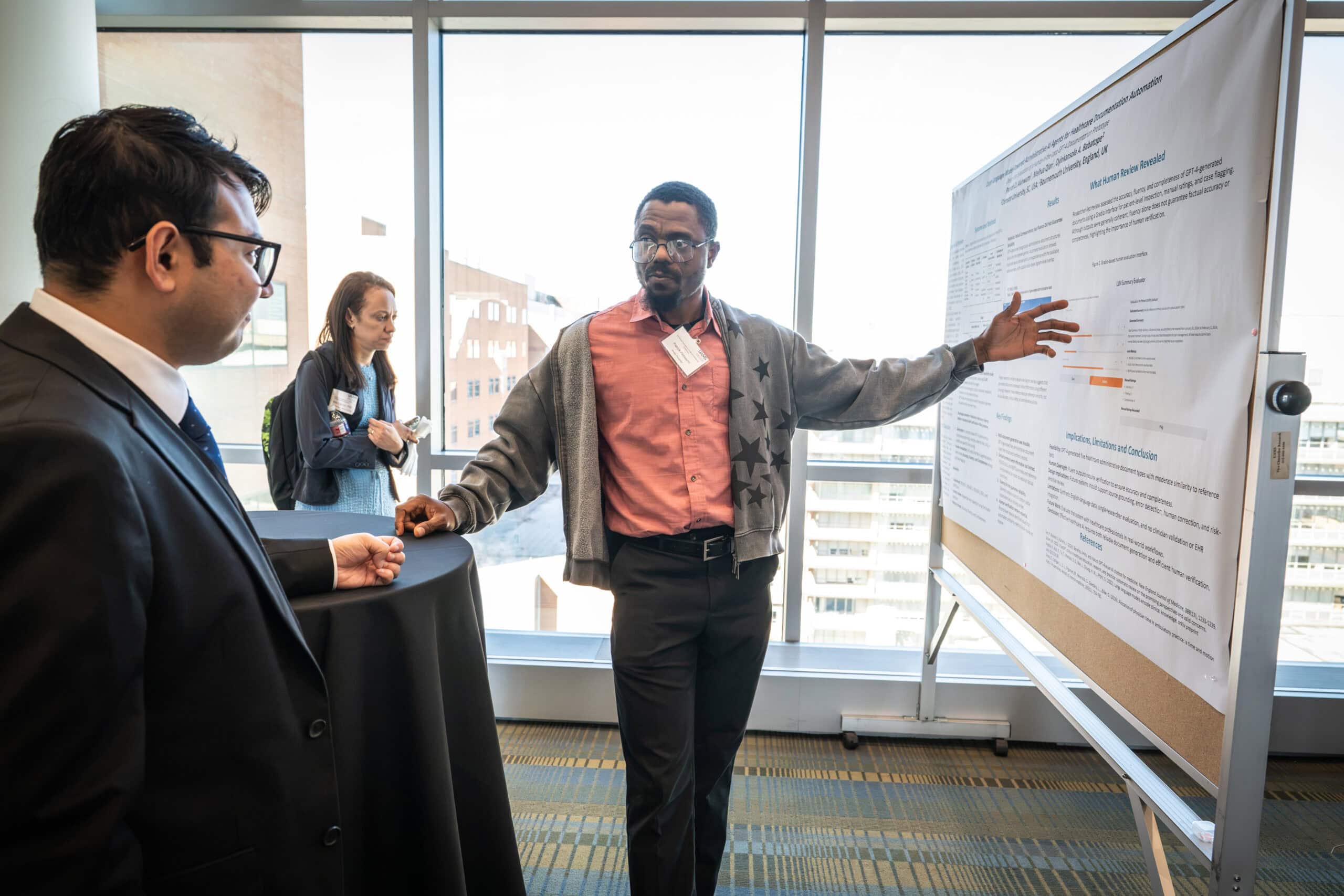
Patrick Akinwumi, Ph.D., a researcher at Clemson University, discusses his research with attendees at this year's AI conference.
Image by Bryan Clifton
Third Annual AI Conference at UAMS Focuses on Ethical, Responsible Use
| As the healthcare industry works to keep pace with the rapid advancement of artificial intelligence (AI), there have been growing concerns about balancing ethical and responsible use with the speed and efficiency it brings. The third annual Innovations in Artificial Intelligence Conference, recently held at UAMS, included speakers who tackled these issues head-on.
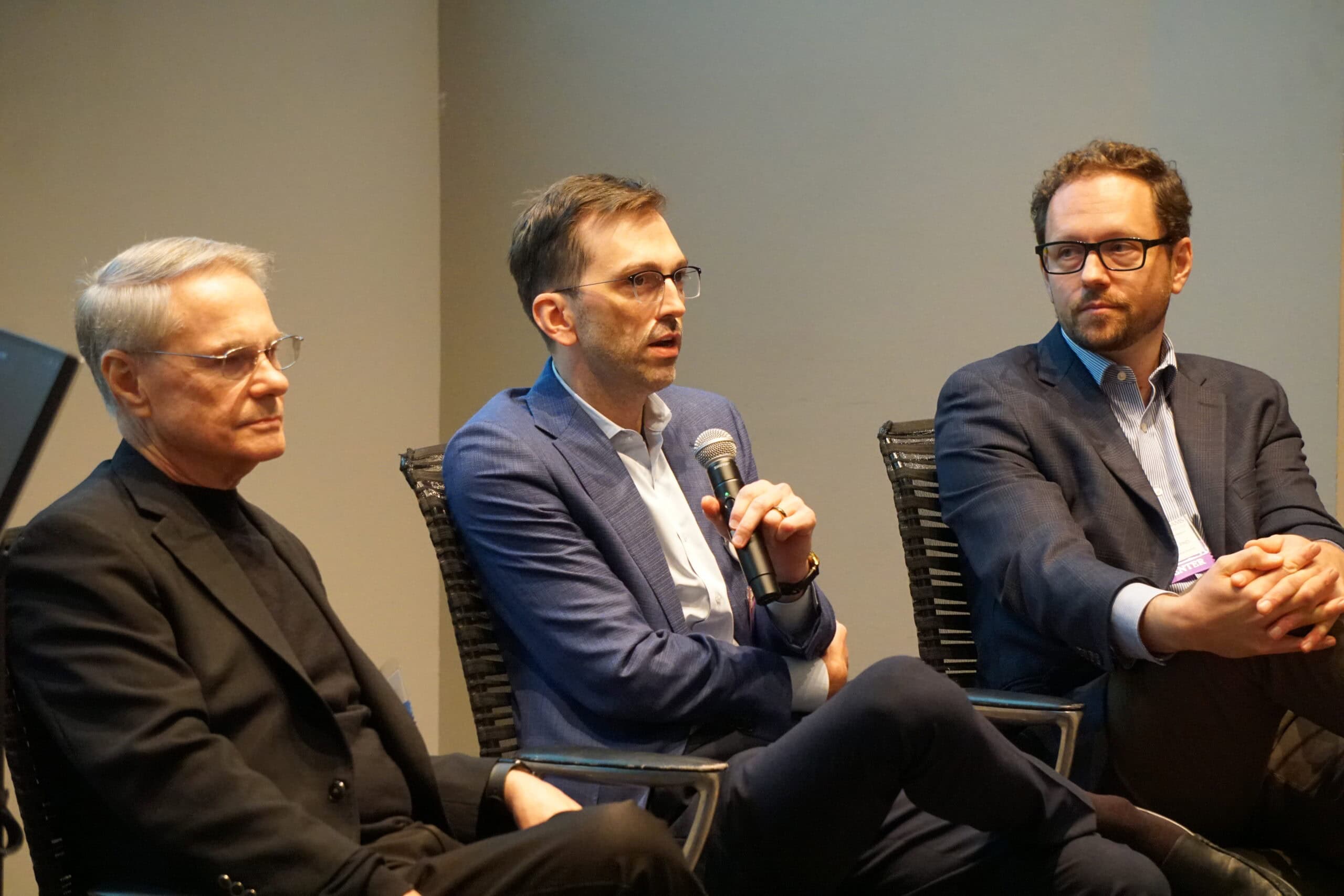
Joseph Sanford, M.D. (center) responds to a question during the conference’s first day, along with Fred Prior, Ph.D. (left) and Jonathan Bona, Ph.D. (right).Benjamin Waldrum
More than 150 people attended the two-day conference, held Oct. 8-9 on the 10th floor of the UAMS Winthrop P. Rockefeller Cancer Institute. Attendance was evenly split between in-person and virtual attendees. The UAMS Department of Academic Affairs sponsored the conference, along with all UAMS colleges and the graduate school, and many collaborative community partners.
“Artificial intelligence has the potential to revolutionize our work across all three missions,” said Wendy Ward, Ph.D., a professor in the UAMS College of Medicine and associate provost for academic affairs. “This conference brings people across professions together to translate emerging possibilities into safe, effective, and responsible applications that drive scientific discovery, enrich the education of our next-generation workforce, and improve access to high-quality care.”
The pre-conference, held on the first day, included discussions on advancement and ethical use.
“AI appears to be everywhere and being built into everything,” said Fred Prior, Ph.D., distinguished professor and chair of the UAMS Department of Biomedical Informatics. “But it’s really up to us to use these tools wisely.”
UAMS has safeguards in place to ensure responsible AI use. The Office of Academic Affairs maintains an AI Governance Committee, which oversees the governance, approval, monitoring, and lifecycle management of AI tools at UAMS, with subgroups evaluating academic, research, and administrative uses. Prior is one of the committee’s members.
Prior went over some of the pitfalls resulting from AI innovation outpacing regulation. For example, the National Institutes of Health (NIH) had to change its rules on R01 grant submissions after some researchers sent more applications than a human could write without AI doing the writing.
Medical AI transcription devices, also called scribes, are becoming more common in healthcare. Providers use them to transcribe conversations, allowing more one-on-one time with the patient. However, only 25% of medical AI scribes have privacy or risk policies in place, Prior said. In fact, of the 1,357 total AI medical devices cleared by the Food and Drug Administration in the past year, he said, only three had any data on whether they positively affected patient outcomes.
“Without that validation that the tools that we’re buying are effective, what are we paying our money for?” Prior said. “Responsible use comes down to us making good decisions about, is this tool really going to help, and how do I know it’s going to help? Even if it works correctly today, is it still going to work correctly a year from now?”
Prior urged caution, sharing an AI-generated image of lemmings following each other over a cliff, adding, “Nobody wants to be left behind.”
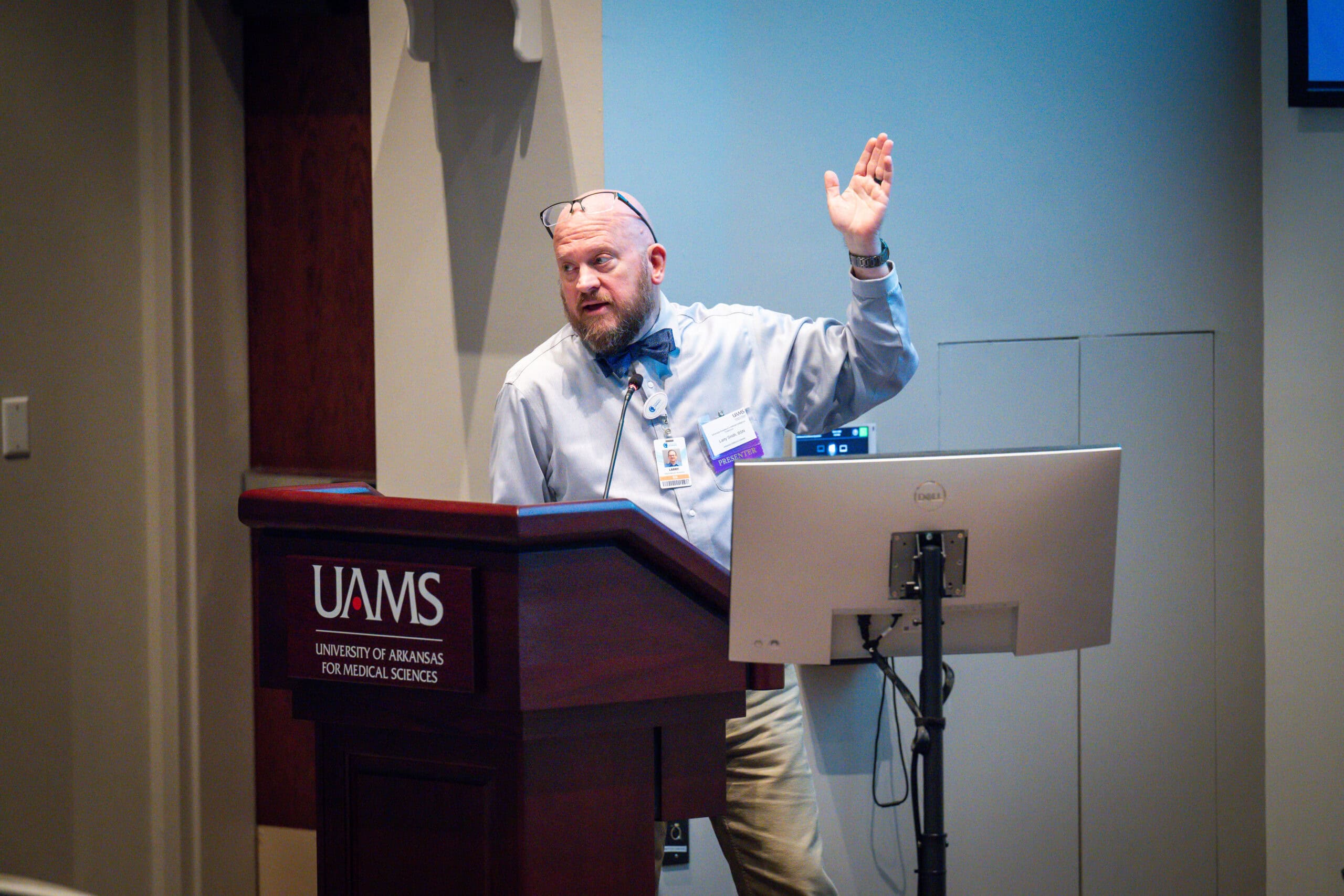
Larry Smith, BSN, discussed data for a pediatric patient risk model developed with Branson Bolden, M.D., and Obeid Shafi, M.D.Bryan Clifton
Joseph Sanford, M.D., chief clinical informatics officer for UAMS, shared a list of 57 AI tools that UAMS uses to support multiple aspects of the healthcare system, adding that it could no longer fit on a single page. UAMS uses AI in large part to help streamline more technical, time-consuming aspects of reporting and record keeping.
The efficiency of AI scribes, Sanford said, will lead to seeing more patients per day in clinic. He noted that using scribes for patient notation in Arkansas jumped from 6.8% of patients last year to over 12% this year. Some providers have adapted so quickly that it has become indispensable.
“I can tell you that, for a physician, the impact is profound,” Sanford said. “We made a transition [recently] where we had to take [an AI scribe program] down for six hours, and I had one clinician metaphorically grab one of my staff by the lapels, and say, ‘How do you expect me to see clinic?’ In the space of five months, their whole raft of expectations changed.”
Sanford emphasized that AI models should not be taken at face value. Because they can fail like any other tool, there should always be “a human in the loop.”
“We have to do this responsibly, which means setting a pathway,” Sanford said.
Prior and Sanford, along with Jonathan Bona, Ph.D., associate professor of bioinformatics, took audience questions in an informal panel at the midway point of the first day. Scott Wright, Ed.D., and Josiah Wheeler, M.Ed., assistant professors of institutional design, led an interactive discussion with workbook exercises on AI use in health professions assessments.
Speakers, Panel Spark Thoughtful Discussion
The second day kicked off with remarks from Stephanie Gardner, Pharm.D., Ed.D., provost and chief strategy officer for UAMS. She mentioned many changes that have come from AI in healthcare while emphasizing its challenges, and said that AI should enhance, not replace, the human connection to medicine.
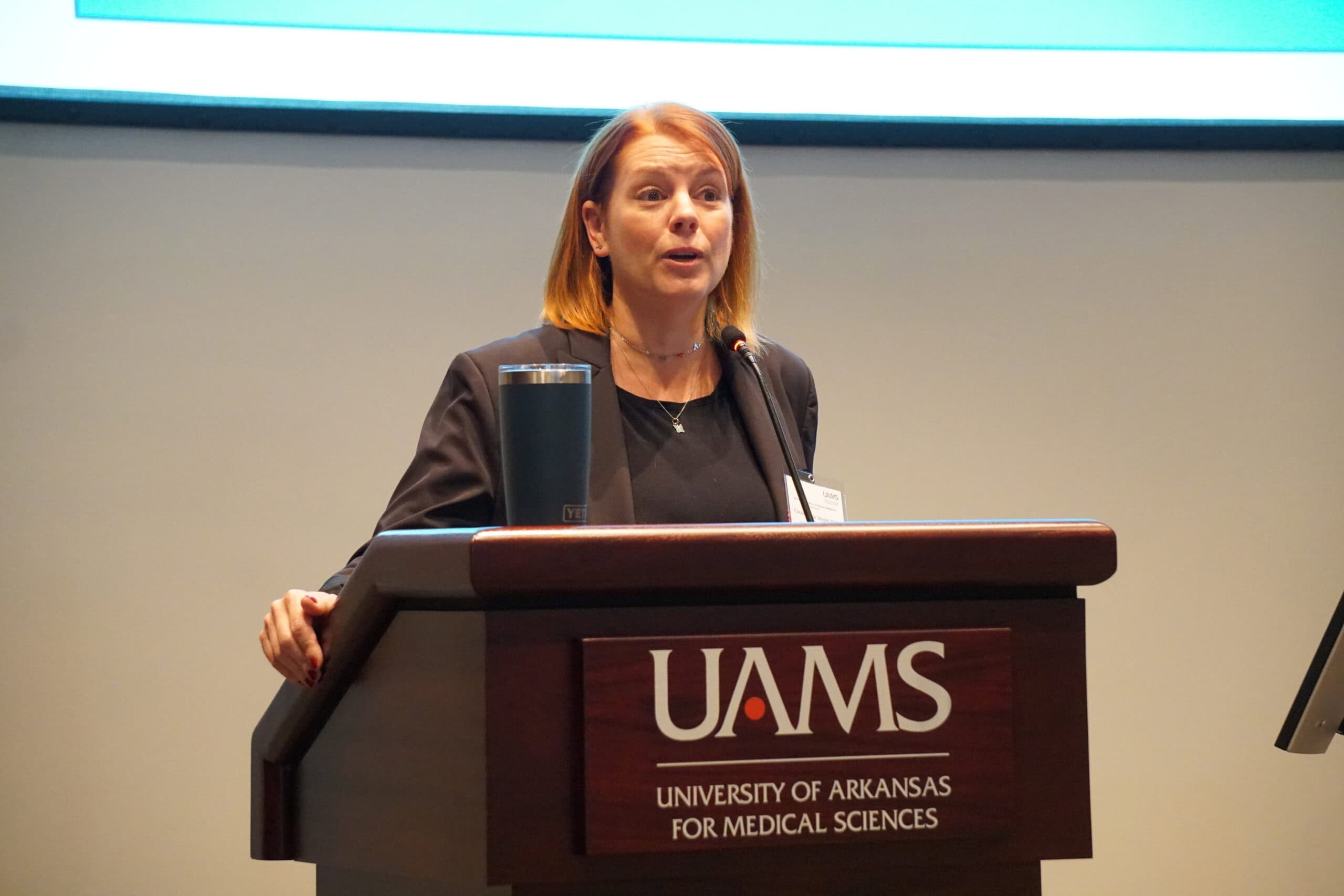
Vaile Wright, Ph.D., said that AI is not a replacement for licensed psychological treatment.Benjamin Waldrum
There were multiple presentations throughout the day: a deep dive on AI data methodology by Mathias Brochhausen, Ph.D.; pediatric patient risk models from Branson Bolden, M.D., Larry Smith, BSN, and Obeid Shafi, M.D.; and a fall risk assessment model from Bona. Additional poster presentations were displayed in the foyer, including findings from other researchers in Arkansas and from around the country.
Highlights from the day included two national speakers: Vaile Wright, Ph.D., senior director for health care innovation at the American Psychological Association, and Sean Mooney, Ph.D., director of the NIH’s Center for Information Technology.
Wright, a licensed psychologist and researcher, said there is a significant gap in mental healthcare due to cost, accessibility, and a lack of providers. Patients have turned to using AI for psychological support and well-being, but that is not its intended use, she said.
“Something is happening here where individuals feel like they cannot go to others [for advice],” Wright said. “The majority of adults don’t feel like they can talk about their stress with others because they don’t want to burden people. So, is it any wonder that people are turning to digital options when they feel like they can’t turn to the humans next to them?”
Wright said that using AI is not a replacement for treatment. She emphasized the importance of better AI literacy and increased governance and human oversight going forward.
Mooney said that AI technology has moved so fast in the past two years that even experts have struggled to predict where it’s going, calling it “a state of disequilibrium.”
Using the weather as an example, Mooney said that predictive models have evolved over several decades to accurately simulate and forecast weather patterns. Over time, many different models gave way to larger, centralized models. Medicine should follow this pattern, he said.
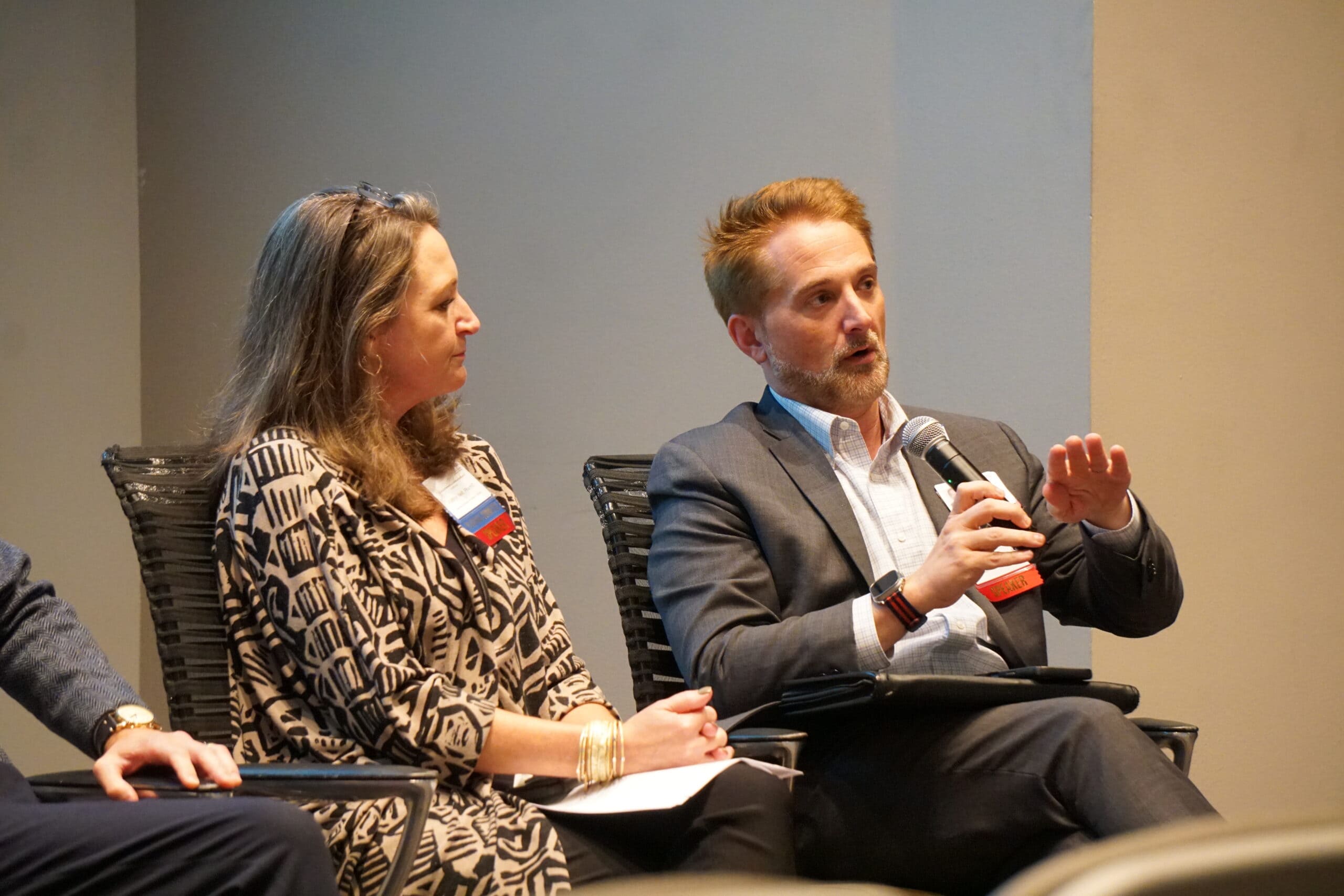
Brandon Robinson, J.D., MHA, speaks during a Q&A panel that closed out the conference.Benjamin Waldrum
“In biomedical research, we’re not there,” Mooney said. “In the meteorology world, they’ve had an entire transformation, and I really think there’s a lot that we can learn about medicine.”
The NIH funded more than $400 million on AI programs in 2025, Mooney said, with investment growing 43% on average each year. AI already helps with phone surveys and connecting patients with clinical trials. Building platforms, not just training materials, he said, is the next step.
“The way I think about it is like Lego blocks that you would want to be able to pull off the shelf and use,” Mooney said. “It should be open, it should be standardized, it should be interoperable with other systems, and it should be available to everybody — self-service, and easy-to-use.”
At the end of the conference, Ward moderated a discussion panel with Prior and Sanford, along with Kathryn Neill, Pharm.D., associate provost for academic affairs, and Brandon Robinson, J.D., MHA, managing associate general counsel and chief legal counsel for UAMS Health. They discussed the future of AI among themselves and took several questions from the audience.
The panel agreed it was difficult to forecast where AI would be in five years and emphasized keeping a human element at the forefront. When asked what skills they wanted people to learn to adapt to the growth of AI, Sanford said curiosity; Neill said humility; and Prior said critical thinking.
Amy Widner, director of recruiting for the UAMS College of Medicine, attended the conference and said she enjoyed hearing different perspectives on AI, which is changing everyday life.
“I like attending the AI conference because it’s inspiring to hear how people from across campus are incorporating AI and new technologies into their work.” she said. “AI has vast potential to re-shape everything we do in research, clinical care, education, and administration. I appreciate having a venue to discuss how we can move into a shared vision of this future, while doing so thoughtfully and ethically.”