View Larger Image
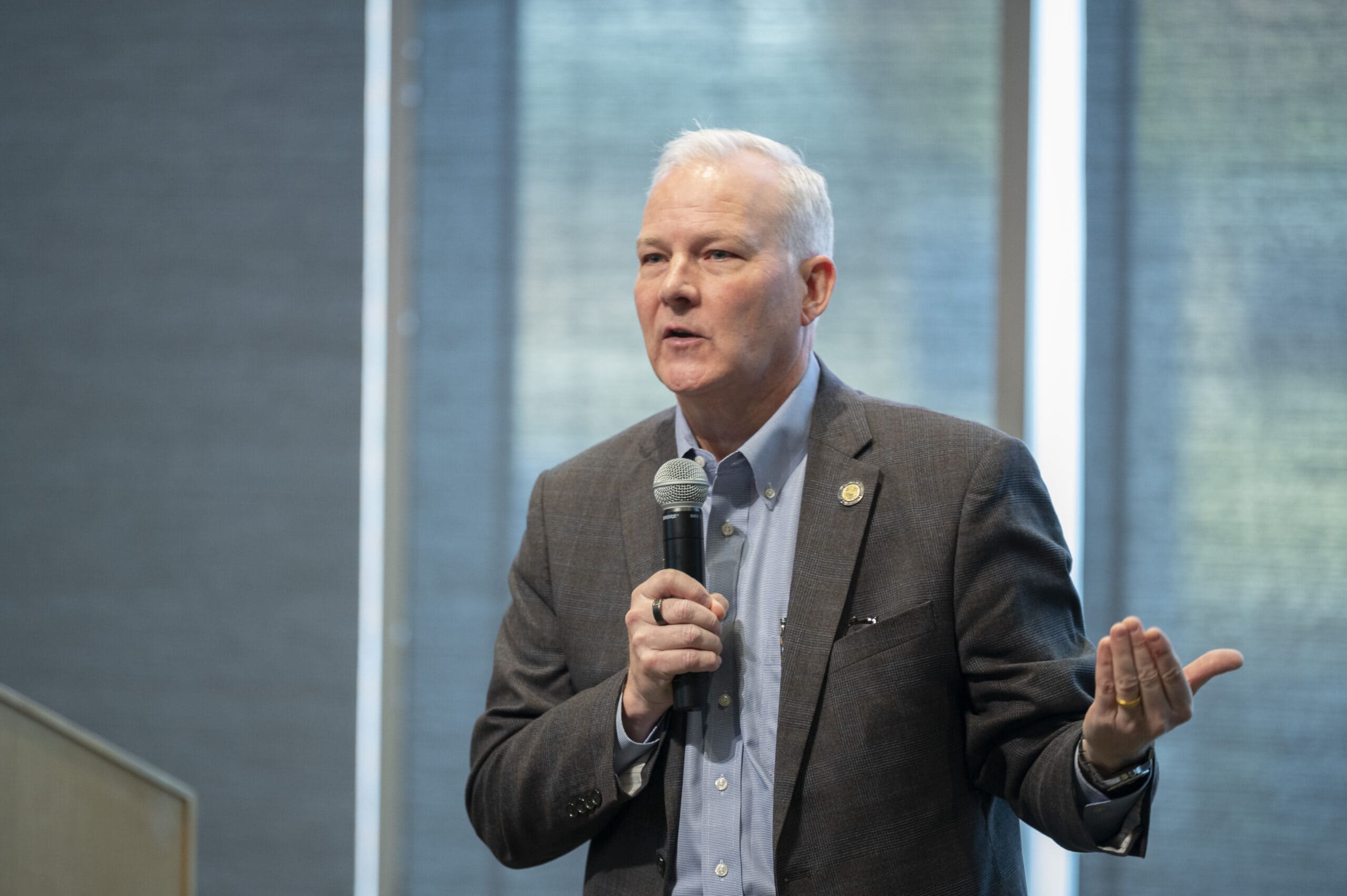
Arkansas Attorney General Tim Griffin discusses the need to educate Arkansas’ young people about the dangers of opioids.
Image by Evan Lewis
UAMS Students Receive Training on Preventing Opioid Overdose
| Eighty-one University of Arkansas for Medical Sciences (UAMS) students learned how to reverse an opioid overdose Monday during a hands-on naloxone training in the UAMS Library’s Active Learning Center.
The session was conducted by the Office of Interprofessional Education (IPE), which supports collaborative learning and practice across UAMS’ five colleges and graduate school. Working in teams, the students learned about opioid use disorder, the dangers of fentanyl and counterfeit pills, and the impact of opioid misuse in Arkansas. A team of 13 student educators guided participants through naloxone administration training and led discussions about overdose prevention, emergency response, and the roles of health professionals in addressing the opioid crisis.
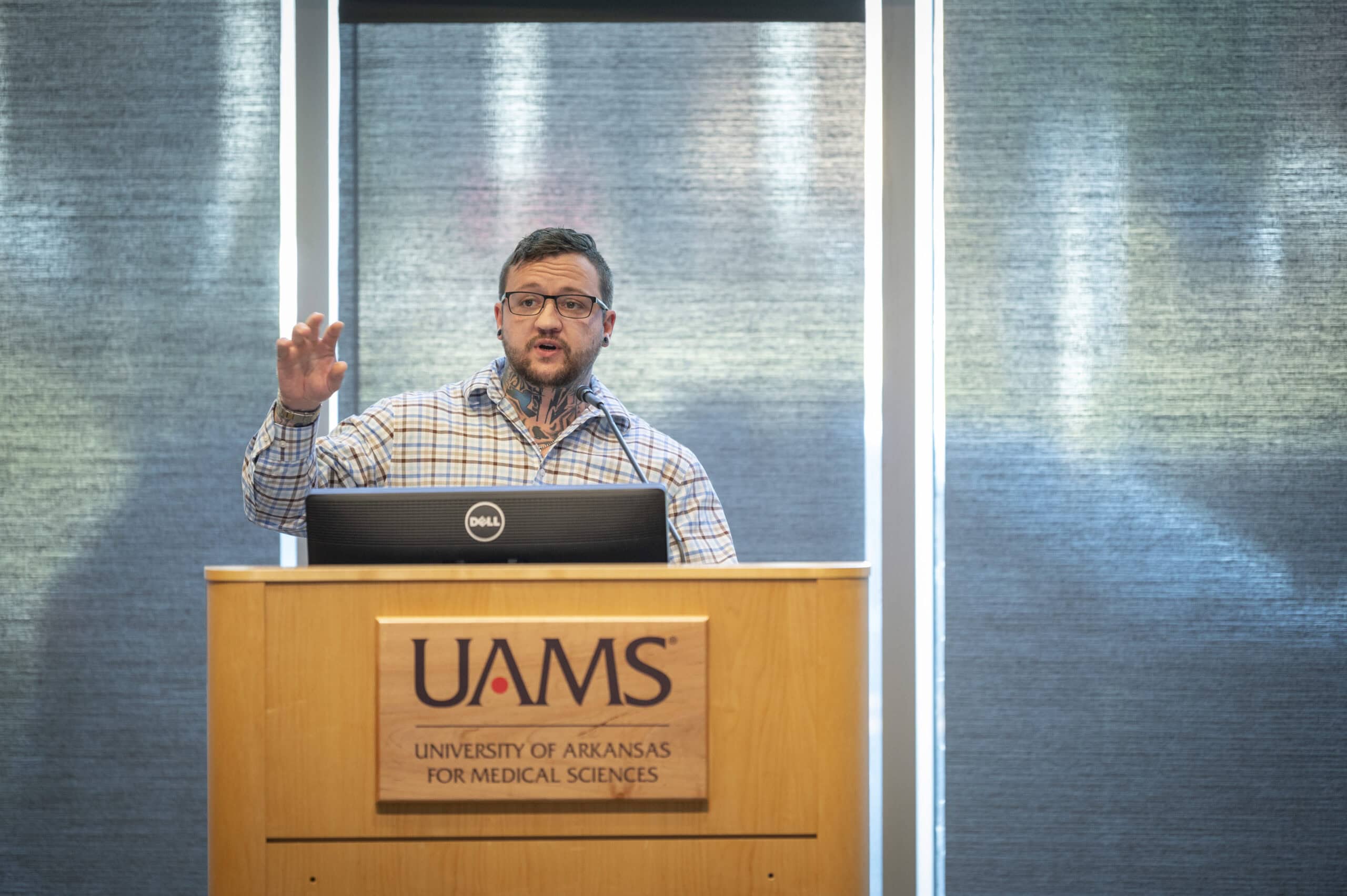
Josh Hankins, an alcohol and drug counselor, talks about the impact fentanyl has had on his life.Evan Lewis
The students also received a naloxone kit and drug identification kits, courtesy of Arkansas Attorney General Tim Griffin. The drug identification kits include a fentanyl test strip, a pair of rubber gloves, a safe drug disposal bag, and a card designed to help identify potentially counterfeit medications.
A press conference was held earlier that day to mark the 20th such training held as part of Griffin’s “One Pill Can Kill” initiative. Griffin, who spoke at the press conference along with UAMS Chancellor C. Lowry Barnes, M.D., and Little Rock Recovery’s Josh Hankins, has provided drug identification kits to 15 college campuses in the state.
“UAMS plays a critical role in educating and training Arkansas’s future healthcare professionals. Educating young people about the dangers of illicit opioids and equipping them to save lives is critical to protecting Arkansans,” Griffin said. “Bringing One Pill Can Kill to this campus provides an opportunity to equip students with knowledge and tools that can make a difference not only in their own lives but also in the lives of the patients and communities they will serve.”
“The Attorney General’s office and UAMS aren’t simply handing out Narcan [the commercial name for naloxone]. The goal is to teach people what to do in an emergency, so they can potentially save a life,” said Barnes, who recognized Stephanie Gardner, Pharm.D., Ed.D., UAMS provost and chief strategy officer, and Michael Mancino, M.D., program director of UAMS’ Center for Addiction Services and Treatment, for their efforts to address the opioid threat in Arkansas.
Barnes also mentioned Alison Oliveto, Ph.D., and Peggy Healy, LCSW, of the UAMS Psychiatric Research Institute, for their cooperative work with Griffin’s office.
“Their work in education, training, and outreach — from helping create an educational video to leading Narcan training sessions on college campuses — is a powerful example of how academic medicine can serve the public in real and tangible ways,” said Barnes.
Hankins, an alcohol and drug counselor at Little Rock Recovery, described using opioids as a youth as “a piece of the puzzle that made me feel comfortable around people, that made me feel whole.”
“My whole generation was wiped out because of opioid abuse. I had 39 friends, people that I grew up with that I will never see again, fentanyl took away all of that,” said Hankins, who has provided more than 80 community-based classes over the past three years for the UAMS Arkansas Naloxone Education Training (ANET) program. “If naloxone was a thing during that time period, I’d like to think a lot of those people would be alive today.”