2026 UAMS Stroke Conference Shares Clinical Expertise, Personal Experiences
| The University of Arkansas for Medical Sciences’ (UAMS) 2026 Stroke Conference focused on a theme of “Piecing Together the Next Era of Stroke Care.”
Held Oct. 2 in the UAMS Jackson T. Stephens Spine & Neurosciences Institute, it marked the eighth annual event put on by the UAMS Comprehensive Stroke Program to share updates and general information with healthcare professionals about pre-hospital, acute, and post-acute care for stroke patients.
The conference featured engaging clinical presentations by UAMS healthcare experts in the fields of vascular neurology, vascular neurosurgery, neurocritical care, neurointerventional radiology, and palliative care. Two presentations particularly highlighted the importance of communication, collaboration, and understanding the complexities of acute stroke care and survivorship.
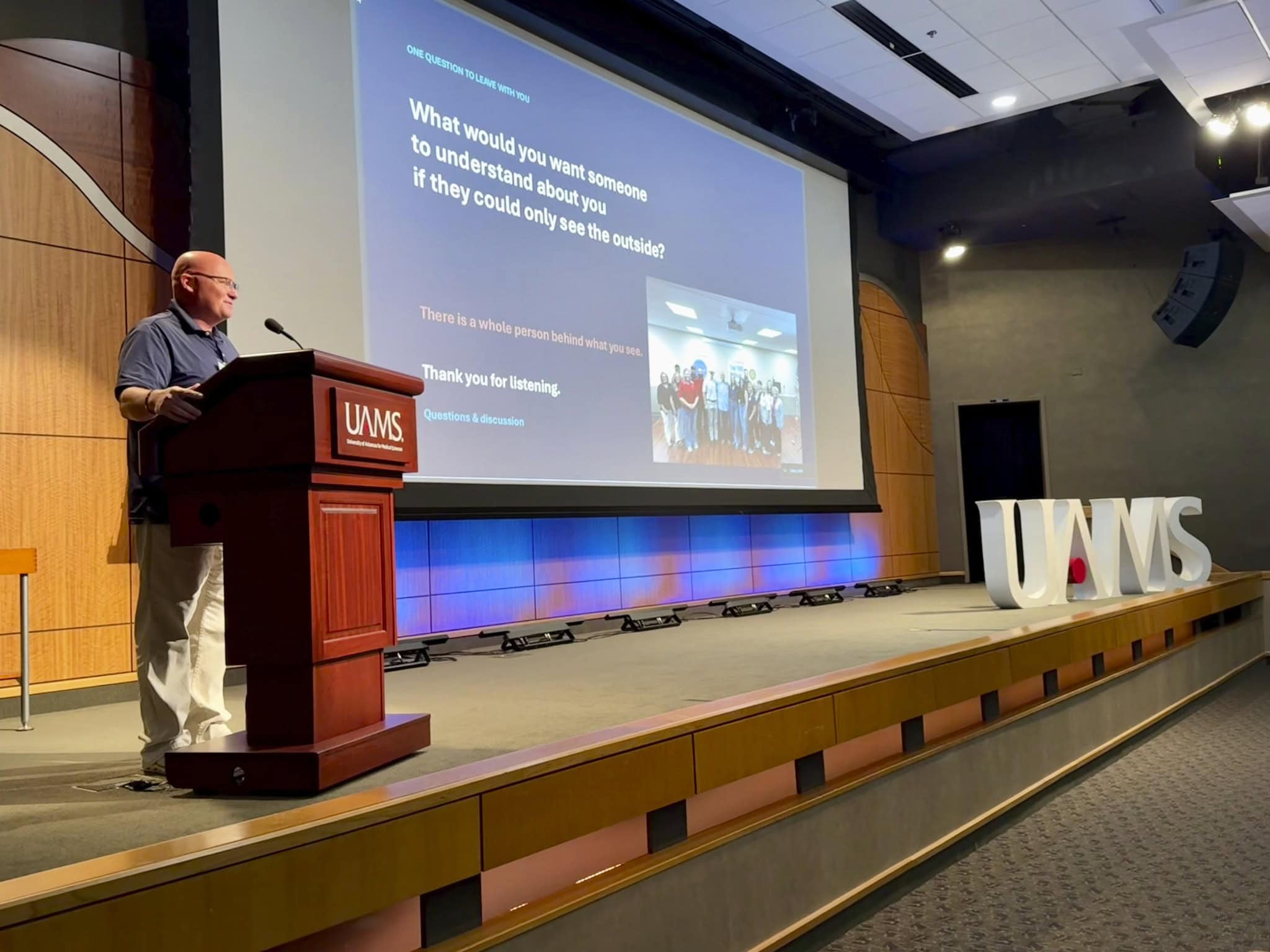
Randal Birdwell, a Morrilton man who had a stroke on July 29, 2024, while working as a project manager at a commercial construction company, described the challenges of working through deficits caused by a stroke, even while outwardly appearing to be further along in the recovery process.
“Leaving the hospital doesn’t mean that recovery is over,” he said. “Recovery can continue for months or years, and in my particular instance, I have realized that it is a new me, and some of the deficits I will carry with me for the rest of my life. And then some of the challenges emerge or become even clearer after discharge. Survivors and their families learn new ways to live life every day.”
He said he wished that doctors and therapists who treat stroke survivors wouldn’t stop at reassuring them that their recovery process is “normal.”
He said patients cannot always adequately convey their fear about the deficits they are experiencing. He suggested that providers ask probing questions about what the patient is experiencing that day, what has changed since their last visit, and what type of follow-up treatment they might need a referral for.
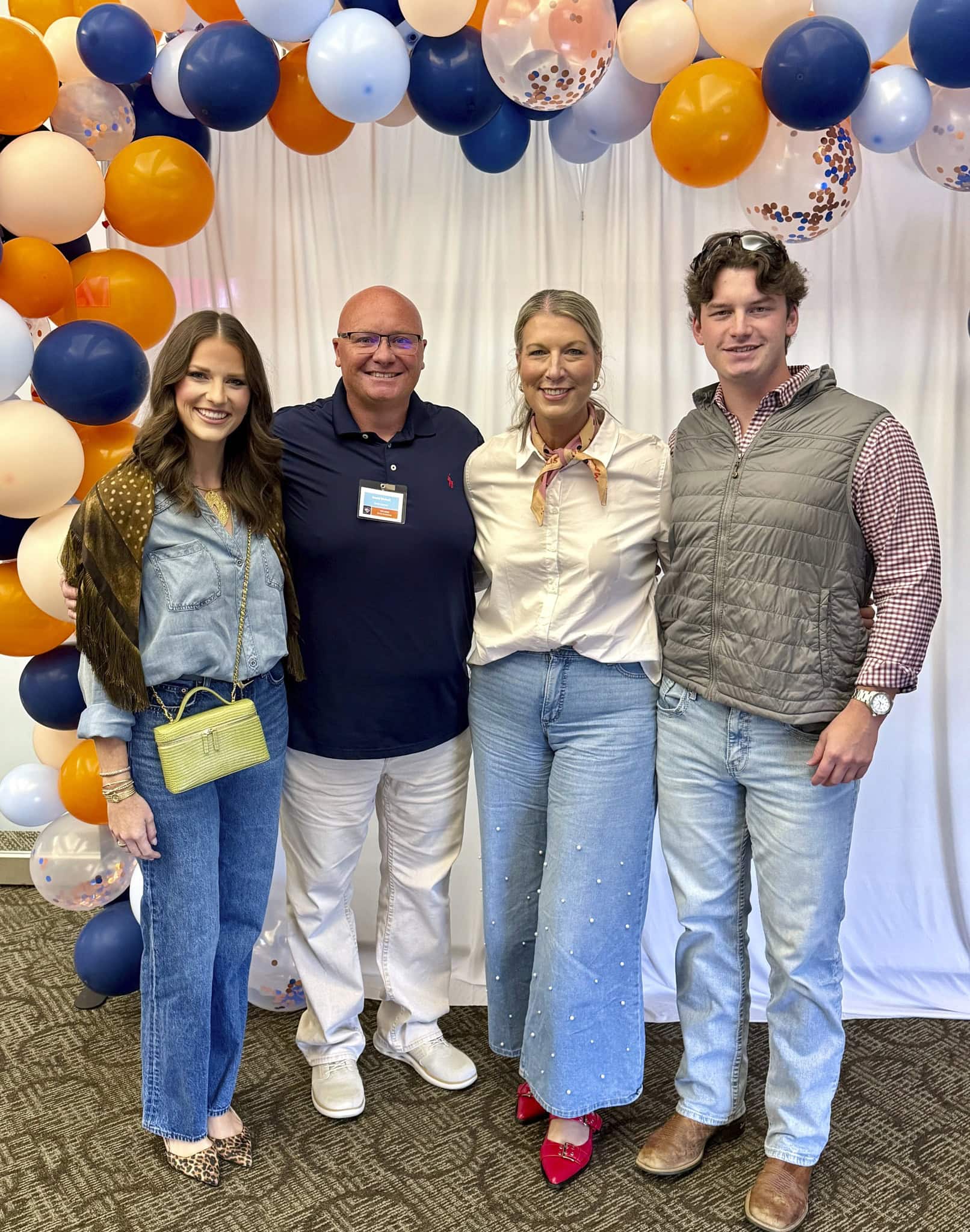
Randal Birdwell (second from left) with his family — daughter Rylie, wife Misty, and son Chase.
Birdwell said the lingering effects of a stroke can alter a person’s sense of independence, their confidence, and even their identity, sometimes just by disrupting normal routines like eating, buttoning a shirt, and using a mobile phone.
“What you may see is I look OK, I talk OK, I can participate, and I can be somewhat independent,” he said. “But what I want you to know is that I have an altered sensation. For some reason, I’ve been cold today. I have nerve pain. I have phantom pain. I have a lot of cognitive effort, and when I have things, like being at this event, I have to schedule downtime.”
The process of “finding a new path and a new direction” can be very emotional, he said, stressing the importance of support from the patient’s family and meeting regularly with a stroke survivor support group.
Birdwell and his wife of more than 29 years, Misty, have two grown children — Rylie, 26, and Chase, 23, who appeared in a video about their father’s recovery and were present to show their support.
Earlier, Garrett Whisenhunt, a paramedic who is the clinical coordinator and hospital liaison for Metropolitan Emergency Management Service (MEMS), shared the stage with Brittney Sanchez, M.D., MPH, an emergency medicine resident at UAMS, to discuss diagnostic and communication challenges between ambulance staff and emergency room providers when treating patients who had strokes as well as patients with conditions that mimic having a stroke.
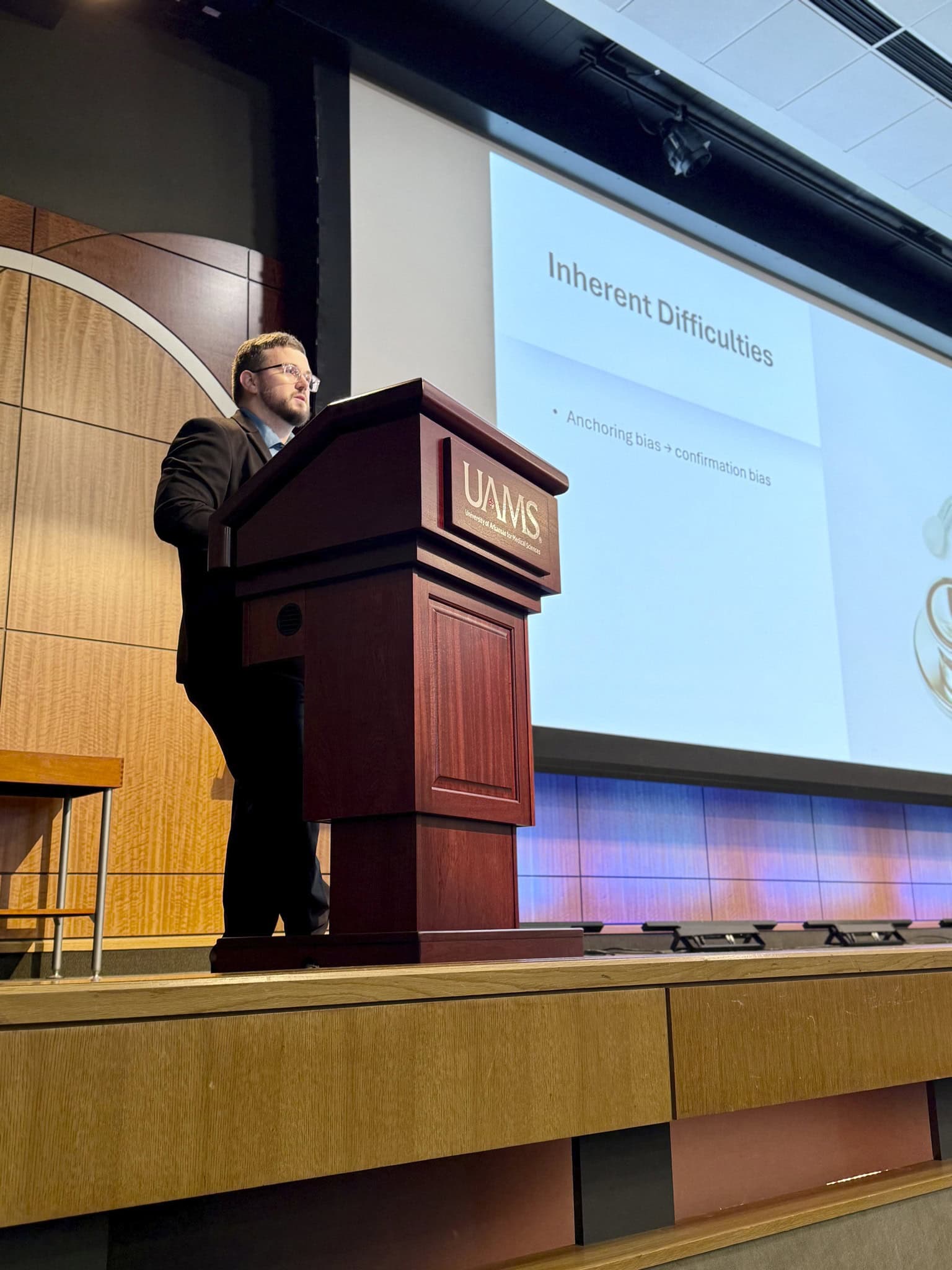
Garrett Whisenhunt, clinical coordinator and hospital liaison for Metropolitan Emergency Management Service (MEMS), explains paramedics’ role in assessing a potential stroke patient.
Differentiating between a stroke and a condition that mimics stroke symptoms is “inherently difficult” for both paramedics and physicians, Sanchez acknowledged.
Whisenhunt emphasized that EMS providers do not need to definitively distinguish a stroke from a stroke mimic before arriving at the hospital. Instead, he said medics must focus on four things: obtaining a timeline of events leading up to the 911 call, including what was the most recent ‘well-time;’ establishing the patient’s baseline, making objective findings, and “protecting the pathway — arguably the most important job.”
Through a case study, Whisenhunt discussed the ABC approach to clinical decision-making, including the challenges of balancing a thorough assessment and the urgency of stroke care.
“There’s lots to do before transport, but we also recognize the time sensitivity here and how prompt we need to be gathering that stuff and then getting out the door,” he said.
He also discussed a phenomenon known as “anchoring bias,” a tendency to rely too heavily on the first piece of information received, and said past experiences also influence medics’ decisions. Paramedics must quickly assess the patient’s condition while determining the most appropriate destination for care.
Upon arrival at an emergency room, he said, medics need to “hand over timelines, baselines, interventions, and responses to those interventions, and then possibilities about what could be going on.”
Sanchez shared the emergency department perspective, highlighting the types of questions that emergency room crews need to ask paramedics, such as the kinds of medications the patient takes and how full the bottles are. She described the rapid diagnostic tests, such as CT scans and a neurological exam, that help emergency staff obtain an initial diagnosis and get the patient to the correct specialist, and said the patient “always, always, always” needs a blood sugar test.
She encouraged providers to gather information from family members, such as the patient’s baseline and any previous history of symptoms, while also allowing patients to respond independently when possible.
Throughout the presentation, both speakers reinforced the importance of effective communication between prehospital and hospital teams, saying it is essential to timely stroke care.