View Larger Image
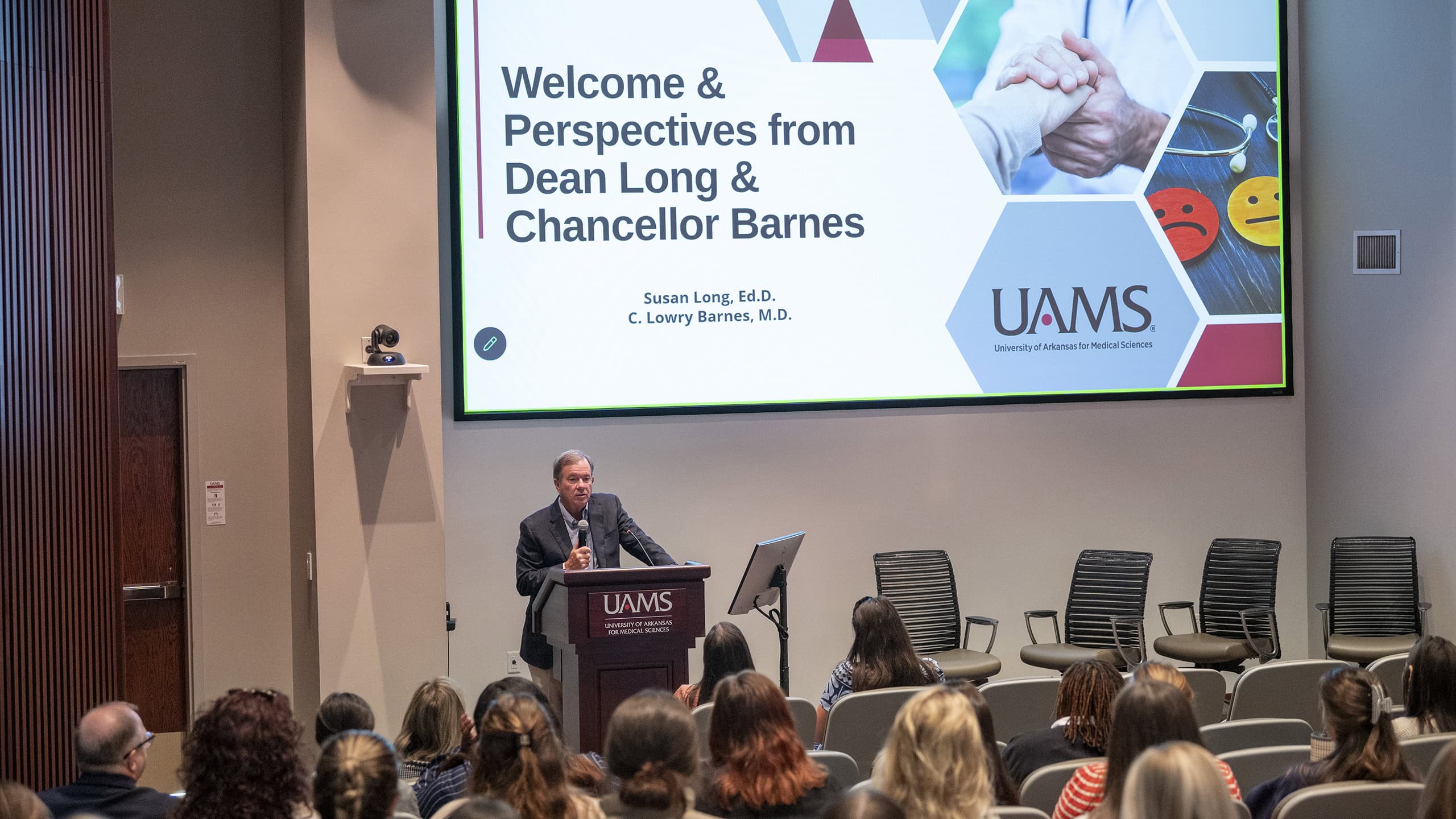
Chancellor C. Lowry Barnes speaks at the opening of the Patient Experience Seminar organized by the College of Health Professions.
Image by Evan Lewis
Seminar Focuses on Helping Health Professions Students Create Positive Patient Experiences
| Nearly 300 students from across the UAMS College of Health Professions recently gathered for a Patient Experience Seminar designed to strengthen their communication, empathy, and interpersonal skills with patients.
Dean Susan Long, Ed.D., welcomed the participants, and UAMS Chancellor C. Lowry Barnes, M.D., encouraged students to embrace UAMS CARES and its guiding principles of Compassion, Attention, Respect, Empathy and Service.
Madison Howe, Au.D., assistant professor and director of the Audiology Program, said the idea for the seminar grew from a pilot program launched about two years ago with audiology and nuclear medicine students. Howe was a co-organizer of the seminar along with Summer Khairi, Ph.D., MBA, an assistant professor and director of the Nuclear Medicine Imaging Sciences program, and Bridget Fitzhugh, RDH, MSDH, chair, program director and assistant professor in the Department of Dental Hygiene.
“We piloted this as just an initiative within our two programs, and the students loved it so much,” Howe said.
The program was later expanded collegewide to help students develop patient-centered skills that are not always taught in traditional coursework.
According to Howe, feedback from clinical preceptors consistently showed that students are well prepared academically but often seek guidance on communicating with patients, navigating difficult conversations, and building rapport. The seminar was designed to help bridge that gap while supporting the college’s workforce readiness mission.
“I recognized there was a gap in the way we train students, because there aren’t chapters in the textbook on how to provide patient experience,” she said.
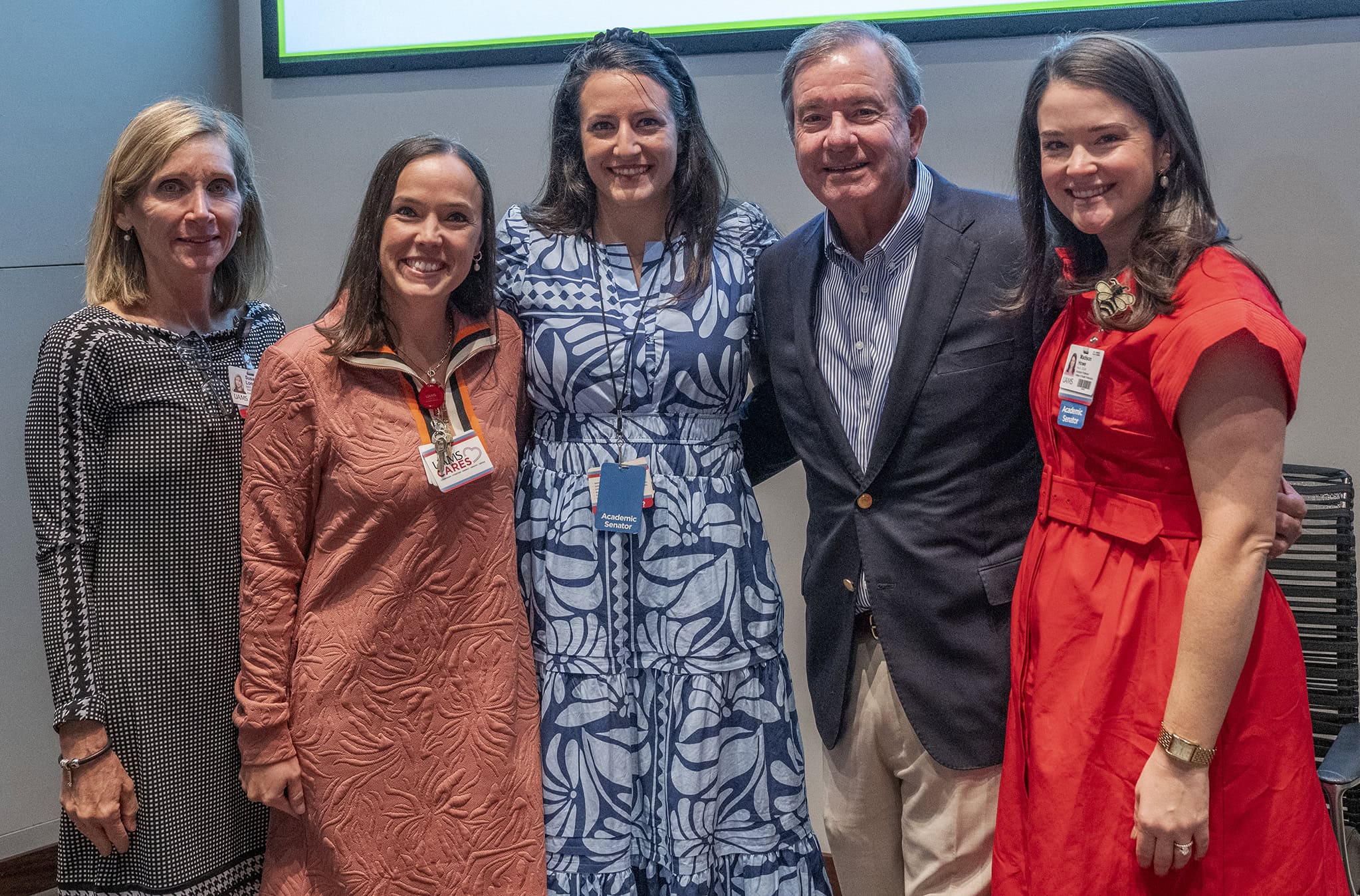
College of Health Professions Dean Susan Long, left, Bridget Fitzhugh, Summer Khairi, Chancellor Barnes and Madison Howe gather for a group photo before the start of the seminar.Image by Evan Lewis
Long addressed that gap and requested the audience to ask themselves a question when caring for patients.
“Patients don’t experience healthcare as a series of procedures. They experience it as a series of human interactions,” she said. “You are all spending an enormous amount of time learning how to be excellent at what you do. You are learning the science. You are learning the technology. You are developing clinical judgment and technical skills. Those things matter tremendously. But I would challenge you today to think about another question: What will it feel like to be your patient?”
The Oct. 23 seminar featured Jordan Gall, patient experience specialist with the UAMS Office of Patient Experience, as well as a panel discussion with professionals representing dental hygiene, physician assistant studies, nuclear medicine and audiology. Gall’s presentation was part of the office’s educational efforts, supported by Kristi Stern, director of patient experience, and Sofie Morgan, M.D., associate chief quality officer for patient experience, to strengthen patient-centered communication and care across UAMS.
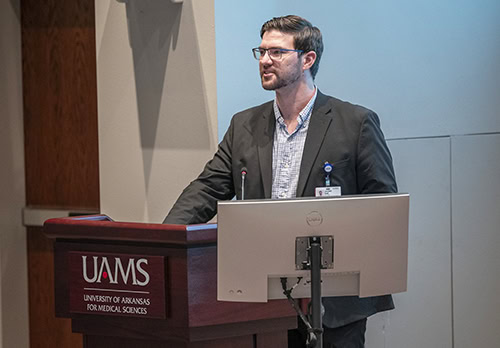
Jordan Gall shares patient experience data along with personal stories of patient care in his presentation.Evan Lewis
During his presentation, Gall shared patient feedback and examples illustrating how everyday interactions shape patients’ experiences. He emphasized the importance of providing consistent, compassionate care and helping patients feel heard, respected and understood.
Drawing from patient survey comments, Gall highlighted the importance of kindness, courtesy and personal connection. He encouraged students to introduce themselves, build rapport and give patients their attention during conversations. He also discussed sitting while speaking with patients as one way to support attentive communication and create space for questions and concerns.
Sharing his family’s experience during his stepfather’s treatment for pancreatic cancer, Gall reflected on the lasting impact of how difficult news is communicated. The story underscored the importance of delivering honest information with compassion and recognizing the emotional weight of these conversations for patients and families.
The presentation also included a video featuring patient advisor Gerald Canada, who described losing part of his leg after a serious infection. Although medical treatment saved his life, the people who offered comfort and kindness remained central to his memories of hospitalization.
“No one wants to be hospitalized,” Canada said in the video. “They just want to be treated as human.”
Together, the patient feedback, personal reflections and patient advisor’s perspective encouraged students to consider how they can make each encounter more respectful, understandable, and supportive.
Richard Robinson, RDH, founder and executive director of My Why Foundation and a 2022 graduate of the college’s Department of Dental Hygiene, described the patient experience as everything a patient feels from the moment an appointment is scheduled until after care is completed.
“Every patient wants to be seen, they want to be heard,” Robinson said.
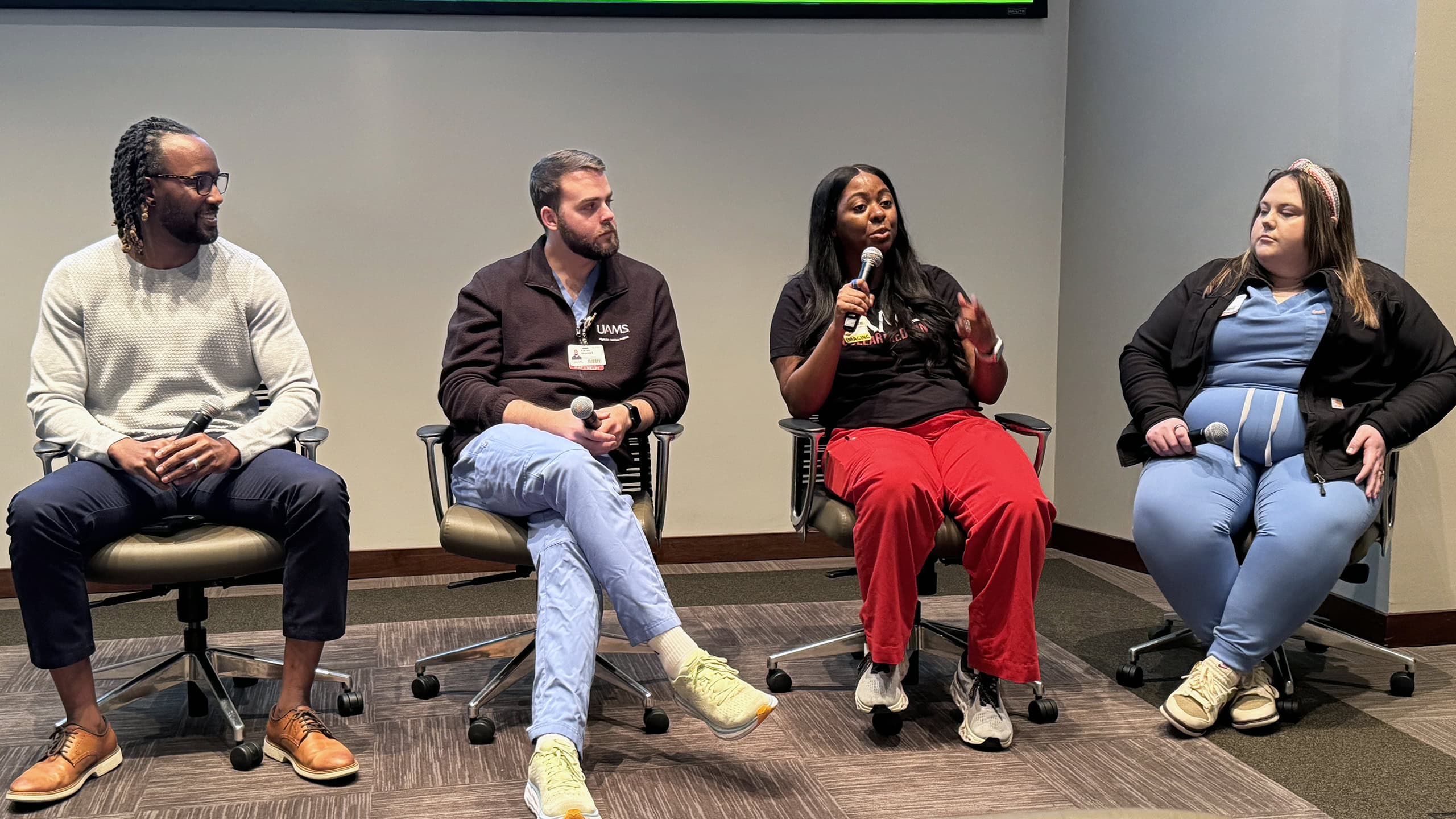
Panelists Richard Robinson, left, Aaron Woodall, Haley Smith and Lei Ross deliver advice on how to manage different types of patient interactions.
Aaron Woodall, MPAS, PA-C, assistant professor and director of didactic education in the Department of Physician Assistant Studies, said clinicians must remember that patients often arrive carrying stress, uncertainty and concerns that affect their experience.
Panelists discussed techniques for building trust, including learning about patients’ interests, remembering personal details and identifying barriers that may affect care. Haley Smith, CNMT, a UAMS nuclear medicine imaging professional, said finding ways to connect personally with patients helps create a more positive experience.
“I feel like I’m very big on this one,” Smith said before describing how she asks about patients’ families, hobbies, and interests to build rapport.
UAMS Health audiologist Lei Ross, Au.D., said patients want to feel recognized as individuals rather than as diagnoses.
“I think it comes down to also just knowing them,” she said.
Speakers also emphasized the importance of clear communication, avoiding medical jargon, and being mindful of how emotions can affect clinical encounters. When discussing difficult conversations, the panel together encouraged future clinicians to demonstrate empathy, allow patients time to process information, and establish trust before delivering challenging news.
“I know this is tough. I know this is probably not what we wanted to hear. I’m here for you. We are all here for you through this process,” Woodall said when describing his approach to delivering difficult information.
The panelists also shared lessons learned early in their careers, including overcoming imposter syndrome, asking questions when needed, and the importance of focusing on genuine human connection rather than simply completing clinical tasks.
For many students, the seminar provided practical advice they can apply when they begin interacting with patients.
Sarah Hansen, a junior dental hygiene student, said one lesson that resonated with her was the importance of becoming comfortable with silence during patient conversations.
“I think that that is something that I struggle with a lot, so I think that’s something that I’m going to keep with me and kind of leave there, rather than try to fill the silence,” Hansen said.
Hansen said the session also reinforced the importance of communication and ensuring that every patient feels heard, even during busy clinic days.
By bringing together students from multiple disciplines, one goal of the seminar was to help future health professionals understand their collective role in shaping patient experiences.
“We want students to know that this is a professional skill,” Howe said, “and it’s a hat that you have to wear when you’re in the clinic.”
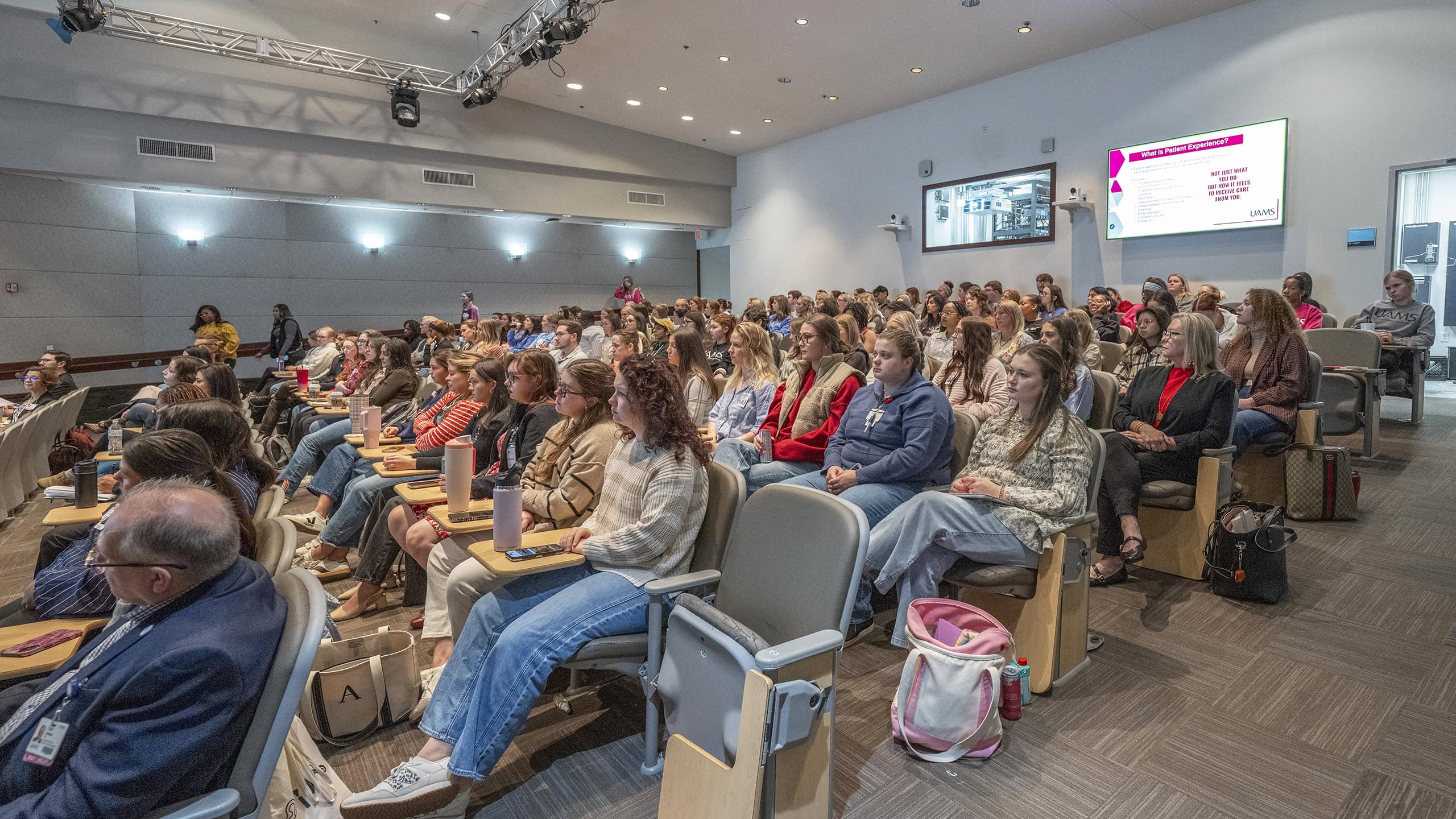
Nearly 300 students pack the Walton Auditorium for a day-long seminar on how to make the patient experience a positive one.Image by Evan Lewis