Institutes


May 7, 2019

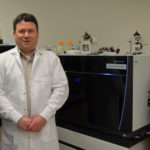
Johann Granted $1.47 Million to Continue Cutting-Edge Lung Cancer Clinical Trials

News Staff

Dr. Johann at desk

What will lung cancer diagnosis and treatment look like in the future? Look no further than the research happening today at UAMS. “We’re coming into the long-promised ‘future’ of cancer treatment,” said physician-scientist Donald J. Johann Jr., M.D. “For the last 50 years, the holy grail of cancer research has been being able to detect…


May 6, 2019

Florida-based Friendship Transcends, Through Sickness and Health

Linda Haymes

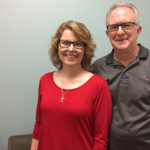
Myeloma Center patient Gail Naimo of Port St. Lucie, Fla., (right) encouraged fellow myeloma patient Sergio Pinango and his wife Blanca Nieto (left) to seek treatment at UAMS. He did and today is in remission with no evidence of the disease.

A Facebook friendship that formed over an illness in common proved lifesaving for a Florida man who found what he needed at the UAMS Myeloma Center. Myeloma Center patient Gail Naimo of Port St. Lucie, Fla. met fellow Floridians Sergio Pinango, 56, and his wife, Blanca Nieto, 50, on a myeloma Facebook page five years…


May 3, 2019

FCC Commissioner Impressed by UAMS Digital Health Initiatives

Ben Boulden

May 3, 2019 | UAMS’ pioneering work in bringing health care to those who need it through digital health applications has drawn the attention of a top federal official who traveled from Washington D.C. to UAMS recently to see for herself. Jessica Rosenworcel, a commissioner on the Federal Communications Commission, visited April 29 with UAMS Chancellor Cam Patterson, M.D., MBA; guests of the university; and leaders of UAMS’ new Institute for Digital Health & Innovation, including institute director Curtis Lowery, M.D. “We are 46th out of 50 states in health outcomes,” Patterson said. “UAMS needs to change that for the better, and we won’t do it just by staying in Pulaski County.” Telemedicine allows health professionals to diagnose and treat patients not physically present by using telecommunications technology, such as live video. It allows UAMS to extend its presence beyond its main campus and regional campuses. The creation of the institute, under the leadership of Patterson and Lowery, was announced in February and builds upon several telemedicine programs already in place, including ANGELS for high-risk pregnancy, AR SAVES for stroke, STAR for rural School-Based Health Centers and more. The institute connects the majority of hospitals and clinics across the state with telemedicine through interactive video and other digital services. Lowery gave a brief presentation to Rosenworcel about the history of digital health and telemedicine at UAMS. Lowery, Tina Benton, B.S.N., and a small team of clinicians and staff in 2003 founded ANGELS to bring maternal-fetal medicine to women with high-risk pregnancies who did not live near such a specialist. ANGELS (the Antenatal and Neonatal Guidelines, Education and Learning System) is an innovative consultative service for a wide range of physicians including family practitioners, obstetricians, neonatologists and pediatricians in Arkansas. An ANGELS obstetrician can talk to a pregnant mother via a live video connection and watch an ultrasound image of her baby from a local hospital so she can avoid traveling to Little Rock hours away. Lowery said the institute is doing a pilot study to see if ANGELS’ live video consultations can help during an emergency labor-and-delivery. “That’s the only way you’re going to do anything about it,” Lowery said. “By the time you transfer a mother from that smaller hospital, we might lose her because of excessive bleeding. I think in the next year we’re going to explore the idea of delivering blood by using drones. It could make a real difference when a hospital doesn’t have the blood for a massive loss.” Rosenworcel said she was intrigued by the idea of using drones to facilitate the transportation of blood and transplant organs. During her visit, she observed a live ANGELS consultation with a pregnant mother in another Arkansas town and toured the 24-hour call center that routes calls for ANGELS and other telemedicine programs like Arkansas Stroke Assistance through Virtual Emergency Support (AR SAVES). Renee Joiner, B.S.N., AR SAVES director, briefed Rosenworcel about the stroke telemedicine program. UAMS started AR SAVES in 2008 to provide telemedicine consultations with stroke neurologists at any time via live video. Through this service, almost 2,000 patients have received a clot-busting drug that often restores complete function to the patient. Arkansas recently fell to seventh in the nation in the number of stroke deaths per capita after many years in first place, a huge improvement credited in part to the efforts of AR SAVES. “I went down to Crossett on Friday and met a 27-year-old gentleman who had a stroke and went to the Ashley County Medical Center,” Patterson said. “He was treated through AR SAVES. Without this, he probably would have been a paraplegic and unable to work.” Rosenworcel learned about the trauma telemedicine program and the School Telemedicine in Arkansas (STAR) program, the first-ever effort to bring telemedicine care to Arkansas’ rural School-Based Health Centers. STAR two years ago rolled out the Healthy Now initiative for obesity reduction and prevention. Graduate students from the University of Central Arkansas and a UAMS nutritionist engage the students in one-on-one telemedicine encounters. “We piloted the program in the Magazine School District,” said Alan Faulkner, a program manager for the institute. “With two groups of participating students, 51% in one group reduced their weight, and 66% in another group reduced their weight.” Rosenworcel said she found those numbers to be very impressive. She was also given an overview of the Arkansas e-Link network by network director Roy Kitchen. The network was created from a $102 million grant awarded in August 2010 to UAMS and partner institutions through the federal Broadband Technology Opportunities Program Comprehensive Community Infrastructure grant. Led by UAMS, e-Link uses high-speed data transmission lines to connect about 400 community institutions for videoconferencing between medical professionals, patients and doctors and others along with the real-time exchange of patient data and readings. “Your approach has been great,” Rosenworcel said. “Instead of building a network and then finding problems to solve with it, you identified many real problems in public health and specific ways a digital health network can be used to solve them.” Rosenworcel especially enjoyed being able to meet an ANGELS patient via live video and observe the patient’s telemedicine consultation. “We are becoming one of the most connected states in the nation, and we believe with that we can use digital health to improve the health and quality of life of Arkansans,” Lowery said.

UAMS’ pioneering work in bringing health care to those who need it through digital health applications has drawn the attention of a top federal official who traveled from Washington D.C. to UAMS recently to see for herself. Jessica Rosenworcel, a commissioner on the Federal Communications Commission, visited April 29 with UAMS Chancellor Cam Patterson, M.D.,…


May 2, 2019

Study May Bring Options for Children with Tourette Syndrome

News Staff

McAlister posing for photo with family

Barrett McAlister hopes an ongoing clinical trial at UAMS can help establish a new treatment for Tourette syndrome in children so they can focus on being kids, playing and learning, without worrying about being “different.” “If they’ve got a chance at a normal life, I say take it,” McAlister said. “Take it with both hands.”…


April 29, 2019

Woman Relaxed for First Time in Years After Complex Spine Surgery

Katrina Dupins

Denise Frerichs visits Kazemi in his clinic at UAMS.

Last fall, just getting out of a chair and walking from one room to the next was a labored and painful experience for Denise Frerichs. The pain was excruciating and it ran down from her back to her legs. “The pain started about two years ago. At first I thought it would get better. I…


April 25, 2019

UAMS Cancer Researcher to Speak at May 16 Event in Hot Springs Village

Susan Van Dusen

You are invited to learn about the latest advances in cancer research, treatment and prevention at a free event at 11:30 a.m. May 16 in Hot Springs Village featuring a researcher from the University of Arkansas for Medical Sciences (UAMS).


April 24, 2019

Colorectal Cancer Patient Says UAMS Saved Her Life

Katrina Dupins

Lowetta Bishop says she's glad she chose UAMS for her cancer treatments.

When a doctor told Lowetta Bishop she had colorectal cancer, she told him he was wrong. “I’d gone to my family doctor for a regular visit, I told him I’d experienced bleeding, but not often. We both agreed it was probably hemorrhoids,” Bishop said. “We scheduled a colonoscopy and the doctor there told me it…


April 23, 2019

Fifth Year of Parkinson’s Symposium Marks Continued Growth

News Staff

Demonstrator leading audience in chair yoga

The Parkinson’s Symposium continues to grow each year, welcoming more people who want to learn about the latest advances in the diagnosis and treatment of Parkinson’s disease. The fifth annual event was held April 7 in the Jackson T. Stephens Spine & Neurosciences Institute at UAMS, with nearly 200 people in attendance. “Some people have…


April 19, 2019

New UAMS Screening Initiative Aims to Save Vision of Patients with Diabetes

Spencer Watson

Teleretinal imaging is demonstrated with a special camera. New cameras will take the screening statewide.

Patients with diabetes visiting University of Arkansas of Medical Science (UAMS) Family Medicine Clinics throughout the state will soon receive a new screening during regular doctor’s visits in an effort to save their vision. The screening is called teleretinal imaging and uses a special camera to take pictures of the retina at the back of…


April 18, 2019

UAMS Addiction Training Program Awarded $2.1 Million

Tim Taylor

LITTLE ROCK — The Addiction Research Training Program at the University of Arkansas for Medical Sciences (UAMS) was recently awarded $2.1 million from the National Institute on Drug Abuse (NIDA) to renew the program another five years. The award marks the second time the program has been renewed by NIDA, part of the National Institutes…


Previous page Next page